-
Montenegro
The Energy Development Strategy of Montenegro sets out objectives and defines mechanisms for the transition from the current energy system to a safe, competitive and environmentally acceptable energy paradigm by 2025. It also provides guidelines for the development of the energy sector with the aim of attracting investors.
Data for Montenegro is included under Serbia until 2004.- Overview
- Energy mix
- Emissions
- Electricity
-
+ 5 pages

![Montenegro Flag]()
-
Togo
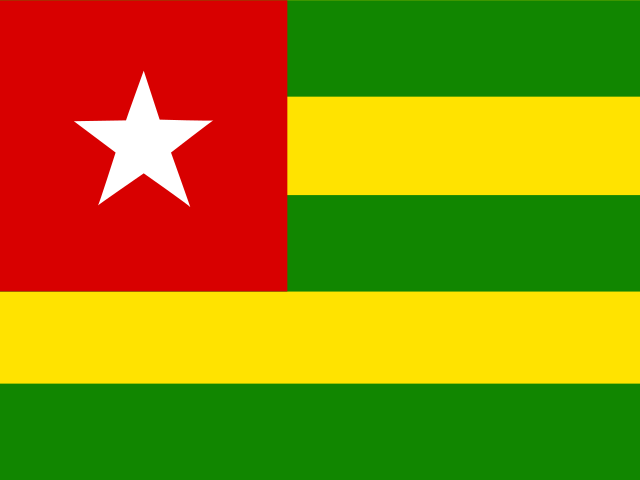
Less than half of the Togolese population has access to electricity. The country has a relatively diversified energy mix and more than 13% of its final energy consumption comes from renewable supplies of energy, mainly hydropower.
- Overview
- Energy mix
- Emissions
- Electricity
-
+ 5 pages

![Togo Flag]()
-
Mongolia
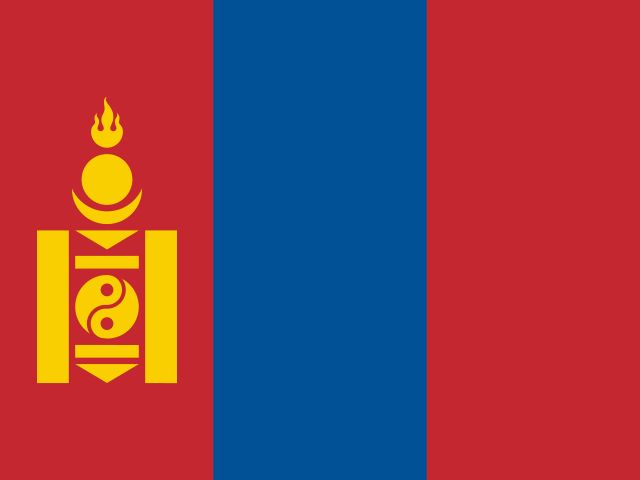
Coal is the first source of electricity generation in Mongolia, but the country has recently begun using hydro, solar and wind power, and has adopted a law aiming to increase and regulate the use of renewables.
- Overview
- Energy mix
- Emissions
- Electricity
-
+ 5 pages

![Mongolia Flag]()
-
Malta
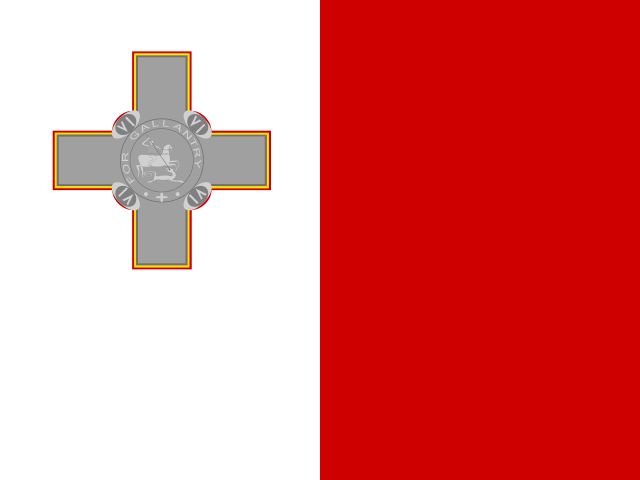
The National energy policy of Malta was launched in December 2012. It lists decisions and actions that have already been implemented as well as measures aiming to ensure the sustainability of Malta's energy sector.
- Overview
- Energy mix
- Emissions
- Electricity
-
+ 5 pages
![Malta Flag]()
-
Universal Access to Clean Cooking in Africa
Progress update and roadmap for implementation Clean cooking access is a defining challenge for Africa’s prosperity. While the number of people without access to clean cooking has halved globally since 2010, the number in sub-Saharan Africa continues to rise. This harms health, economic development, and the environment – contributing to 815 000 premature deaths annually and significant deforestation.In a new report, Universal Access to Clean Cooking in Africa: Progress update and roadmap to implementation, the International Energy Agency (IEA) provides an updated picture of where things stand today, where efforts are gaining ground, and where urgent action is…

-
Portugal 2026
Energy Policy Review Government action plays a pivotal role in ensuring secure and sustainable energy transitions. Energy policy is critical not just for the energy sector but also for meeting environmental, economic and social goals. Governments need to respond to their country’s specific needs, adapt to regional contexts and help address global challenges. In this context, the International Energy Agency (IEA) conducts Energy Policy Reviews to support governments in developing more impactful energy and climate policies.This Energy Policy Review was prepared in partnership between the Government of Portugal and the IEA. It draws on the IEA’s extensive…

-
Ramping up Heat Pumps in Moldova: A Roadmap
Buildings account for more than half of Moldova’s final energy consumption, with three-quarters of that used for space and water heating. At the same time, Moldova lacks domestic hydrocarbon resources and imports more than 80% of its primary energy. Heat pump technology offers Moldova an effective means of accelerating the transition in building heating.The recent expansion of Moldova’s solar and wind capacity also means that heat pumps can now play a greater role in cutting greenhouse gas emissions and lowering local air pollution. Finally, Moldovan’s 2024 referendum, endorsing the goal of European Union membership, underscores…

-
Gibraltar
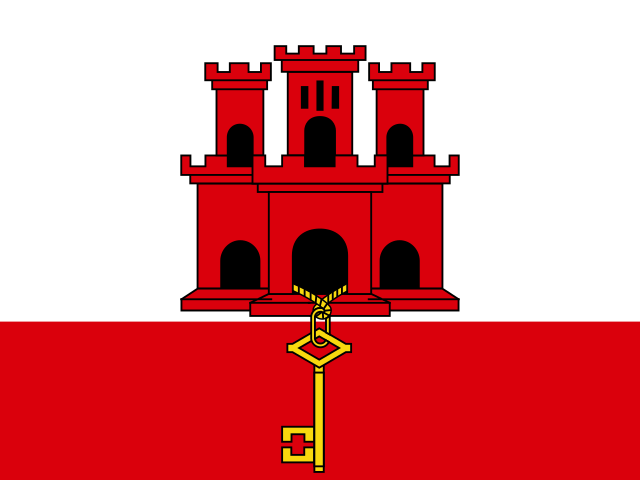
Gibraltar
- Overview
- Energy mix
- Emissions
- Electricity
-
+ 5 pages
![Gibraltar Flag]()
-
Nigeria
Nigeria is the largest economy and the richest oil resource centre of the African continent. The country also remains the largest gas consumer and producer of West Africa. Notable power sector reforms are underway in Nigeria, including plans for electrification.
- Overview
- Energy mix
- Emissions
- Electricity
-
+ 5 pages
![Nigeria Flag]()
-
Burkina Faso
In 2019, Burkina Faso’s energy mix was dominated by biofuels and wastes, with oil products accounting for one-third of the total energy supply. In 2020, 11% of the population had access to clean cooking and only 21% had access to electricity, making Burkina Faso one of the world’s least-electrified countries. For electricity, the country has a target of 95% access for urban areas and 50% for rural areas by 2030. For clean cooking, Burkina Faso has a universal access target for urban areas and 65% in rural areas by 2030. The target for LPG urban penetration…
- Overview
- Energy mix
- Emissions
- Electricity
-
+ 5 pages
![Burkina Faso Flag]()