-
Why the growth of energy service companies is uneven globally
…more than 130 energy cooperatives adopted ESCO business models in 2025 – double the previous year. In Italy, where 900 companies are certified as ESCOs, average market revenues increased by over 78% in the past three years.Overall, ESCO markets scale up where policy frameworks are durable, procurement rules are aligned with performance contracting, and projects are implemented through standardised processes. In markets lacking these conditions, high transaction costs, contractual complexity and policy uncertainty continue to limit demand. These barriers are most visible in smaller scale and residential building projects, where ESCO models based on energy savings are harder to implement…
-
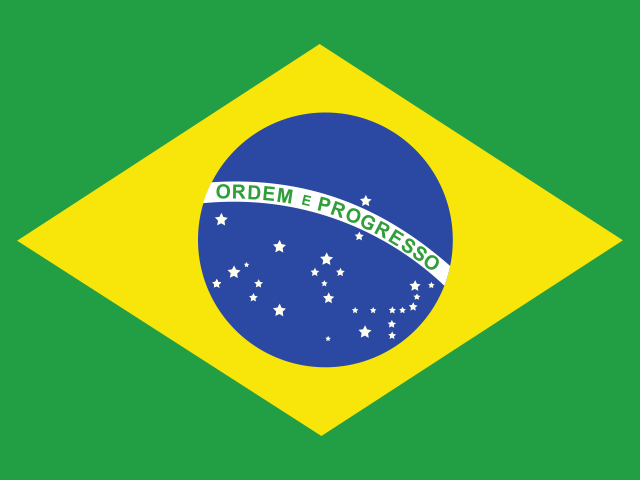
Brazil
Brazil’s energy policies measure up well against the world’s most urgent energy challenges. Access to electricity across the country is almost universal and renewables meet almost 45% of primary energy demand, making Brazil’s energy sector one of the least carbon-intensive in the world. Total primary energy demand has doubled in Brazil since 1990, led by strong growth in electricity consumption and in demand for transport fuels on the back of robust economic growth and a burgeoning middle class.
Large hydropower plants account for around 80% of domestic electricity generation, making the Brazilian electricity mix one of…- Overview
- Energy mix
- Emissions
- Electricity
-
+ 5 pages

![Brazil Flag]()
-
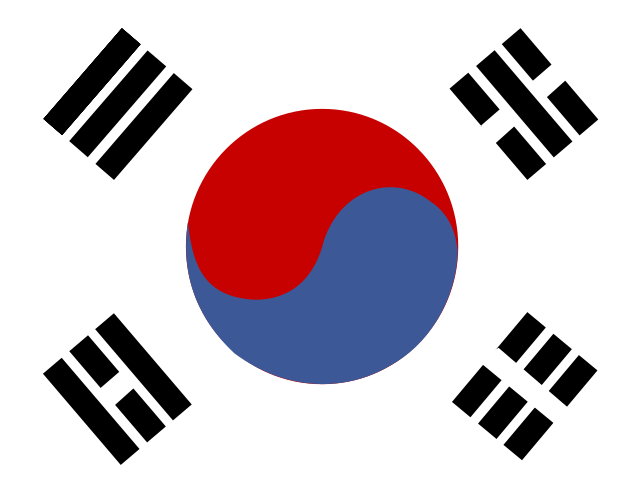
Korea
…a strong dependence on energy imports and one of the highest shares of industrial energy use among IEA countries. Korea aims to leverage the fourth industrial revolution for its energy transition and to foster green growth by means of low-carbon technologies and clean energy. Due to Korea’s high share of coal-fired power generation, the carbon intensity of its electricity mix is above the IEA average. Korea’s private sector has a high capacity for technology innovation and its population has shown an almost unparalleled openness toward digitalisation. As a result, Korea’s energy transition is closely linked…
- Overview
- Energy mix
- Emissions
- Electricity
-
+ 5 pages

![Korea Flag]()
-
Colombia
Colombia launched the Energy Plan 2050 in 2016 , which aims to diversify the country’s energy resources and ensure a reliable energy supply by including wind power plants, solar PV and geothermal energy generation in the country's electric mix.
- Overview
- Energy mix
- Emissions
- Electricity
-
+ 5 pages
![Colombia Flag]()
-
Energy crisis threatens world’s most vulnerable as cooking fuel shortages grow
…being felt across the globe – and households in emerging and developing economies are now facing a particularly severe challenge: whether there is enough fuel simply to cook a meal, and whether they can still afford it.At the centre of this sits liquefied petroleum gas (LPG), the world's most widely used cooking fuel. Around 3.4 billion people across the developing world use LPG as their primary source of energy for cooking. As of 2025, 30% of all seaborne LPG exports transited through the Strait of Hormuz. Developing Asia accounts for the largest share of LPG use for cooking…
-
Natural Gas
…markets, which have been tight and volatile for several years, are set to undergo major changes by the end of this decade. The unfolding coming wave of liquefied natural gas (LNG) production capacity is set to rebalance the global gas market, enhance energy supply security and improve the affordability of natural gas.
About 300 billion cubic metres (bcm) per year of LNG export capacity – a record – is set to be added by 2030, primarily supported by liquefaction capacity additions in the United States and Qatar. This expansion could translate to a net LNG supply increase of 250 bcm a year…
-
Mauritius
The energy mix in Mauritius is dominated by coal and oil. Almost 10% of the country's final energy consumption is generated by modern renewable sources of energy – a share that has gradually decreased for the past 20 years.
- Overview
- Energy mix
- Emissions
- Electricity
-
+ 5 pages

![Mauritius Flag]()
-
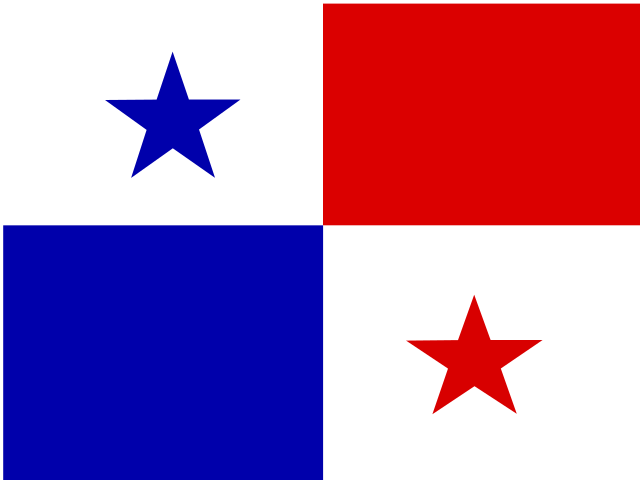
Panama
Panama's National Energy Plan 2015–2050 outlines long-term strategy for the country’s energy sector development, including renewables. The Plan established that 15% of Panama’s generation capacity will come from renewables by 2030 and 50% by 2050.
- Overview
- Energy mix
- Emissions
- Electricity
-
+ 5 pages
![Panama Flag]()
-
Kuwait
Kuwait is wholly reliant on fossil fuels for energy generation and by 2030, its energy demand will triple. In order to diversify its energy mix, the country targets to increase the share of renewable generation to 15% by 2030.
- Overview
- Energy mix
- Emissions
- Electricity
-
+ 5 pages

![Kuwait Flag]()
-
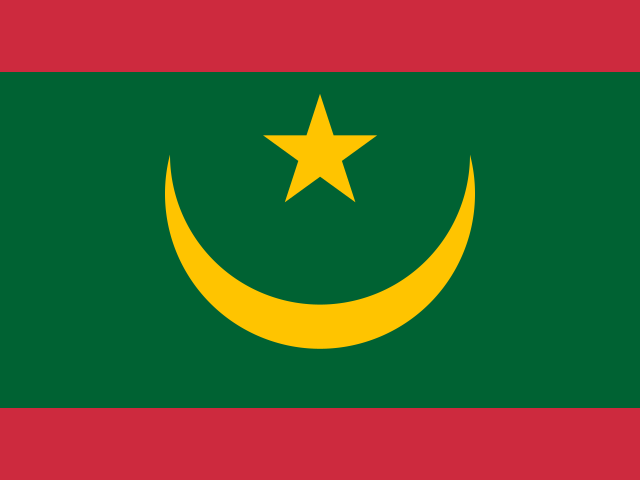
Mauritania
In 2019, Mauritania’s energy mix was dominated by oil products (65%) and biofuels and waste (32%). In 2020, 43% of the population had access to clean cooking which is the highest share in West Africa. In 2020, 47% of the population had access to electricity. For electricity access, the country targets universal access in urban areas and doubling of the current rate in rural areas by 2024, with country-wide universal access by 2030. For clean cooking, the target is 100% access to LPG in urban areas and 50% access to LPG in rural areas by 2030.
- Overview
- Energy mix
- Emissions
- Electricity
-
+ 5 pages
![Mauritania Flag]()