-
Chinese Taipei
The Taiwanese government enacted in the late 2010s the Statute for Renewable Energy Development to reduce CO2 emissions, improve energy diversification and promote green-energy industries. The government is seeking to generate 8% of electricity from renewables by 2025.
- Overview
- Energy mix
- Emissions
- Electricity
-
+ 5 pages

![Chinese Taipei Flag]()
-
Turkmenistan
Turkmenistan’s government is continuously investing in oil and gas, to modernise and expand the electricity and heat sector by 2020. Moreover, the energy sector is almost fully subsidised, with citizens receiving free electricity, heat and gas up to a certain level of consumption, until 2030, but the government is taking steps to reduce subsidies to curb domestic demand and increase exports. Turkmenistan is part of the EU4Energy Programme, an initiative focused on evidence-based policymaking for the energy sector.
- Overview
- Energy mix
- Emissions
- Electricity
-
+ 5 pages

![Turkmenistan Flag]()
-
Iran
Iran has in place legislation obliging the Minister of Energy to increase the share of renewables and clean power plants to at least 5% of the country's capacity until the end of 2021.
- Overview
- Energy mix
- Emissions
- Electricity
-
+ 5 pages

![Iran Flag]()
-
Brunei Darussalam
In 2014, Brunei adopted a strategic plan to achieve 10% share of renewables in the national energy mix by 2035. The plan provides the outline to introduce renewable energy policy and regulatory frameworks and to scale-up market deployment of solar PV.
- Overview
- Energy mix
- Emissions
- Electricity
-
+ 5 pages
![Brunei Darussalam Flag]()
-
Slovenia
Slovenia has put in place a National Renewable Action Plan to 2020, which targets a 25% share of energy generation from renewable sources in gross final energy consumption and 39% of electricity demand met by electricity generated from renewable energy sources.
- Overview
- Energy mix
- Emissions
- Electricity
-
+ 5 pages

![Slovenia Flag]()
-
Yemen
In Yemen, less than half of the population has access to electricity. In 2010, the government launched a National Strategy for renewable energy and energy efficiency, which aims to develop grid and off-grid renewable energy and targets a 15% share of renewable electricity generation by 2025.
- Overview
- Energy mix
- Emissions
- Electricity
-
+ 5 pages
![Yemen Flag]()
-
Uganda
In 2019, Uganda’s energy mix was dominated by fuel wood and charcoal followed by a small share of oil products. The country produces electricity mainly from hydroelectric plants. Between 2017 and 2019, electrification outpaced population growth in Uganda. However in 2020, less than 5% of the population had access to clean cooking.
The Electricity Connection Policy was introduced in 2018 with the ambition of increasing Uganda’s electricity access to 60 percent by 2027 through connection subsidies for consumers located close to the existing network. About 300,000 households and businesses have received free electricity connections, benefiting 1.5…- Overview
- Energy mix
- Emissions
- Electricity
-
+ 5 pages

![Uganda Flag]()
-
Honduras
In 2014, Honduras approved a new Law of Electrical Industry, which establishes technology-specific auctions for renewable energy. 75% of the population has access to electricity in the country and only 48% can rely on clean cooking facilities.
- Overview
- Energy mix
- Emissions
- Electricity
-
+ 5 pages

![Honduras Flag]()
-
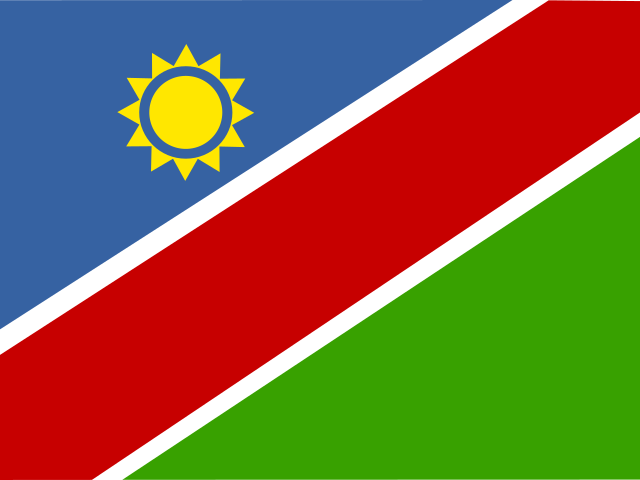
Namibia
Most of Namibia’s electricity is generated by hydropower. The country is also one of the ten-largest uranium resource-holders in the world and provides 8.2% of global production. The country has stated its interest in introducing nuclear power into its domestic mix.
- Overview
- Energy mix
- Emissions
- Electricity
-
+ 5 pages
![Namibia Flag]()
-
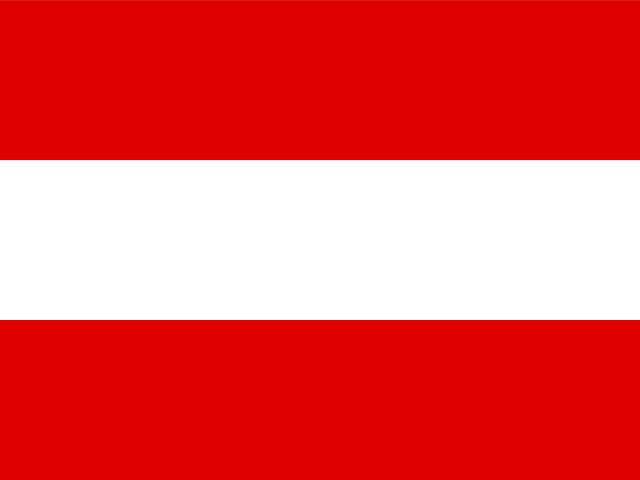
Austria
Austria is committed to reaching climate neutrality by 2040. Over three quarter of electricity generation already comes from renewables, with a target of achieving a 100% renewable electricity supply by 2030 (national balance). This requires investments to make networks more resilient and flexible, optimise demand side management, and updating the legal and regulatory framework to allow more consumer participation. Buildings and transport account for around half of total emissions . To progress the transition in these sectors, the government supports building renovation, switching from fossil fuels to sustainable heating systems, the electrification of transport and invests in public transport infrastructure.
- Overview
- Energy mix
- Emissions
- Electricity
-
+ 5 pages
![Austria Flag]()