-
Latvia
Latvia is undertaking its energy transition with some promising results to date, with the goal to reduce total greenhouse gas emissions (without land use, land-use change and forestry) by 65% from 1990 levels by 2030 and to achieve net zero by 2050. It has made inroads on the share of renewable energy in its fuel mix, with sizeable shares of bioenergy and hydropower.
Renewable energy sources dominate its electricity mix, in particular, accounting for around three-quarters of domestic generation. Other sectors, notably transport and buildings, continue to consume large amounts of energy and rely on dated infrastructure that…- Overview
- Energy mix
- Emissions
- Electricity
-
+ 5 pages

![Latvia Flag]()
-
Eswatini
Eswatini
- Overview
- Energy mix
- Emissions
- Electricity
-
+ 5 pages

![Eswatini Flag]()
-
Ethiopia
In Ethiopia, while electricity reaches less than half of the population, great progress has been made over the past two decades. The National Electrification Program, launched in 2017, outlines a plan to reach universal access by 2025, aiming to supply 35% of the population with off-grid solutions. Meanwhile, Ethiopia is diversifying its hydro-dominated installed generation mix in favour of solar, wind and geothermal to pursue a more climate-resilient power system and reach economic development objectives.
- Overview
- Energy mix
- Emissions
- Electricity
-
+ 5 pages
![Ethiopia Flag]()
-
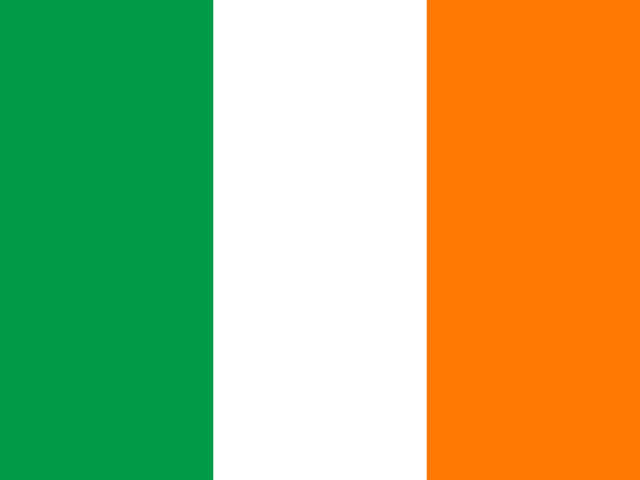
Ireland
Ireland put in place an ambitious and comprehensive set of policies and targets to reach net zero by 2050 and 80% of renewable electricity generation by 2030, but now their implementation needs to accelerate. Natural gas will remain an important part of the energy mix at least until the mid-2030s, especially to meet peak electricity demand, but offshore renewable energy will become the cornerstone of Ireland’s energy transition beyond 2030. Given Ireland’s current exclusive reliance on energy imports from the United Kingdom, energy security is a major concern to the government while transitioning to a (variable) renewables…
- Overview
- Energy mix
- Emissions
- Electricity
-
+ 5 pages
![Ireland Flag]()
-
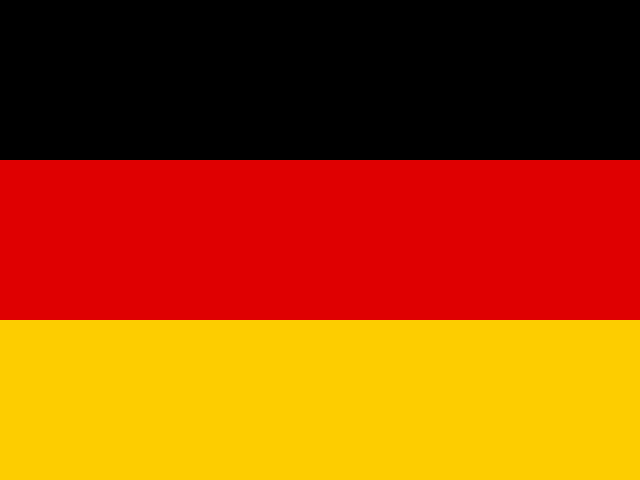
Germany
Germany’s Climate Law sets out the framework for reaching net zero emissions by 2045. In order to achieve the ambitious Energiewende by 2030, 80% of all electricity supply will need to come from renewable energy sources (and 100% by 2035) and coal is to be completely phased out. Germany has been an early leader in offshore wind and solar PV and phased out nuclear power in 2023. Major legislative reforms in renewable energy planning and siting support targets of 100-110 GW of onshore wind, 30 GW offshore wind and 200 GW solar, alongside investments in 10 GW of…
- Overview
- Energy mix
- Emissions
- Electricity
-
+ 5 pages
![Germany Flag]()
-
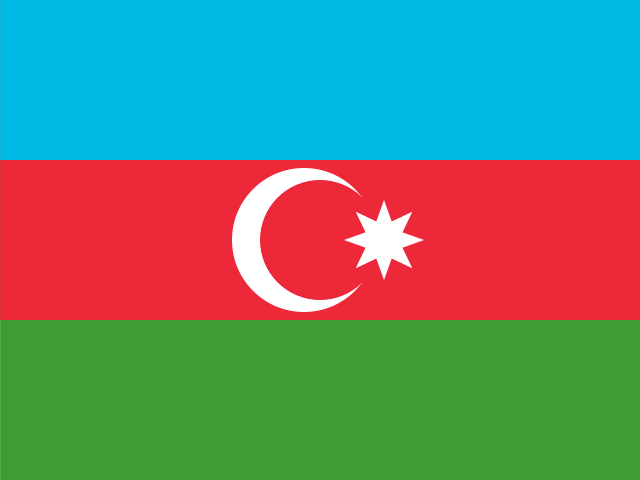
Azerbaijan
Azerbaijan has one of the highest energy self-sufficiency ratios in the world as a major crude oil and natural gas producer. While the renewable sector has not seen as much attention, the government is now looking to stimulate investment and accelerate deployment, allowing for diversification of domestic energy consumption. In addition, the government is working on a new energy strategy that will set the stage for further policy shifts. Azerbaijan is part of the EU4Energy Programme, an initiative focused on evidence-based policymaking for the energy sector.
- Overview
- Energy mix
- Emissions
- Electricity
-
+ 5 pages

![Azerbaijan Flag]()
-
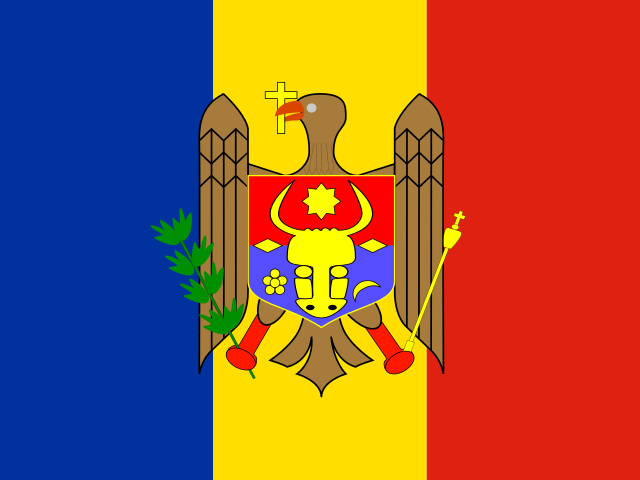
Moldova
Moldova is almost fully dependent on fossil fuel and electricity imports, with natural gas serving most of its energy needs. The government plans to diversify the energy mix with renewables such as wind and solar. Moldova is part of the EU4Energy Programme, which focuses on improving evidence-based policy making for the energy sector.
- Overview
- Energy mix
- Emissions
- Electricity
-
+ 5 pages
![Moldova Flag]()
-
Costa Rica
Costa Rica’s energy policy aims to move from a fossil fuels based energy system towards renewable energy sources and to expand its power generation capacity, replacing old power generating stations and developing new projects.
- Overview
- Energy mix
- Emissions
- Electricity
-
+ 5 pages

![Costa Rica Flag]()
-
Tunisia
Tunisia mostly relies on gas imports to meet its primary energy needs: almost 97% of its electricity generation came from gas in 2016. However, energy policy puts the emphasis on renewable energy. Electricity generation from wind power strongly increased since 2014.
- Overview
- Energy mix
- Emissions
- Electricity
-
+ 5 pages
![Tunisia Flag]()
-
Hong Kong
Hong Kong
- Overview
- Energy mix
- Emissions
- Electricity
-
+ 5 pages

![Hong Kong Flag]()