-
Gabon
Almost two-thirds of the population of Gabon has access to electricity. The country can partially rely on its 150 thousand barrels per day hydrocarbon liquids production and has recently implemented a new petroleum legislation.
- Overview
- Energy mix
- Emissions
- Electricity
-
+ 5 pages

![Gabon Flag]()
-
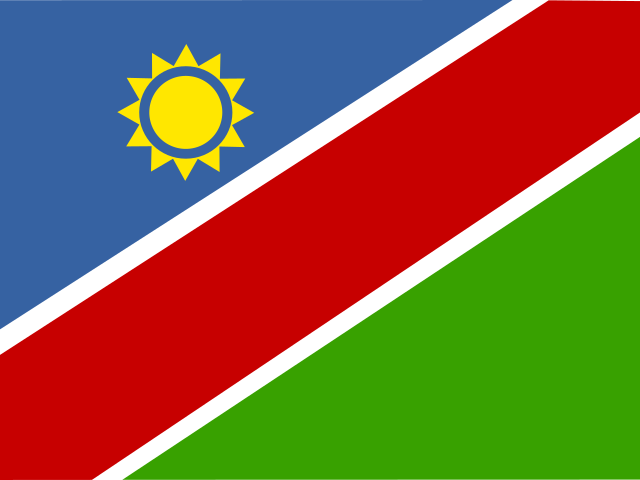
Namibia
Most of Namibia’s electricity is generated by hydropower. The country is also one of the ten-largest uranium resource-holders in the world and provides 8.2% of global production. The country has stated its interest in introducing nuclear power into its domestic mix.
- Overview
- Energy mix
- Emissions
- Electricity
-
+ 5 pages
![Namibia Flag]()
-
Global Methane Tracker 2026 Recent insights from methane emissions studies
Advances in measurement and data processing Methane detection has improved markedly in recent years by making better use of existing satellite arrays and launching new devices, improving airborne instrumentation and calibration, and deploying tower, stationary and handheld detectors more widely. Overall, detection limits have been optimised, coverage has broadened and observation times have increased. Meanwhile, advances in data processing have enhanced both the speed and the quality of analysis.These advances yield better coverage and sharper insights into the sources and scale of methane emissions. They also confirm that effective methane management requires multi-scale measurement frameworks that combine space…

-
Aluminium
Country and regional Highlights
Technological progress is being made in a range of countries, while the expected expansion of China’s emissions trading systems will be key to reducing direct emissions
CO2 emissions
Further action to reduce emissions intensity will be needed to get on track with the NZE Scenario
Energy
While the energy efficiency of aluminium production has improved, fuel switching needs to accelerate
Activity
Technology deployment
Innovation
Supporting infrastructure
Policy
-
Sheltering From Oil Shocks Summary
The conflict in the Middle East has created the largest supply disruption in the history of the global oil market, due to the near halt in shipping traffic through the Strait of Hormuz. Some 15 million barrels of crude oil and 5 million barrels of oil products typically traversed the Strait each day, equivalent to around 20% of global oil consumption. These flows have slowed to a trickle. The loss of supply is having significant impacts in global markets, pushing up prices for crude oil above $100/barrel, and leading to much higher prices for some refined products – notably diesel…

-
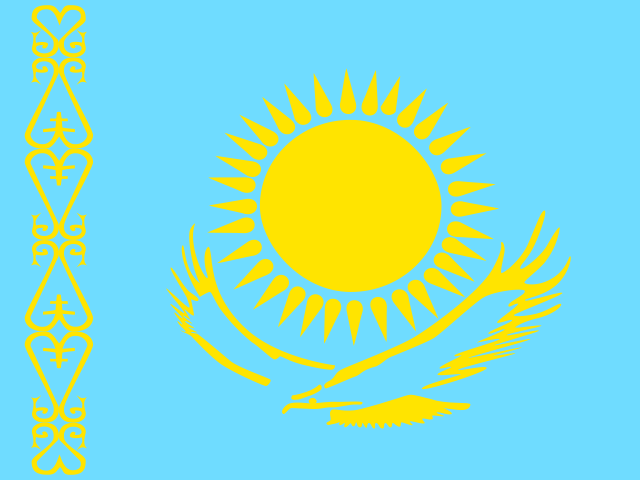
Kazakhstan
Kazakhstan is a significant producer of coal, crude oil and natural gas, and a major energy exporter. While coal dominates the country’s energy mix, renewable sources of energy are a small but growing share of Kazakhstan’s electricity generation. Gas pipeline network expansion remains a priority, in order to expand access and reduce reliance on coal and LPG for household consumption. Kazakhstan is part of the EU4Energy Programme, an initiative focused on evidence-based policymaking for the energy sector.
- Overview
- Energy mix
- Emissions
- Electricity
-
+ 5 pages

![Kazakhstan Flag]()
-
Renewables in District Energy Regional trends in district heating
Regional trends in district heating

-
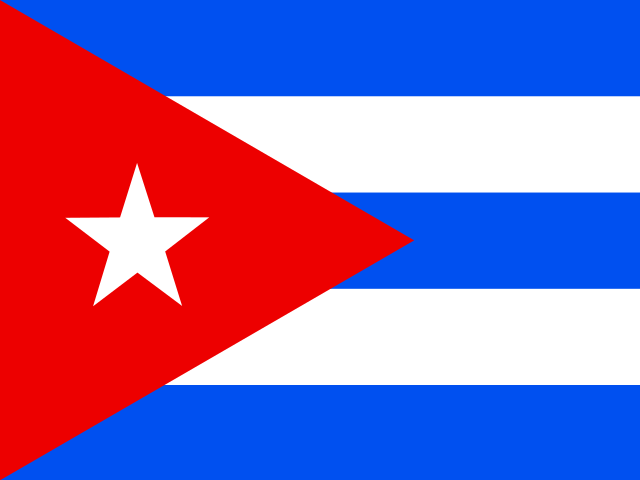
Cuba
Cuba’s energy supply mainly comes from oil products, accounting for over 80% of power generation.
- Overview
- Energy mix
- Emissions
- Electricity
-
+ 5 pages

![Cuba Flag]()
-
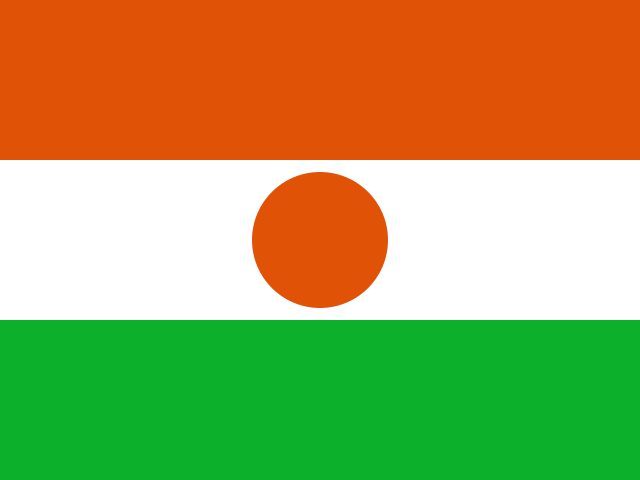
Niger
Access to electricity remains a challenge in Niger and the country is reliant on electricity imports for a significant share of its supply. The country is an oil resource centre and it is one of the ten-largest uranium resource-holders in the world.
- Overview
- Energy mix
- Emissions
- Electricity
-
+ 5 pages
![Niger Flag]()
-
Pakistan
In Pakistan, most of the primary energy supply comes from oil and natural gas. Hydropower is the main renewable source of energy in the country but wind and solar PV’s shares are slowly growing. More than 40 million people remain without access to electricity and half the population lack access to clean cooking facilities.
- Overview
- Energy mix
- Emissions
- Electricity
-
+ 5 pages

![Pakistan Flag]()