-
Growing our Clean Energy Workforce initiative in Victoria, Australia
In March 2022, the government of Victoria in Australia announced the AUD 11 million Growing our Clean Energy Workforce package, which includes subsidised apprenticeships, professional mentoring and access to ongoing education for women in the clean energy space. The state found that women are under-represented in the solar industry by a wide margin, accounting for less than 1% of electricians, plumbers, air conditioning and refrigeration mechanics, solar designers and installers, and licensed electrical inspectors. Therefore, the aim of the Growing our Clean Energy Workforce initiative is to increase the number of women working in the renewables energy industry. In…
-
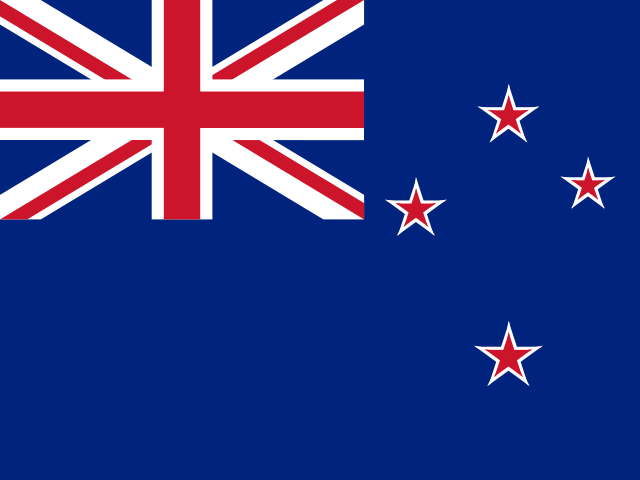
New Zealand
New Zealand has a diversified energy mix, with significant production of both hydropower and geothermal. As the country embarks on an ambitious energy transition, it has many natural advantages, including a strong renewable resource base. New Zealand already has a low-emissions electricity system, with over 80% of electricity coming from renewable sources. The key challenge will be to decarbonise other end-use sectors through clean power and support investments in new technologies to achieve deeper emissions cuts across all sectors. Notably, the transport sector accounts for the highest share of emissions and is almost entirely dependent on oil while…
- Overview
- Energy mix
- Emissions
- Electricity
-
+ 5 pages

![New Zealand Flag]()
-
Fraction of negative hourly wholesale electricity prices in selected regions in the first half of the year, 2019-2025
prices United States Mexico Australia Electricity
-
Lliquefied natural gas export capacity in selected countries, 2005-2030
United States Qatar Australia Natural Gas Fossil Fuels
-
Technical guidelines for the estimation of greenhouse gas emissions by facilities in Australia – 2017-18 reporting year (October 2017)
Establishes the latest methods to be used by auditors in estimating greenhouse gas emissions, including methane, for the 2017-2018 recording year
-
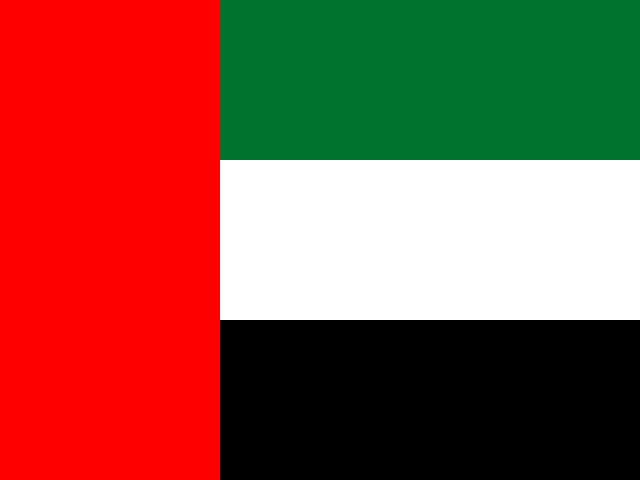
United Arab Emirates
The majority of the energy produced in the United Arab Emirates is from natural gas and oil. The country is also a major exporter of oil and gas and it started using its strong solar PV potential in 2014 to produce electricity.
- Overview
- Energy mix
- Emissions
- Electricity
-
+ 5 pages

![United Arab Emirates Flag]()
-
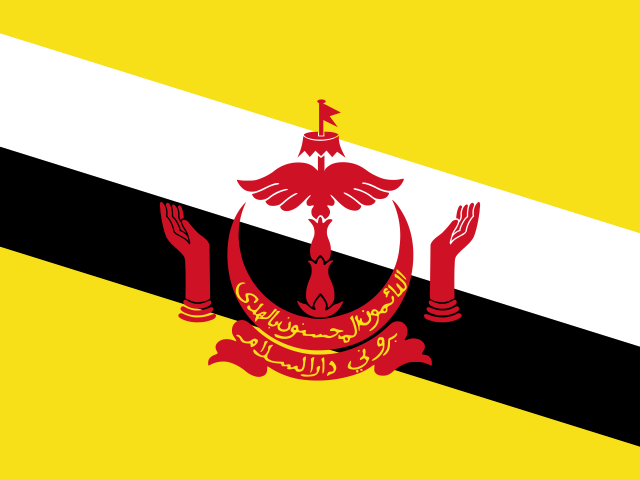
Brunei Darussalam
In 2014, Brunei adopted a strategic plan to achieve 10% share of renewables in the national energy mix by 2035. The plan provides the outline to introduce renewable energy policy and regulatory frameworks and to scale-up market deployment of solar PV.
- Overview
- Energy mix
- Emissions
- Electricity
-
+ 5 pages
![Brunei Darussalam Flag]()
-
Austria 2026
…this context, the International Energy Agency (IEA) conducts Energy Policy Reviews to support governments in developing more impactful energy and climate policies.This Energy Policy Review was prepared in partnership between the Government of Austria and the IEA. It draws on the IEA’s extensive knowledge and the inputs of expert peers from IEA Member countries to assess Austria’s most pressing energy sector challenges and provide recommendations on how to address them, backed by international best practices. The report also highlights areas where Austria’s leadership can serve as an example in promoting secure and clean energy transitions. It…

-
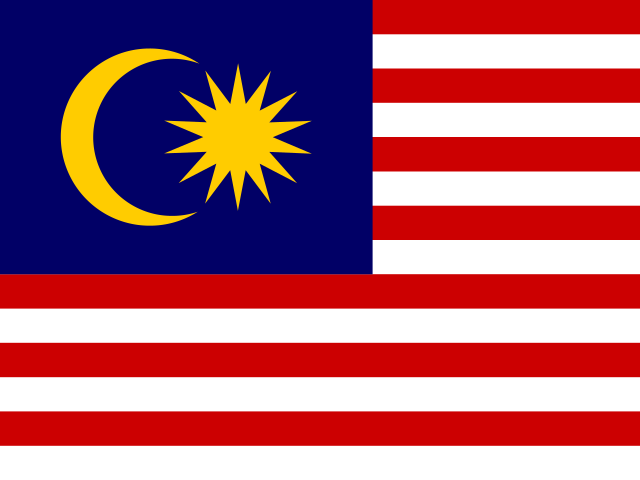
Malaysia
In Malaysia, the share of gas in the power mix decreased from 67% in 2005 to 47% in 2015, led by policies to switch to coal in response to declining domestic gas production. The country holds a large share of Southeast Asia’s fossil fuel resources.
- Overview
- Energy mix
- Emissions
- Electricity
-
+ 5 pages
![Malaysia Flag]()
-
Southeast Asia Energy Outlook 2026
The Southeast Asia Energy Outlook 2026 is the seventh edition of this World Energy Outlook Special Report, making Southeast Asia by far the most regularly updated regional outlook compiled by the International Energy Agency (IEA). This reflects the dynamism of the region, as well as the importance of the IEA’s partnership with the eleven countries that make up the Association of Southeast Asian Nations (ASEAN) – Brunei Darussalam, Cambodia, Indonesia, Lao People’s Democratic Republic (Lao PDR), Malaysia, Myanmar, the Philippines, Singapore, Thailand, Timor-Leste (joined ASEAN in 2025) and Viet Nam.As energy security concerns move ever higher on…