-
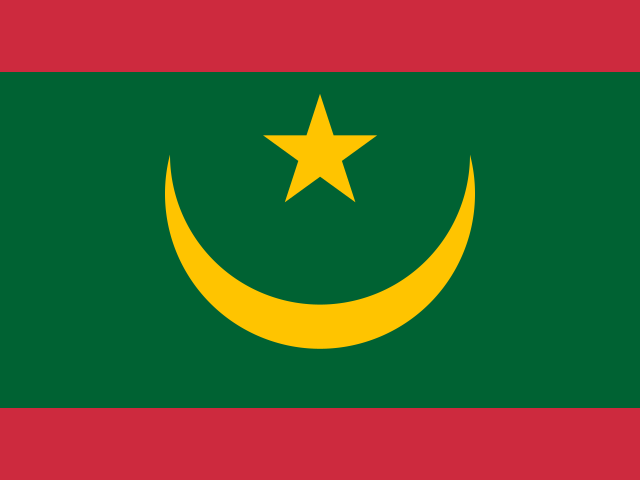
Mauritania
In 2019, Mauritania’s energy mix was dominated by oil products (65%) and biofuels and waste (32%). In 2020, 43% of the population had access to clean cooking which is the highest share in West Africa. In 2020, 47% of the population had access to electricity. For electricity access, the country targets universal access in urban areas and doubling of the current rate in rural areas by 2024, with country-wide universal access by 2030. For clean cooking, the target is 100% access to LPG in urban areas and 50% access to LPG in rural areas by 2030.
- Overview
- Energy mix
- Emissions
- Electricity
-
+ 5 pages

![Mauritania Flag]()
-
Qatar
Qatar is a major producer and exporter of natural gas, oil and oil products. Its domestic oil and gas productions entirely cover the country’s energy needs.
- Overview
- Energy mix
- Emissions
- Electricity
-
+ 5 pages

![Qatar Flag]()
-
Global EV Outlook 2026 Electric vehicle charging
Light-duty electric vehicle charger deployment Most electric car owners charge at home Globally, the number of private light-duty vehicle (LDV) charging points is estimated to have reached more than 43 million in 2025, supporting an electric LDV stock of around 76 million. About one-third of the private charging points worldwide are in the People’s Republic of China (hereafter, “China”), one-third in Europe, and one in six in the United States.Home charging – whether in a driveway, garage or other dedicated parking space – is currently the preferred way to charge an electric car for those with the ability to…

-
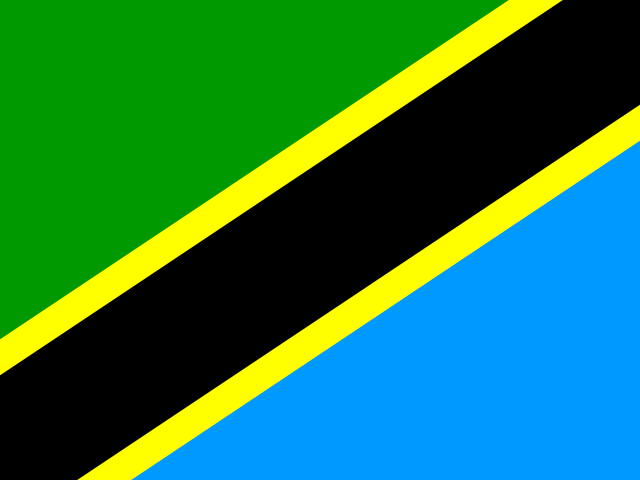
Tanzania
Electricity access in Tanzania increased from around 13% in 2008 to 32% in 2017. The government is supporting the private sector to develop its electricity market, enhancing the role of renewable energy in the energy mix and increasing rural electricity access.
- Overview
- Energy mix
- Emissions
- Electricity
-
+ 5 pages
![Tanzania Flag]()
-
Southeast Asia Energy Outlook 2026
The Southeast Asia Energy Outlook 2026 is the seventh edition of this World Energy Outlook Special Report, making Southeast Asia by far the most regularly updated regional outlook compiled by the International Energy Agency (IEA). This reflects the dynamism of the region, as well as the importance of the IEA’s partnership with the eleven countries that make up the Association of Southeast Asian Nations (ASEAN) – Brunei Darussalam, Cambodia, Indonesia, Lao People’s Democratic Republic (Lao PDR), Malaysia, Myanmar, the Philippines, Singapore, Thailand, Timor-Leste (joined ASEAN in 2025) and Viet Nam.As energy security concerns move ever higher on…

-
COP28 Tripling Renewable Capacity Pledge 2025: Update
Tracking countries’ ambitions COP28: Tracking the Energy Outcomes Nearly 200 countries made major collective pledges on energy at the COP28 climate summit in Dubai with the aim of keeping the Paris Agreement target of limiting global warming to 1.5 °C within reach. For the first time, governments set key goals to help meet this objective, including tripling global renewable electricity capacity by the end of this decade. In June 2024, the IEA published COP28 Tripling Renewable Capacity Pledge: Tracking countries’ ambitions and identifying policies to bridge the gap, which provided a global stocktake of renewable capacity plans to assess…

-
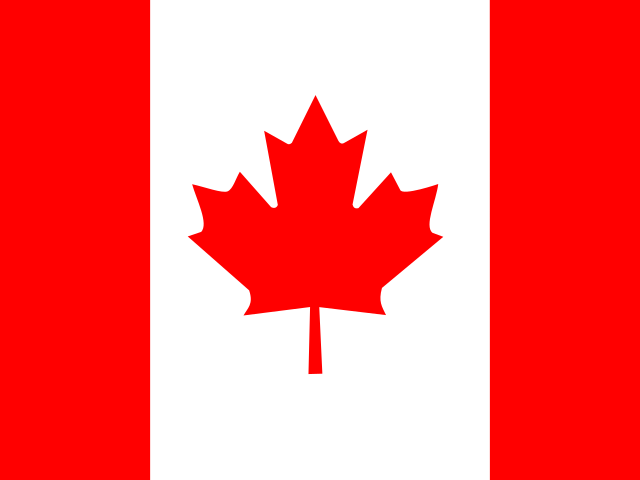
Canada
Canada has set an ambitious target to cut greenhouse gas emissions by 40-45% from 2005 levels by 2030 and to reach net zero emissions by 2050. Canada’s energy and economic profile presents both challenges and opportunities to achieving these targets given its profile as a major producer, consumer and exporter of energy. Energy production and use in Canada accounts for over 80% of the country’s GHG emissions, with oil and gas production alone accounting for around a quarter. Canada’s electricity system is already among the cleanest in the world, with heavy dominance of hydropower as well…
- Overview
- Energy mix
- Emissions
- Electricity
-
+ 5 pages

![Canada Flag]()
-
Best Practices and Insights to Expand Clean Energy Access and Adoption
This report was commissioned by the European Commission to serve as a technical repository of analysis and evidence-based practices in support of the Campaign on Sustainable Lifestyles, Fairness and Access to Clean Energy Technologies. The analysis presented draws on discussions and research shared during the Widening Participation in Clean Energy workshop held in Brussels, contributions presented at the official all-member meetings of the Campaign on Sustainable Lifestyles, and the IEA’s analytical work in areas such as people-centred clean energy transitions, affordability, energy efficiency and clean energy access.This work is organised into three chapters, each corresponding…

-
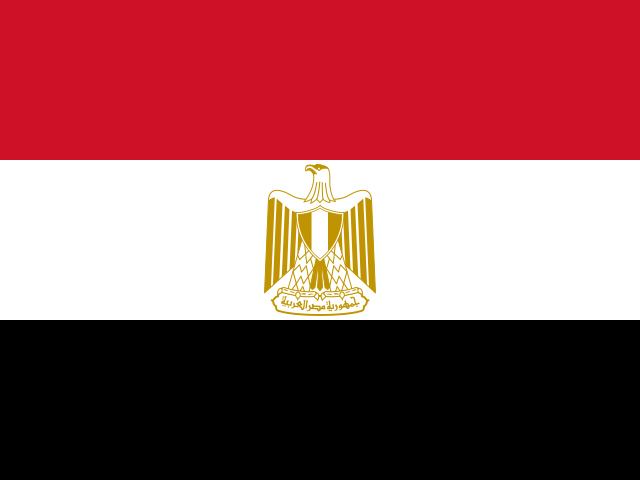
Egypt
Egypt has initiated a number of energy sector reforms, gradually reducing electricity subsidies and introducing feed-in tariffs to promote renewable energy production. The energy sector reforms recently initiated by the country have resulted in a significant increase in investments which have boosted electricity production over the last 5 years and ensured a stable supply across the country.
Egypt also has plans to increase the share of renewables in the electricity mix to 42% by 2035.- Overview
- Energy mix
- Emissions
- Electricity
-
+ 5 pages
![Egypt Flag]()
-
The next wave of LED lighting: Smarter, circular and more efficient
lighting commentary The first LED revolution reduced energy use worldwide – and a second wave of deployment is now taking shape As the world enters the Age of Electricity, lighting remains one of the most visible – and widespread – parts of our energy use.The IEA estimates that lighting in buildings and outdoor applications accounts for the majority of overall lighting electricity demand. In 2024, around 8% of global electricity demand – or about 2 200 terawatt hours (TWh) – was attributed to lighting in buildings and outdoor applications, excluding industry and agriculture. These figures reflect the latest available data and define the scope…