-
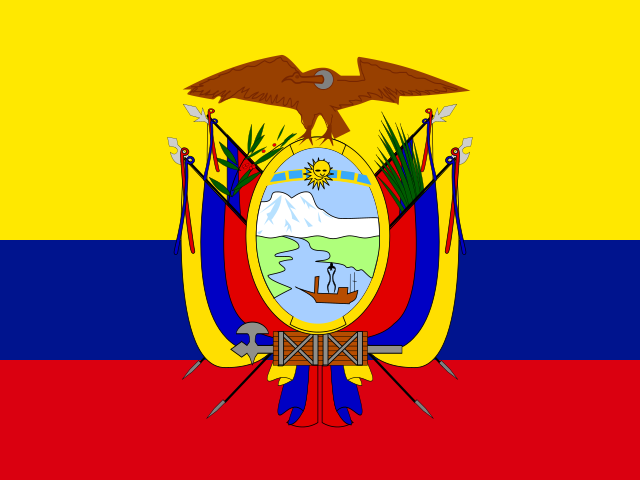
Ecuador
In Ecuador, The Energy Efficiency National Plan 2016-2035 presents an inter-sectoral plan for energy efficiency, policies in transport, industry, residence, production, generation and all energy consumption sectors. In 2013, a new feed-in tariff scheme for renewable energy projects also entered into force.
- Overview
- Energy mix
- Emissions
- Electricity
-
+ 5 pages

![Ecuador Flag]()
-
Colombia
Colombia launched the Energy Plan 2050 in 2016 , which aims to diversify the country’s energy resources and ensure a reliable energy supply by including wind power plants, solar PV and geothermal energy generation in the country's electric mix.
- Overview
- Energy mix
- Emissions
- Electricity
-
+ 5 pages
![Colombia Flag]()
-
Free Trade Agreement Chile-Uruguay
The Chile-Uruguay Free Trade Agreement entered into force in December 2018. The Agreement provides for the reduction or elimination of import tariffs and restrictions, notably for the following products: Agglomerated and reduced iron;Alumina, scrap metal;Ammonia, crude steel, aluminium;Nitrogen fertilizers;Solar PV modules, solar cells, solar wafers;Polysilicon;Battery packs, battery cells;Anodes and cathodes;Electrolysers, heat pumps, electric vehicles;Rules of origin delineated in the Agreement include provisions preventing goods only undergoing minimal transformations in one of the signatory countries or incorporating excessive values of materials of external origin to benefit from the tariff treatment.
-
Partial Economic Agreement Venezuela - Uruguay
The Partial Economic Agreement between Venezuela and Uruguay was put into force on 13 March 2001 to eliminate full or partial tariff liberalisations on the goods traded between the countries.
-
Decree 441/021 - Uruguay CO2 tax
In June 2021, a draft bill presented to parliament included a proposal for a carbon tax on gasoline, indicating an initial carbon rate of UYU 5,286 per tonne CO2. The draft bill intended to replace part of the existing fuel excise charges applied to gasoline through the Specific Internal Tax (IMESI), with a tax based on the carbon emissions. The bill became Law No. 19,996 (November 3, 2021), with article 326 containing provisions on the carbon tax. The carbon tax (Impuesto a las Emisiones de CO2) was implemented on January 1, 2022, following the Presidential Decree 441/021…
-
Uzbekistan
Despite being energy self-sufficient thanks to its gas sector, Uzbekistan's ageing infrastructure struggles to meet growing domestic demand. Losses, overuse and financing remain problematic. Wide-ranging reforms focused on improving and diversification the energy sector are being introduced and the government has adopted the Strategy of Actions 2017-2021, which prioritizes improving energy efficiency and increasing generating capacity and use of renewables. Uzbekistan is part of the EU4Energy Programme, an initiative focused on evidence-based policymaking for the energy sector.
- Overview
- Energy mix
- Emissions
- Electricity
-
+ 5 pages

![Uzbekistan Flag]()
-
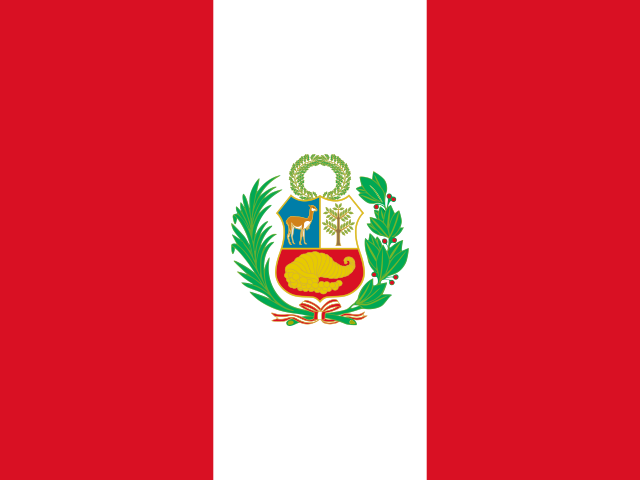
Peru
Peru’s government identified the development of electricity from renewable energy sources as a public necessity of national interest. The country established a National Renewable Energy Development Plan to be funded by the Annual Budget Law, external debt operations, direct investments and contributions from international institutions.
- Overview
- Energy mix
- Emissions
- Electricity
-
+ 5 pages
![Peru Flag]()
-
Free Trade Agreement - Mexico and Uruguay
The Free Trade Agreement (FTA) between Mexico and Uruguay entered into force as the Economic Complementation Agreement ACE No 60 on July 15 2004. It provides for the reduction or elimination of import duties for many energy products , including : - Agglomerated and reduced iron- Alumina- Scrap metal- Ammonia - Crude steel - Aluminium - Nitrogen fertilisers - Solar PV Modules and Solar Cells- Solar Wafers- Polysilicon- Battery packs and battery cells- Electrolysers - Heat pumps Rules of origin delineated in the Agreement state that goods may benefit from preferential tariff treatment if wholly obtained, produced or having undergone a significant production process on the territory of one of…
-
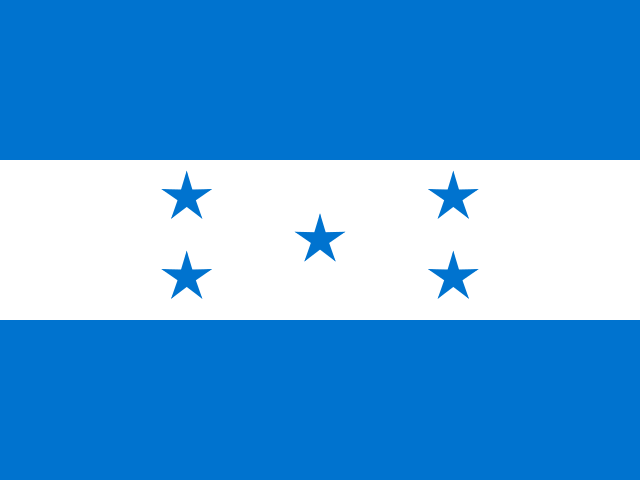
Honduras
In 2014, Honduras approved a new Law of Electrical Industry, which establishes technology-specific auctions for renewable energy. 75% of the population has access to electricity in the country and only 48% can rely on clean cooking facilities.
- Overview
- Energy mix
- Emissions
- Electricity
-
+ 5 pages
![Honduras Flag]()
-
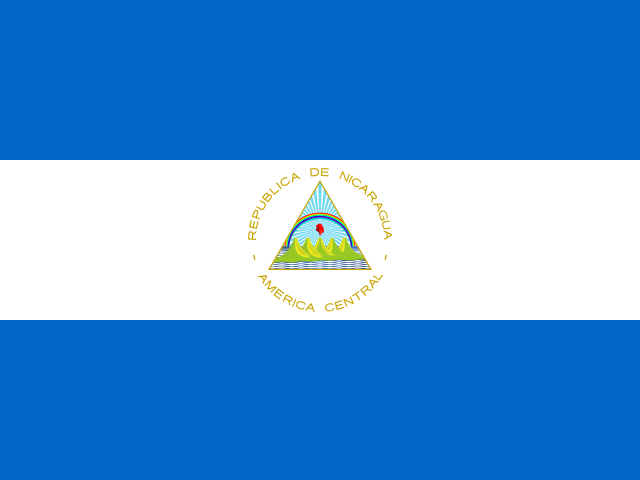
Nicaragua
The National Energy Policy of Nicaragua establishes a policy framework for the development and exploitation of renewable sources. The law sets the objective of prioritizing the use of renewable energy in the national energy mix and of stabilizing energy prices using renewables.
- Overview
- Energy mix
- Emissions
- Electricity
-
+ 5 pages
![Nicaragua Flag]()