-
South Sudan
South Sudan is one of Eastern Africa's major oil resource holders but exported more than 85% of its production in 2014. Only 1% of the population had access to electricity in the country in 2017.
- Overview
- Energy mix
- Emissions
- Electricity
-
+ 5 pages

![South Sudan Flag]()
-
Global Critical Minerals Outlook 2025 Overview of outlook for key minerals
…applications drives strong demand growth for these minerals. Meanwhile, expanding construction and the electrification of grids and industrial equipment are fuelling increased demand for copper. Growing demand for permanent magnets, particularly from EVs and wind power, boosts the need for magnet rare earths.Meeting the rising demand for critical minerals under both the STEPS and APS would require substantial investment for new mines and refineries. In the STEPS, around USD 500 billion in new capital investment is required for mining between now and 2040. In the APS, as mineral demand rises more rapidly, capital requirements are about 15% higher at…

-
Steel
Country and regional highlights
Near zero-emission projects advance fastest in Europe, with some progress for low-emissions facilities globally
CO2 emissions
The CO2 emission intensity of steel has been relatively stable in recent years, but needs to drop significantly to align with the NZE Scenario
Energy
A reduction in reliance on coal and an increase in electricity use are required to get on track with the NZE Scenario
Activity
Technology deployment
Innovation
Supporting infrastructure
Policy
-
Sudan
Most of Sudan’s electricity generation comes from hydropower, and more than half of the Eastern African region’s total oil-based capacity is located in the country. Sudan is also contemplating scaling up projects on solar power in the coming years.
- Overview
- Energy mix
- Emissions
- Electricity
-
+ 5 pages
![Sudan Flag]()
-
Malta
The National energy policy of Malta was launched in December 2012. It lists decisions and actions that have already been implemented as well as measures aiming to ensure the sustainability of Malta's energy sector.
- Overview
- Energy mix
- Emissions
- Electricity
-
+ 5 pages

![Malta Flag]()
-
Egypt
Egypt has initiated a number of energy sector reforms, gradually reducing electricity subsidies and introducing feed-in tariffs to promote renewable energy production. The energy sector reforms recently initiated by the country have resulted in a significant increase in investments which have boosted electricity production over the last 5 years and ensured a stable supply across the country.
Egypt also has plans to increase the share of renewables in the electricity mix to 42% by 2035.- Overview
- Energy mix
- Emissions
- Electricity
-
+ 5 pages
![Egypt Flag]()
-
El Salvador
The National Energy Policy to 2024 of El Salvador guides the national actions on energy, following main principles: ensure high quality level and continuous and affordable energy access, decrease fossil fuel dependency and mitigate environmental and social impacts of energy projects.
- Overview
- Energy mix
- Emissions
- Electricity
-
+ 5 pages

![El Salvador Flag]()
-
CO2 Capture and Utilisation
Country and regional highlights
CCUS and synthetic fuel policies are being strengthened in the United States and Europe
CO2 emissions
CO2 use can bring important climate benefits, but with caveats
Activity
CO2 use for synthetic fuels remains the leading new utilisation route
Technology installation and infrastructure
CCU supply chains can benefit from synergies with fossil-based synthetic fuel production and CCS
Innovation
Policy
Investment
Venture capital investment in CCU continues to grow
-
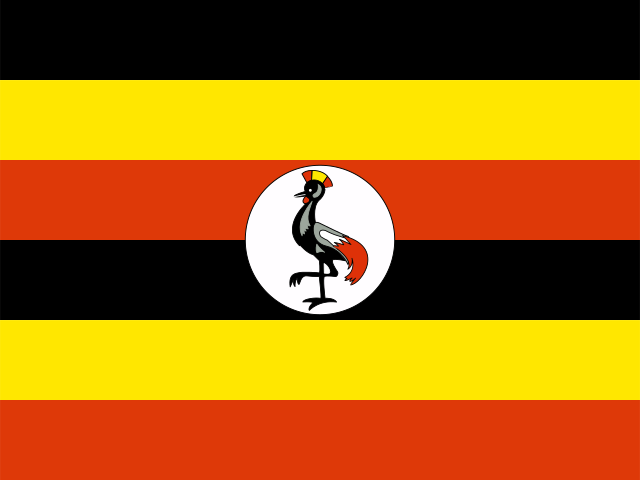
Uganda
In 2019, Uganda’s energy mix was dominated by fuel wood and charcoal followed by a small share of oil products. The country produces electricity mainly from hydroelectric plants. Between 2017 and 2019, electrification outpaced population growth in Uganda. However in 2020, less than 5% of the population had access to clean cooking.
The Electricity Connection Policy was introduced in 2018 with the ambition of increasing Uganda’s electricity access to 60 percent by 2027 through connection subsidies for consumers located close to the existing network. About 300,000 households and businesses have received free electricity connections, benefiting 1.5…- Overview
- Energy mix
- Emissions
- Electricity
-
+ 5 pages
![Uganda Flag]()
-
Portugal
…supporting decarbonisation through a wide variety of measures, such as, coal-fired generation was phased out in 2021. Portugal is further developing its large hydropower fleet, including additional capacity of pumped hydro storage. Portugal is an international leader for integration of wind generation, and auctions are driving rapid deployment of PV and battery storage. Portugal is pushing for better electricity interconnections with the rest of Europe. Portugal’s National Energy and Climate Plan sets 2030 targets for emissions reductions, energy efficiency and renewable energy that aim to put the country a path to achieving cost effective carbon neutrality by 2050.
- Overview
- Energy mix
- Emissions
- Electricity
-
+ 5 pages
![Portugal Flag]()