-
African Growth and Opportunity Act
The African Growth and Opportunity Act entered into force in October 2020. It currently provides involved sub-Saharan African country imports with duty-free access to the U.S. market, including for:Electric motors, turbines and generators; Mechanical equipment including pumps, appliances, and other advanced machinery; Electric accumulators, transformers, capacitors, batteries; Motor vehicles; Mineral ore, slag and ash; Mineral fuels, oils and other products; Metals and their articles e.g. iron and steel; Semiconductors devices and photovoltaic cells; The following conditions notably apply for products to benefit from preferential tariff treatment:- products are to be wholly obtained, produced or -products…
-
Coal Mid-Year Update 2025 Supply
…In Australia, production increased around 3% to 475 Mt, despite heavy rainfalls in the beginning of the year. The United States saw a 11% drop, mainly due to a halt in the stock building in 2024. Mongolia’s production jumped by 21% as Chinese import demand strengthened. South African production increased by 1%, as power outages impacted growth of domestic coal demand. Despite sluggish coal demand, 2025 is set to be another record year for coal production In 2025, we expect global coal production to rise slightly to 9.2 Bt, setting a new record. This increase is once again led…

-
Solid biofuels consumption estimation model
The African continent accounts for about 50% of the solid biofuels consumed worldwide, with 82% of its inhabitants – or around 900 million people -- relying on it for heating and cooking. In sub-Saharan Africa alone, roughly 95% of the population depends on biomass in the form of fuelwood, charcoal and residues. Accurate data to measure solid biofuel’s share of the energy mix is key to developing policies and assessing sustainability goals. However, the continent suffers from systematic lack of data, with the reported figures often not harmonised across countries and collected from outdated surveys.The International Energy Agency (IEA) has…
Free -
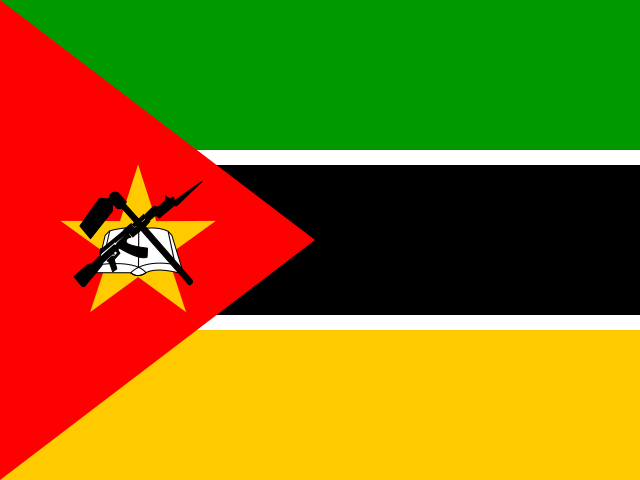
Mozambique
In Mozambique, around 40% of people have access to electricity, through the grid or mini/off-grid systems. The government has promoted solar PV solutions in rural areas, reporting that 700 schools and 800 other public buildings now have electricity from solar.
- Overview
- Energy mix
- Emissions
- Electricity
-
+ 5 pages

![Mozambique Flag]()
-
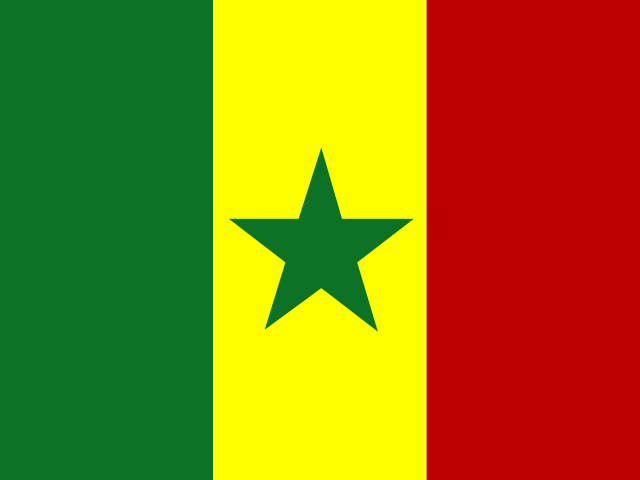
Senegal
In Senegal, 65% of the population has access to electricity. Strong policies and incentives have supported liquefied petroleum gas (LPG) use and less than 25% of the urban population now relies on solid biomass for cooking.
- Overview
- Energy mix
- Emissions
- Electricity
-
+ 5 pages
![Senegal Flag]()
-
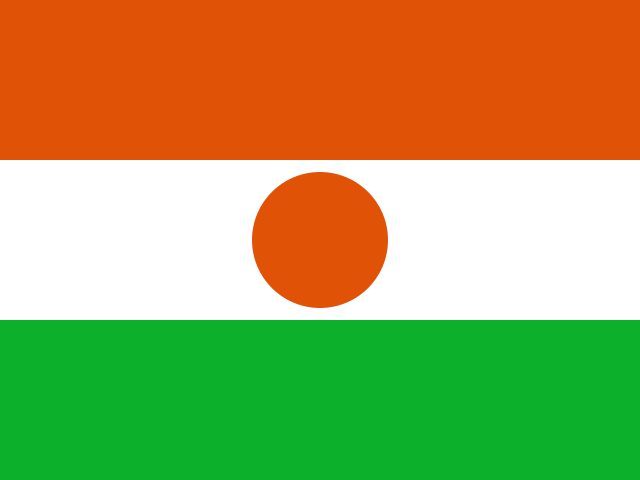
Niger
Access to electricity remains a challenge in Niger and the country is reliant on electricity imports for a significant share of its supply. The country is an oil resource centre and it is one of the ten-largest uranium resource-holders in the world.
- Overview
- Energy mix
- Emissions
- Electricity
-
+ 5 pages
![Niger Flag]()
-
Botswana
Coal production is set to increase in Botswana, but exports remain limited and mainly involve trade with neighbouring countries. Regarding electrification rates, the country has recently made good progress through a large push for mini-grid and off-grid solutions in rural areas.
- Overview
- Energy mix
- Emissions
- Electricity
-
+ 5 pages
![Botswana Flag]()
-
Estimated air conditioner penetration by income quintile in Europe & Central Asia, East Asia and Pacific and sub-Saharan Africa
Space Cooling Buildings Electricity
-
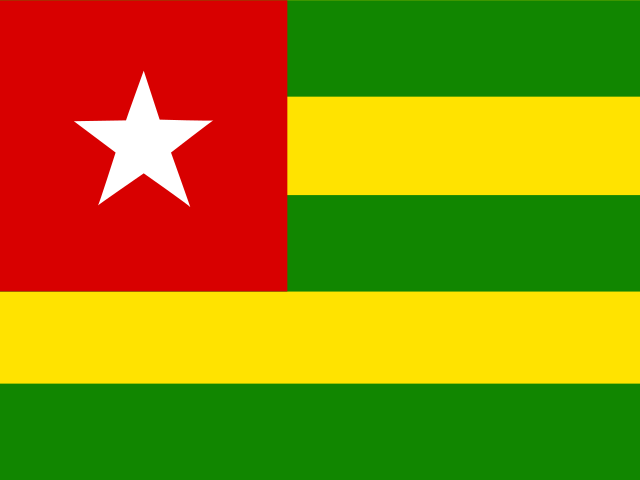
Togo
Less than half of the Togolese population has access to electricity. The country has a relatively diversified energy mix and more than 13% of its final energy consumption comes from renewable supplies of energy, mainly hydropower.
- Overview
- Energy mix
- Emissions
- Electricity
-
+ 5 pages
![Togo Flag]()
-
Revised/Updated NDC of South Africa
South Africa aims at capping its GHG emissions at a range of 398 to 510 MtCO2e by 2025 and at a range of 350 to 420 MtCO2e by 2030.