-
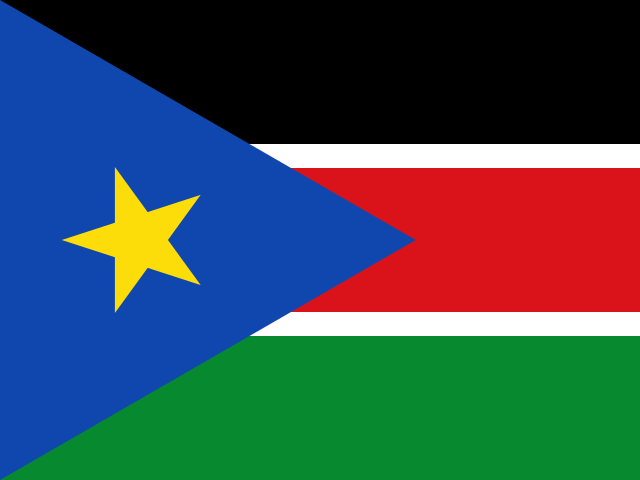
South Sudan
South Sudan is one of Eastern Africa's major oil resource holders but exported more than 85% of its production in 2014. Only 1% of the population had access to electricity in the country in 2017.
- Overview
- Energy mix
- Emissions
- Electricity
-
+ 5 pages

![South Sudan Flag]()
-
Armenia
Imports of oil and gas cover 77% of Armenia’s energy needs. Current energy policy is focused on developing indigenous energy sources, mainly renewable, and on replacing the country’s main nuclear reactor. Energy Efficiency policy has also become a bigger priority as energy security and reliability remain key focus areas. Armenia is part of the EU4Energy Programme, an initiative focused on evidence-based policymaking for the energy sector.
- Overview
- Energy mix
- Emissions
- Electricity
-
+ 5 pages

![Armenia Flag]()
-
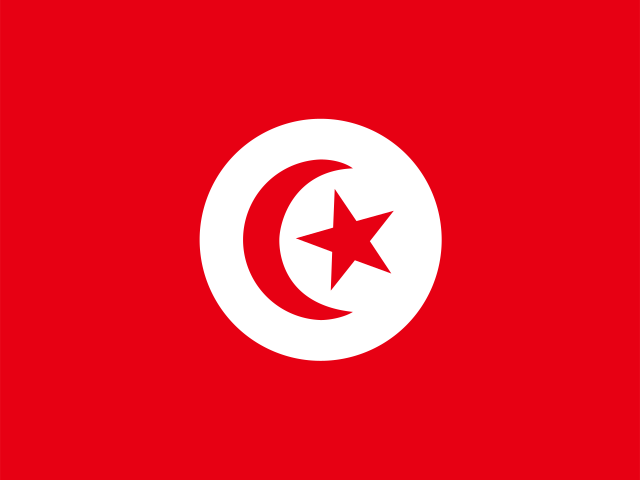
Tunisia
Tunisia mostly relies on gas imports to meet its primary energy needs: almost 97% of its electricity generation came from gas in 2016. However, energy policy puts the emphasis on renewable energy. Electricity generation from wind power strongly increased since 2014.
- Overview
- Energy mix
- Emissions
- Electricity
-
+ 5 pages
![Tunisia Flag]()
-
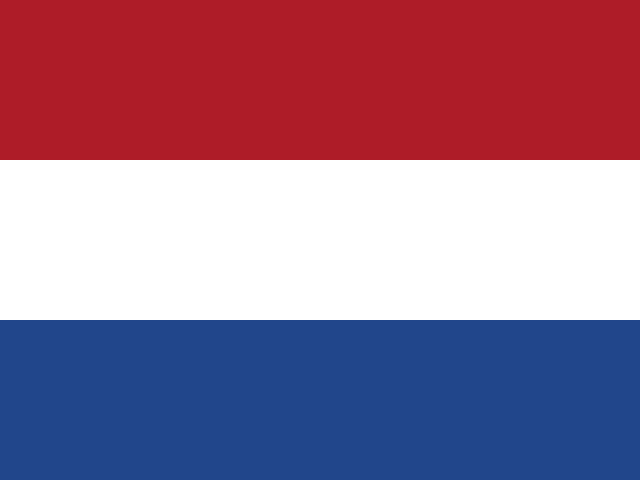
The Netherlands
The Netherlands aims to achieve net zero carbon emissions by 2050, and numerous measures have been introduced to support achievement of this goal. A competitive auctions process awards subsidies to renewables, hydrogen and carbon capture, based on avoided CO2 emissions. An offshore wind roadmap is driving rapid deployment and aims for 11.5 GW of capacity by 2030, while strong innovation programmes support deployment of key decarbonisation technologies. Electricity from solar has experienced an impressive growth, with the Netherlands ranking among the top countries in the world for installed PV capacity per capita. The Netherlands will need to closely monitor…
- Overview
- Energy mix
- Emissions
- Electricity
-
+ 5 pages

![The Netherlands Flag]()
-
Mozambique 2024
Energy Policy Review Government action plays a pivotal role in ensuring secure and sustainable energy transitions. Energy policy is critical not just for the energy sector but also for meeting environmental, economic and social goals. Governments need to respond to their country’s specific needs, adapt to regional contexts and help address global challenges. In this context, the International Energy Agency (IEA) conducts Energy Policy Reviews to support governments in developing more impactful energy and climate policies.This Energy Policy Review was prepared in partnership between the Government of Mozambique and the IEA. It draws on the IEA’s extensive…

-
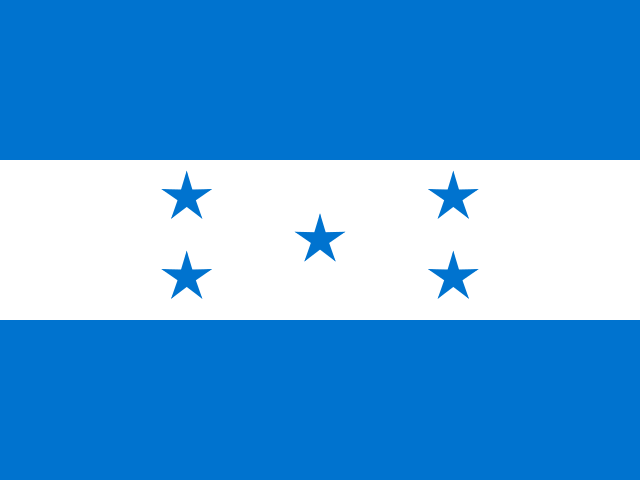
Honduras
In 2014, Honduras approved a new Law of Electrical Industry, which establishes technology-specific auctions for renewable energy. 75% of the population has access to electricity in the country and only 48% can rely on clean cooking facilities.
- Overview
- Energy mix
- Emissions
- Electricity
-
+ 5 pages

![Honduras Flag]()
-
Nepal
Almost the totality of the electricity generated in Nepal comes from hydropower. Most of the energy supply is from biofuels and waste as 21 million people still rely on traditional biomass for cooking. In 2000, 81% did not have access to electricity but with remarkable efforts from the government, only 6% of the population remain without access today.
- Overview
- Energy mix
- Emissions
- Electricity
-
+ 5 pages

![Nepal Flag]()
-
Libya
In 2013, the Libyan government launched the Renewable Energy Strategic 2013-2025 Plan, which aims to achieve 7% renewable energy contribution to the electric energy mix by 2020 and 10% by 2025. This will come from wind, Concentrated Solar Power, solar PV and solar heat.
- Overview
- Energy mix
- Emissions
- Electricity
-
+ 5 pages
![Libya Flag]()
-
Ramping up Heat Pumps in Moldova: A Roadmap
Buildings account for more than half of Moldova’s final energy consumption, with three-quarters of that used for space and water heating. At the same time, Moldova lacks domestic hydrocarbon resources and imports more than 80% of its primary energy. Heat pump technology offers Moldova an effective means of accelerating the transition in building heating.The recent expansion of Moldova’s solar and wind capacity also means that heat pumps can now play a greater role in cutting greenhouse gas emissions and lowering local air pollution. Finally, Moldovan’s 2024 referendum, endorsing the goal of European Union membership, underscores…

-
Sweden
Sweden is a global leader in decarbonisation and has targets to cut greenhouse gas emissions 59% by 2030 compared with 2005, and to have a net-zero carbon economy by 2045. Sweden was the first country to introduce carbon pricing and has the highest carbon price in the world, which has proven effective at driving decarbonisation. Most of Sweden’s electricity supply comes from hydro and nuclear, along with a growing contribution from wind. Heating is supplied mainly through bioenergy-based district heating and heat pumps.
Most of Sweden’s greenhouse gas emissions come from the transport sector, which remains…- Overview
- Energy mix
- Emissions
- Electricity
-
+ 5 pages
![Sweden Flag]()