-
France
…fleet, the second-largest after the United States. As an early leader in setting out an ambitious energy transition, France legislated a net zero emissions target for 2050 in its 2019 Energy and Climate Act and aims at reducing by 55% its greenhouse gas emissions by 2030. A national low-carbon strategy with 5-year carbon budgets and a multiannual plan for energy investments implement the long-term target.
Acknowledging the need to maintain electricity security in the longer term and a low-carbon footprint France invests in efficiency, six new nuclear power plants and renewable energy, notably offshore wind…- Overview
- Energy mix
- Emissions
- Electricity
-
+ 5 pages

![France Flag]()
-
Kyrgyzstan
Kyrgyzstan’s hydro-rich energy sector is characterised by aging infrastructure and significant losses, which are exacerbated by a combination of weather-related shocks and growing demand. Energy policy aims to improve energy security by developing indigenous energy sources and rehabilitating and expanding transmission and distribution networks. Developing sustainable energy and improving energy efficiency are also priorities, while slowly removing subsidies will allow for further investment and expansion of domestic resources. Kyrgyzstan is part of the EU4Energy Programme, which is focused on evidence-based policymaking in the energy sector.
- Overview
- Energy mix
- Emissions
- Electricity
-
+ 5 pages

![Kyrgyzstan Flag]()
-
Indonesia
…was responsible for 55% of the net decrease in the number of people without access across Southeast Asia since 2000. Those remaining without access in Indonesia are concentrated in a number of provinces, including East and Central Java, East Nusa Tenggara and Papua.
This underscores that there is no uniform solution to meeting Indonesia’s energy access targets, and that a great deal of pragmatism and flexibility will be needed to meet its goal of universal access by 2024. In recognition, the plans introduced by the government of Indonesia are multi-dimensional; they include the extension of the existing grid…- Overview
- Energy mix
- Emissions
- Electricity
-
+ 5 pages

![Indonesia Flag]()
-
Egypt
Egypt has initiated a number of energy sector reforms, gradually reducing electricity subsidies and introducing feed-in tariffs to promote renewable energy production. The energy sector reforms recently initiated by the country have resulted in a significant increase in investments which have boosted electricity production over the last 5 years and ensured a stable supply across the country.
Egypt also has plans to increase the share of renewables in the electricity mix to 42% by 2035.- Overview
- Energy mix
- Emissions
- Electricity
-
+ 5 pages

![Egypt Flag]()
-
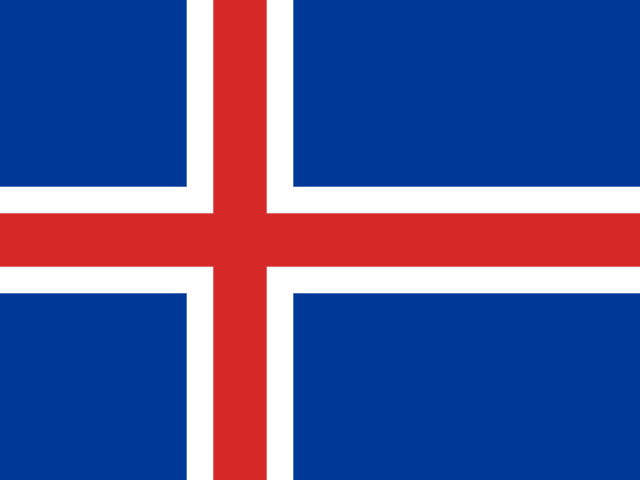
Iceland
In 2007, the Icelandic government released a Climate Change Strategy conceived as a framework for action and government involvement in climate change issues, and setting forth a long-term goal of reducing net greenhouse gas emissions by 50 to 75% of 1990 levels by 2050.
- Overview
- Energy mix
- Emissions
- Electricity
-
+ 5 pages
![Iceland Flag]()
-
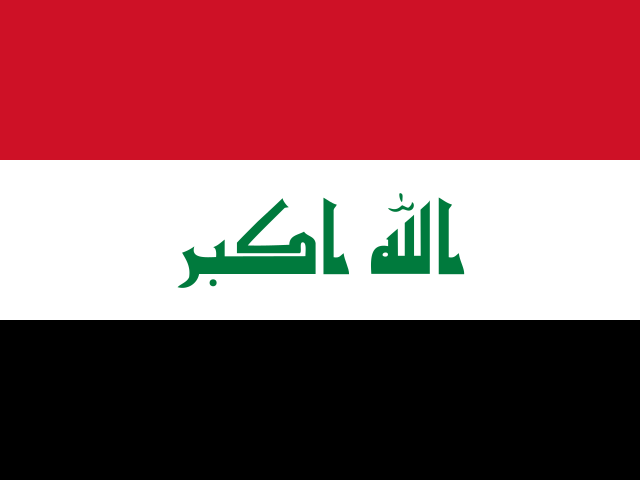
Iraq
Iraq holds abundant oil and gas resources and has strong solar PV potential. Its production to 2030 is set to be third largest contributor to global oil supply. By the same year, the government expects that renewable capacity will amount for 5% of the country’s total system capacity.
- Overview
- Energy mix
- Emissions
- Electricity
-
+ 5 pages

![Iraq Flag]()
-
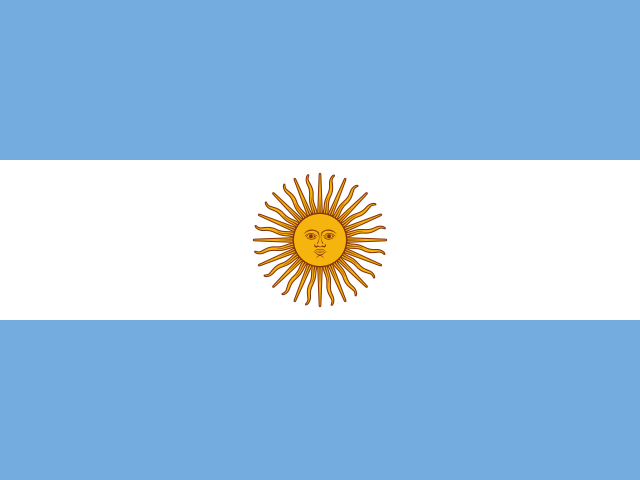
Argentina
Argentina’s total primary energy mix is dominated by natural gas (55%) and oil (33%), with bioenergy contributing 5%, and hydropower and nuclear another 3% each. Argentina has the 2nd largest reserve of shale gas and the 4th largest reserve of shale oil worldwide. In 2019, the country produced 500,000 bpd of oil, of which 89,000 bpd was exported, but the country remains a net importer of oil products. In terms of power generation, Argentina relies on natural gas (65%), hydropower (18%), followed by nuclear 8%, wind (7%) and solar (1%). A set of public policies have boosted…
- Overview
- Energy mix
- Emissions
- Electricity
-
+ 5 pages

![Argentina Flag]()
-
Bulgaria
Bulgaria adopted The Energy from Renewable Sources Act in 2011. The Act regulates the generation and consumption of energy from renewable sources with the aim of achieving the national targets in terms of renewable energy use in final gross energy consumption.
- Overview
- Energy mix
- Emissions
- Electricity
-
+ 5 pages
![Bulgaria Flag]()
-
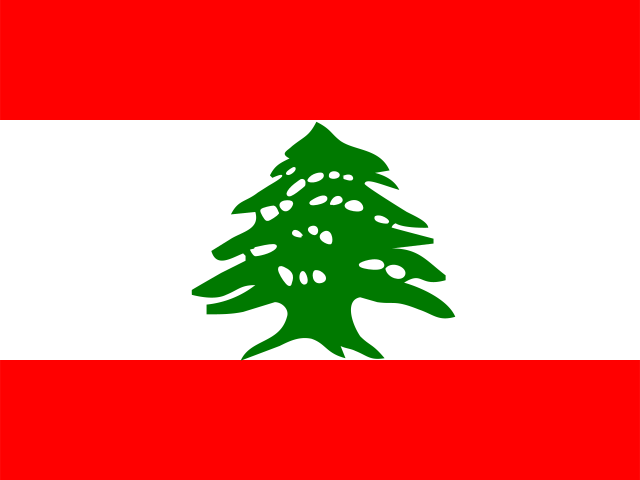
Lebanon
The government of Lebanon launched the "National Energy Efficiency and Renewable Energy Action" in 2010 a mechanism dedicated to the financing of green energy projects in the country. Private sector entities can apply for subsidised loans for any type of environmentally friendly projects.
- Overview
- Energy mix
- Emissions
- Electricity
-
+ 5 pages
![Lebanon Flag]()
-
Viet Nam
In recent years, Viet Nam has increased its non-hydro renewable capacity targets in its power development plan, from 9.4% to 21% of total installed capacity in 2030, and decreased the share of coal-fired capacity from 52% to 43%.
- Overview
- Energy mix
- Emissions
- Electricity
-
+ 5 pages
![Viet Nam Flag]()