-
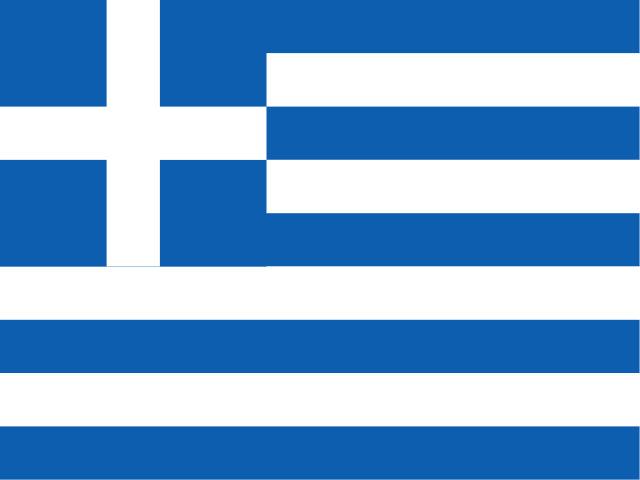
Greece
Greece is making progress on its energy transition, including implementing reforms to standardise and simplify licensing procedures for renewable projects and investigating options for offshore wind. Coal fired generation, once the main source of electricity, will be phased out by 2028 at the latest and EUR 5 billion has been committed to assist impacted communities. Auctions are driving strong deployment of solar PV, onshore wind and battery storage. There are also projects for interconnections and renewables to decarbonise electricity on Greek islands. However, more effort is needed boost electrification and improve efficiency in transport and buildings.
- Overview
- Energy mix
- Emissions
- Electricity
-
+ 5 pages

![Greece Flag]()
-
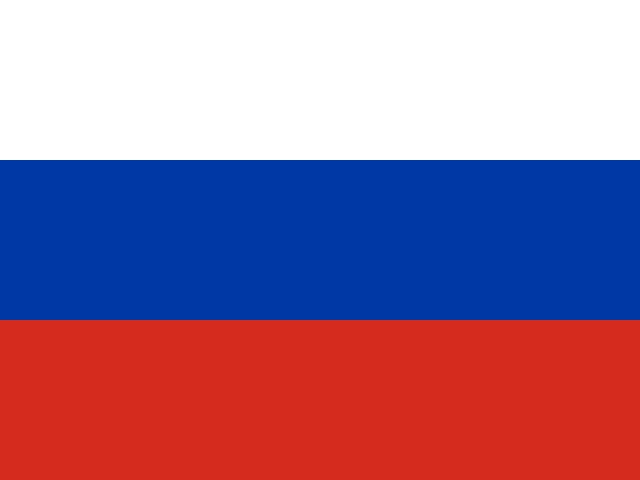
Russia
Russia is the world’s second-largest producer of natural gas, behind the United States, and has the world’s largest gas reserves. Russia is the world’s largest gas exporter. In 2021 the country produced 762 bcm of natural gas, and exported approximately 210 bcm via pipeline.
- Overview
- Energy mix
- Emissions
- Electricity
-
+ 5 pages

![Russia Flag]()
-
Albania
Albania’s Ministry of Energy recently launched an auction round for the construction of the country’s first large-scale solar plant. The country also has a National Strategy of Energy, which aims to develop an effective energy sector that guarantees security of energy supply and efficient use of energy.
- Overview
- Energy mix
- Emissions
- Electricity
-
+ 5 pages
![Albania Flag]()
-
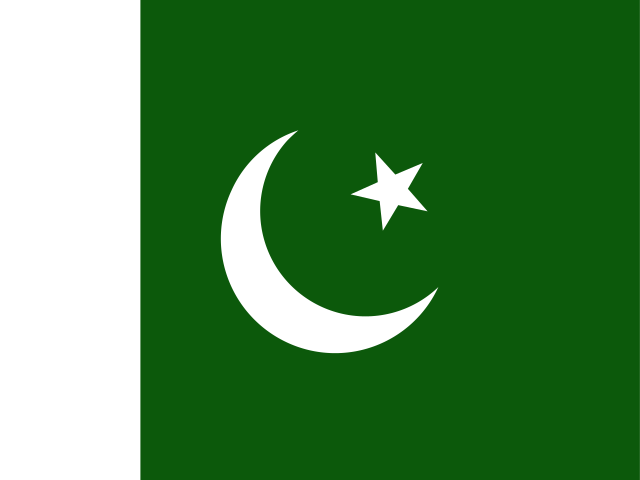
Pakistan
In Pakistan, most of the primary energy supply comes from oil and natural gas. Hydropower is the main renewable source of energy in the country but wind and solar PV’s shares are slowly growing. More than 40 million people remain without access to electricity and half the population lack access to clean cooking facilities.
- Overview
- Energy mix
- Emissions
- Electricity
-
+ 5 pages

![Pakistan Flag]()
-
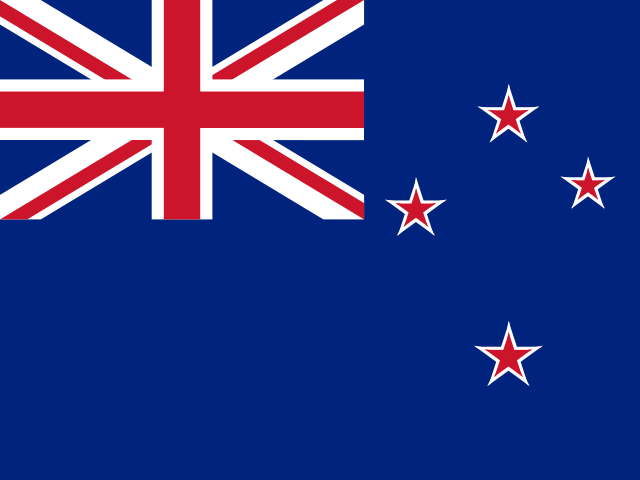
New Zealand
New Zealand has a diversified energy mix, with significant production of both hydropower and geothermal. As the country embarks on an ambitious energy transition, it has many natural advantages, including a strong renewable resource base. New Zealand already has a low-emissions electricity system, with over 80% of electricity coming from renewable sources. The key challenge will be to decarbonise other end-use sectors through clean power and support investments in new technologies to achieve deeper emissions cuts across all sectors. Notably, the transport sector accounts for the highest share of emissions and is almost entirely dependent on oil while…
- Overview
- Energy mix
- Emissions
- Electricity
-
+ 5 pages
![New Zealand Flag]()
-
Mozambique
In Mozambique, around 40% of people have access to electricity, through the grid or mini/off-grid systems. The government has promoted solar PV solutions in rural areas, reporting that 700 schools and 800 other public buildings now have electricity from solar.
- Overview
- Energy mix
- Emissions
- Electricity
-
+ 5 pages

![Mozambique Flag]()
-
Equatorial Guinea
Electrification rates are relatively high in Equatorial Guinea at 66%. The country began oil production in the late 1990s and began LNG exports in 2007.
- Overview
- Energy mix
- Emissions
- Electricity
-
+ 5 pages
![Equatorial Guinea Flag]()
-
Ecuador
In Ecuador, The Energy Efficiency National Plan 2016-2035 presents an inter-sectoral plan for energy efficiency, policies in transport, industry, residence, production, generation and all energy consumption sectors. In 2013, a new feed-in tariff scheme for renewable energy projects also entered into force.
- Overview
- Energy mix
- Emissions
- Electricity
-
+ 5 pages

![Ecuador Flag]()
-
Estonia
Estonia has achieved a notable reduction in greenhouse gas emissions thanks mainly to lowering its reliance on electricity generation from domestic oil shale, an energy rich sedimentary rock. However, oil shale remains the main energy source and imported fossil fuels still plan a major role, especially in transport. Estonia’s forests, which historically offset significant greenhouse gas emissions, have become a net emissions source. Estonia is aiming to accelerate its clean energy transition with a target to cover 100% of annual electricity demand with renewables by 2030 as part of a larger package to achieve climate neutrality by 2050. It…
- Overview
- Energy mix
- Emissions
- Electricity
-
+ 5 pages
![Estonia Flag]()
-
Denmark
Denmark has been an early leader in decarbonisation and in 2022 the government announced a net zero by 2045 target, aiming at 110% emissions reductions by 2050. Denmark’s technology leadership is important in the areas of offshore wind, biomethane and district heating. The government has expanded these categories to adopt a strategic focus on carbon capture and storage (CCUS) and hydrogen. The government has a robust energy and climate governance under the Danish Ministry of Climate, Energy and Utilities and ‘the year wheel’ of Climate Act of 2020 ensures annual policy actions and funding. Among IEA countries, Denmark has…
- Overview
- Energy mix
- Emissions
- Electricity
-
+ 5 pages
![Denmark Flag]()