-
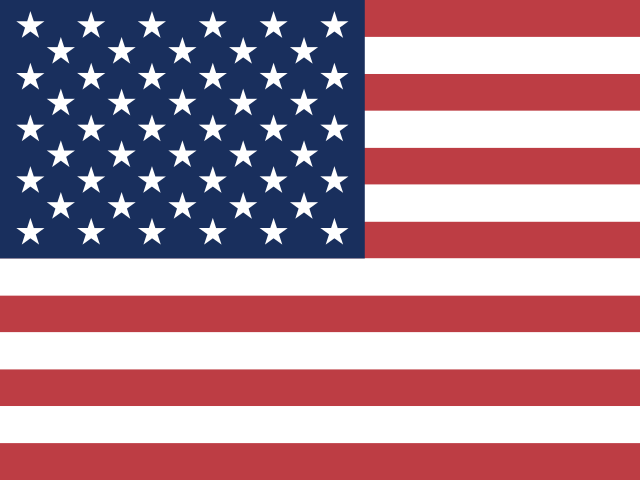
United States
The United States introduced major energy and climate policy reforms which put the country on a path towards a clean, secure and affordable energy system for a net zero economy. The reforms aim to strengthen infrastructure deployment and resilience, include a major focus on clean energy manufacturing, improving diverse supply chains and affordability, enhancing equity and the creation of high-quality clean energy jobs.
The US plays a significant role in supporting international energy security as the world’s largest producer of oil and exporter of liquified natural gas. A wave of clean energy investment means the US is today…- Overview
- Energy mix
- Emissions
- Electricity
-
+ 5 pages

![United States Flag]()
-
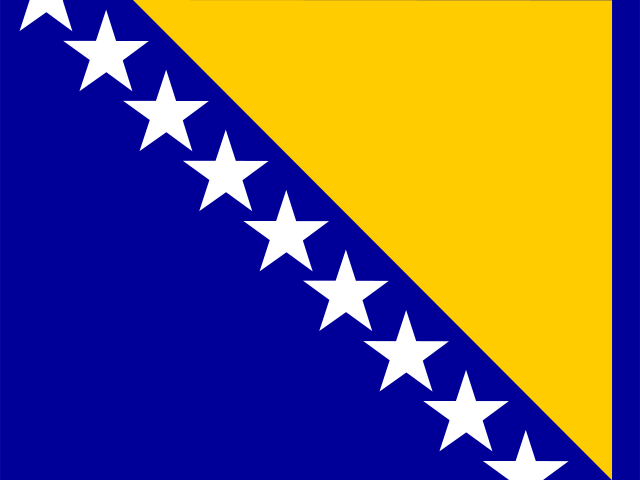
Bosnia and Herzegovina
Bosnia and Herzegovina adopted a National Environmental Action Plan, which provides action path to address the major environmental issues of the country. In the energy sector the target will be achieved by increasing energy efficiency and usage of renewables (hydro, solar, wind and geothermal energy).
- Overview
- Energy mix
- Emissions
- Electricity
-
+ 5 pages

![Bosnia and Herzegovina Flag]()
-
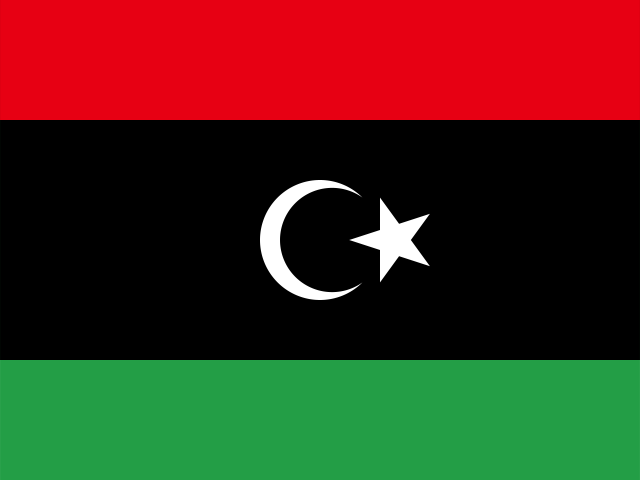
Libya
In 2013, the Libyan government launched the Renewable Energy Strategic 2013-2025 Plan, which aims to achieve 7% renewable energy contribution to the electric energy mix by 2020 and 10% by 2025. This will come from wind, Concentrated Solar Power, solar PV and solar heat.
- Overview
- Energy mix
- Emissions
- Electricity
-
+ 5 pages

![Libya Flag]()
-
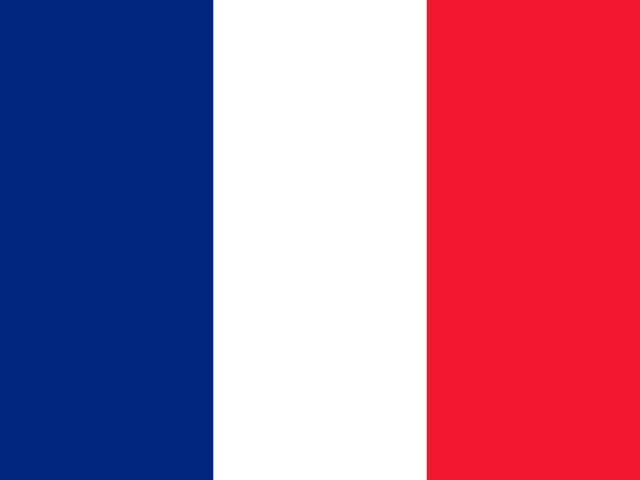
France
…fleet, the second-largest after the United States. As an early leader in setting out an ambitious energy transition, France legislated a net zero emissions target for 2050 in its 2019 Energy and Climate Act and aims at reducing by 55% its greenhouse gas emissions by 2030. A national low-carbon strategy with 5-year carbon budgets and a multiannual plan for energy investments implement the long-term target.
Acknowledging the need to maintain electricity security in the longer term and a low-carbon footprint France invests in efficiency, six new nuclear power plants and renewable energy, notably offshore wind…- Overview
- Energy mix
- Emissions
- Electricity
-
+ 5 pages
![France Flag]()
-
Rwanda
Rwanda included strong commitments to its intended nationally determined contribution (INDC) to the Paris Agreement. The country plans to increase its carbon sink capacity through sustainable forest management practices and to reduce emissions from the agricultural sector. In 2019, Rwanda’s energy mix was dominated by biomass and waste (74%) and oil products (20%), while natural gas, coal and hydro account for the rest of the energy supply. In 2020, less than 5% of the population had access to clean cooking and 50% had access to electricity. With annual access growth of more than 3 percentage points, Rwanda has shown…
- Overview
- Energy mix
- Emissions
- Electricity
-
+ 5 pages
![Rwanda Flag]()
-
Ethiopia
In Ethiopia, while electricity reaches less than half of the population, great progress has been made over the past two decades. The National Electrification Program, launched in 2017, outlines a plan to reach universal access by 2025, aiming to supply 35% of the population with off-grid solutions. Meanwhile, Ethiopia is diversifying its hydro-dominated installed generation mix in favour of solar, wind and geothermal to pursue a more climate-resilient power system and reach economic development objectives.
- Overview
- Energy mix
- Emissions
- Electricity
-
+ 5 pages
![Ethiopia Flag]()
-
Brunei Darussalam
In 2014, Brunei adopted a strategic plan to achieve 10% share of renewables in the national energy mix by 2035. The plan provides the outline to introduce renewable energy policy and regulatory frameworks and to scale-up market deployment of solar PV.
- Overview
- Energy mix
- Emissions
- Electricity
-
+ 5 pages

![Brunei Darussalam Flag]()
-
Sri Lanka
Sri Lanka’s primary energy supply mainly comes from oil and coal. Almost 40% of Sri Lanka’s electricity came from hydropower in 2017 but coal’s shares in power generation has been increasing since 2010. Sri Lanka is reaching universal access to electricity but clean cooking remain an issue with 15 million people still relying on biomass to cook.
- Overview
- Energy mix
- Emissions
- Electricity
-
+ 5 pages
![Sri Lanka Flag]()
-
Mozambique
In Mozambique, around 40% of people have access to electricity, through the grid or mini/off-grid systems. The government has promoted solar PV solutions in rural areas, reporting that 700 schools and 800 other public buildings now have electricity from solar.
- Overview
- Energy mix
- Emissions
- Electricity
-
+ 5 pages
![Mozambique Flag]()
-
Mauritius
The energy mix in Mauritius is dominated by coal and oil. Almost 10% of the country's final energy consumption is generated by modern renewable sources of energy – a share that has gradually decreased for the past 20 years.
- Overview
- Energy mix
- Emissions
- Electricity
-
+ 5 pages
![Mauritius Flag]()