-
Gabon
Almost two-thirds of the population of Gabon has access to electricity. The country can partially rely on its 150 thousand barrels per day hydrocarbon liquids production and has recently implemented a new petroleum legislation.
- Overview
- Energy mix
- Emissions
- Electricity
-
+ 5 pages

![Gabon Flag]()
-
Namibia
Most of Namibia’s electricity is generated by hydropower. The country is also one of the ten-largest uranium resource-holders in the world and provides 8.2% of global production. The country has stated its interest in introducing nuclear power into its domestic mix.
- Overview
- Energy mix
- Emissions
- Electricity
-
+ 5 pages
![Namibia Flag]()
-
Kazakhstan
Kazakhstan is a significant producer of coal, crude oil and natural gas, and a major energy exporter. While coal dominates the country’s energy mix, renewable sources of energy are a small but growing share of Kazakhstan’s electricity generation. Gas pipeline network expansion remains a priority, in order to expand access and reduce reliance on coal and LPG for household consumption. Kazakhstan is part of the EU4Energy Programme, an initiative focused on evidence-based policymaking for the energy sector.
- Overview
- Energy mix
- Emissions
- Electricity
-
+ 5 pages

![Kazakhstan Flag]()
-
Cuba
Cuba’s energy supply mainly comes from oil products, accounting for over 80% of power generation.
- Overview
- Energy mix
- Emissions
- Electricity
-
+ 5 pages

![Cuba Flag]()
-
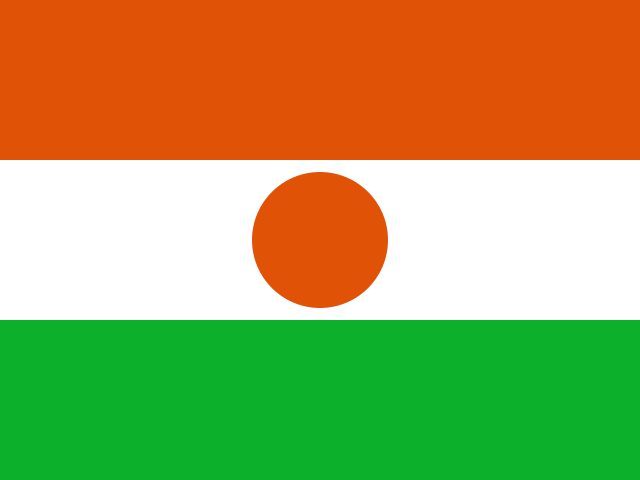
Niger
Access to electricity remains a challenge in Niger and the country is reliant on electricity imports for a significant share of its supply. The country is an oil resource centre and it is one of the ten-largest uranium resource-holders in the world.
- Overview
- Energy mix
- Emissions
- Electricity
-
+ 5 pages
![Niger Flag]()
-
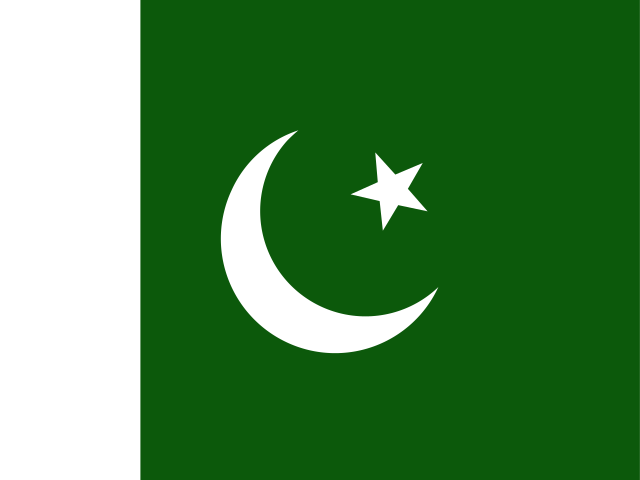
Pakistan
In Pakistan, most of the primary energy supply comes from oil and natural gas. Hydropower is the main renewable source of energy in the country but wind and solar PV’s shares are slowly growing. More than 40 million people remain without access to electricity and half the population lack access to clean cooking facilities.
- Overview
- Energy mix
- Emissions
- Electricity
-
+ 5 pages

![Pakistan Flag]()
-
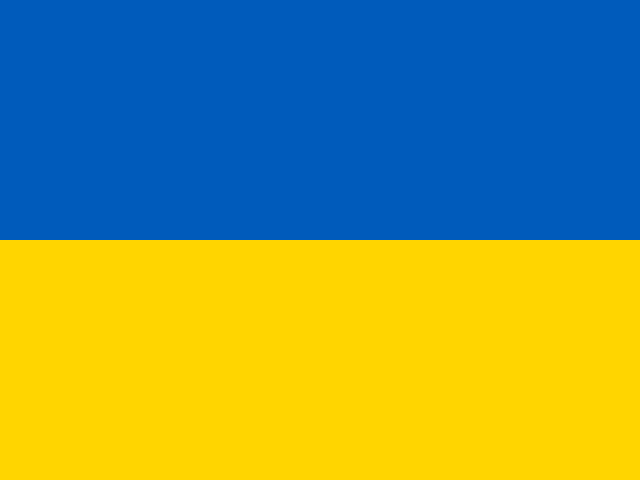
Ukraine
Ukraine is a key country for European and global energy security. Russia’s invasion of Ukraine has pushed it to fundamentally reshape its past dependence on energy imports from Russia.
As the invasion continues, Ukraine is focused on tracking large-scale energy supply disruptions and actively working to recover power and heating for civilians. It is also putting together an ambitious recovery and reconstruction plan, with a strong focus on energy security. In the medium-term, Ukraine’s energy strategy remains focused on European integration, while it aims to an energy system that is ready for a Net Zero future…- Overview
- Energy mix
- Emissions
- Electricity
-
+ 5 pages

![Ukraine Flag]()
-
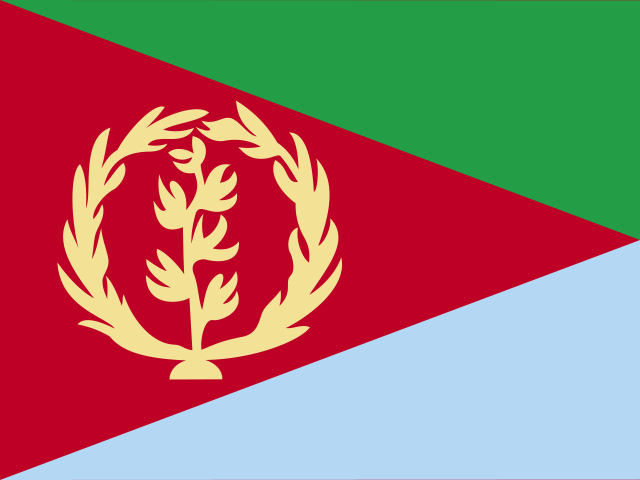
Eritrea
Less than half of the population of Eritrea has access to electricity. Most of the country's electricity generation comes from imported oil.
- Overview
- Energy mix
- Emissions
- Electricity
-
+ 5 pages
![Eritrea Flag]()
-
Qatar
Qatar is a major producer and exporter of natural gas, oil and oil products. Its domestic oil and gas productions entirely cover the country’s energy needs.
- Overview
- Energy mix
- Emissions
- Electricity
-
+ 5 pages

![Qatar Flag]()
-
South Sudan
South Sudan is one of Eastern Africa's major oil resource holders but exported more than 85% of its production in 2014. Only 1% of the population had access to electricity in the country in 2017.
- Overview
- Energy mix
- Emissions
- Electricity
-
+ 5 pages
![South Sudan Flag]()