-
Oman
Oman’s energy supply is entirely generated by nationally-produced natural gas and oil products and the country is a large exporter of oil and gas. The government has recently launched the “Residential PV Initiative" to foster the private use of solar PV.
- Overview
- Energy mix
- Emissions
- Electricity
-
+ 5 pages

![Oman Flag]()
-
Kazakhstan
Kazakhstan is a significant producer of coal, crude oil and natural gas, and a major energy exporter. While coal dominates the country’s energy mix, renewable sources of energy are a small but growing share of Kazakhstan’s electricity generation. Gas pipeline network expansion remains a priority, in order to expand access and reduce reliance on coal and LPG for household consumption. Kazakhstan is part of the EU4Energy Programme, an initiative focused on evidence-based policymaking for the energy sector.
- Overview
- Energy mix
- Emissions
- Electricity
-
+ 5 pages

![Kazakhstan Flag]()
-
France
…fleet, the second-largest after the United States. As an early leader in setting out an ambitious energy transition, France legislated a net zero emissions target for 2050 in its 2019 Energy and Climate Act and aims at reducing by 55% its greenhouse gas emissions by 2030. A national low-carbon strategy with 5-year carbon budgets and a multiannual plan for energy investments implement the long-term target.
Acknowledging the need to maintain electricity security in the longer term and a low-carbon footprint France invests in efficiency, six new nuclear power plants and renewable energy, notably offshore wind…- Overview
- Energy mix
- Emissions
- Electricity
-
+ 5 pages

![France Flag]()
-
Sri Lanka
Sri Lanka’s primary energy supply mainly comes from oil and coal. Almost 40% of Sri Lanka’s electricity came from hydropower in 2017 but coal’s shares in power generation has been increasing since 2010. Sri Lanka is reaching universal access to electricity but clean cooking remain an issue with 15 million people still relying on biomass to cook.
- Overview
- Energy mix
- Emissions
- Electricity
-
+ 5 pages

![Sri Lanka Flag]()
-
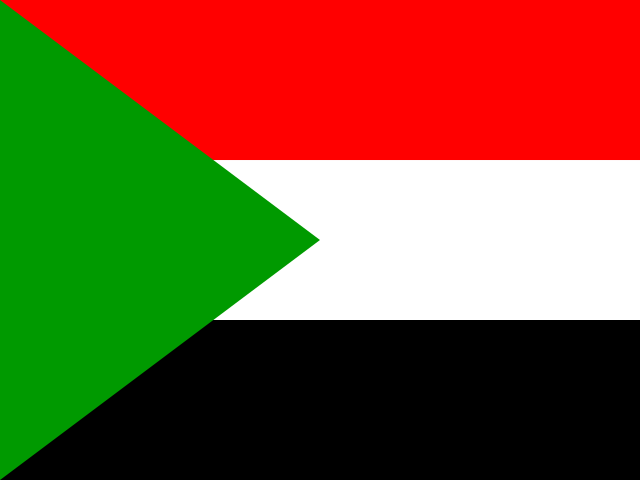
Sudan
Most of Sudan’s electricity generation comes from hydropower, and more than half of the Eastern African region’s total oil-based capacity is located in the country. Sudan is also contemplating scaling up projects on solar power in the coming years.
- Overview
- Energy mix
- Emissions
- Electricity
-
+ 5 pages

![Sudan Flag]()
-
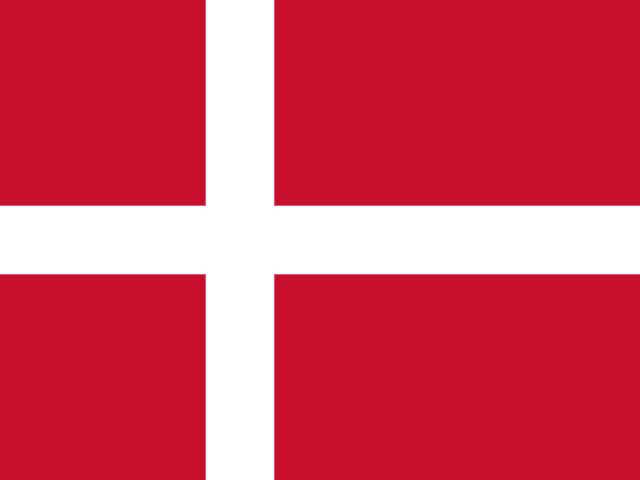
Denmark
…carbon capture and storage (CCUS) and hydrogen. The government has a robust energy and climate governance under the Danish Ministry of Climate, Energy and Utilities and ‘the year wheel’ of Climate Act of 2020 ensures annual policy actions and funding. Among IEA countries, Denmark has the highest share of wind electricity, which together with bioenergy and solar photovoltaic make up over 80% of the electricity mix. The district heating sector has practically phased out coal, contributing to lower reliance on fossil fuels in Denmark’s total energy supply than IEA average. Denmark is committed to end fossil fuel production by…
- Overview
- Energy mix
- Emissions
- Electricity
-
+ 5 pages
![Denmark Flag]()
-
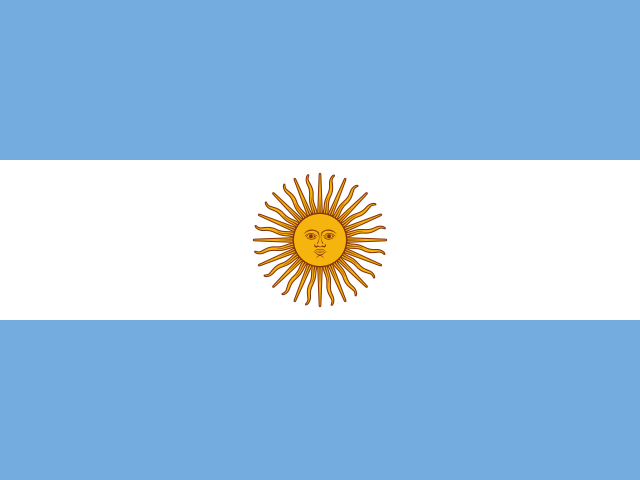
Argentina
…variable renewables, taking advantage of its rich solar and wind resources. The country has set a goal for non-hydro renewables to reach 20% of the power mix by 2025 and recent efforts have triggered increased deployment (2021: 12.5%).
Argentina is the world’s fourth largest lithium producer, a mineral critical for the manufacture of battery storage systems and, therefore, for the energy transition. Argentina is among the first Latin American countries to achieve universal electricity access, with a successful programme on rural electricity markets accelerating the connection of remote last miles users to the grid in recent years.- Overview
- Energy mix
- Emissions
- Electricity
-
+ 5 pages

![Argentina Flag]()
-
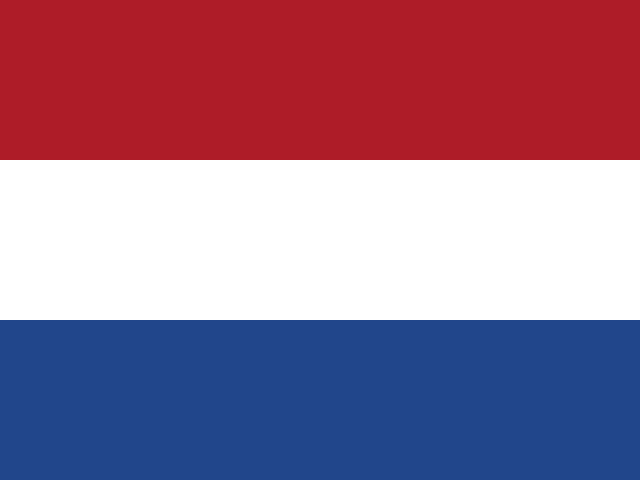
The Netherlands
The Netherlands aims to achieve net zero carbon emissions by 2050, and numerous measures have been introduced to support achievement of this goal. A competitive auctions process awards subsidies to renewables, hydrogen and carbon capture, based on avoided CO2 emissions. An offshore wind roadmap is driving rapid deployment and aims for 11.5 GW of capacity by 2030, while strong innovation programmes support deployment of key decarbonisation technologies. Electricity from solar has experienced an impressive growth, with the Netherlands ranking among the top countries in the world for installed PV capacity per capita. The Netherlands will need to closely monitor…
- Overview
- Energy mix
- Emissions
- Electricity
-
+ 5 pages
![The Netherlands Flag]()
-
Sweden
Sweden is a global leader in decarbonisation and has targets to cut greenhouse gas emissions 59% by 2030 compared with 2005, and to have a net-zero carbon economy by 2045. Sweden was the first country to introduce carbon pricing and has the highest carbon price in the world, which has proven effective at driving decarbonisation. Most of Sweden’s electricity supply comes from hydro and nuclear, along with a growing contribution from wind. Heating is supplied mainly through bioenergy-based district heating and heat pumps.
Most of Sweden’s greenhouse gas emissions come from the transport sector, which remains…- Overview
- Energy mix
- Emissions
- Electricity
-
+ 5 pages
![Sweden Flag]()
-
Zimbabwe
Zimbabwe holds large coal reserves and production is set to increase. The country has also significantly untapped its hydropower potential, even though the share of hydropower generation is gradually decreasing.
- Overview
- Energy mix
- Emissions
- Electricity
-
+ 5 pages
![Zimbabwe Flag]()