-
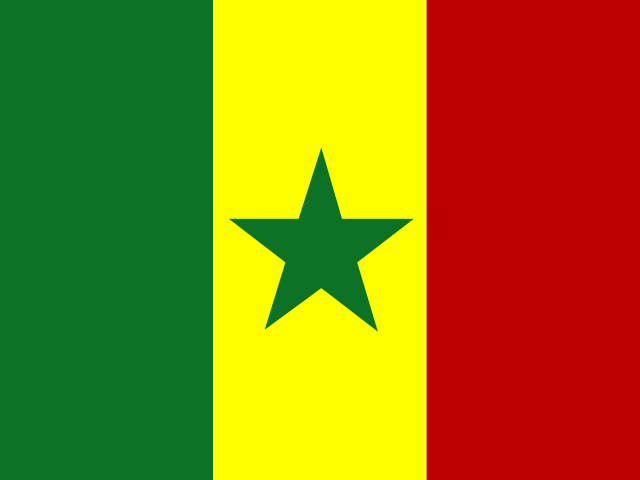
Senegal
In Senegal, 65% of the population has access to electricity. Strong policies and incentives have supported liquefied petroleum gas (LPG) use and less than 25% of the urban population now relies on solid biomass for cooking.
- Overview
- Energy mix
- Emissions
- Electricity
-
+ 5 pages

![Senegal Flag]()
-
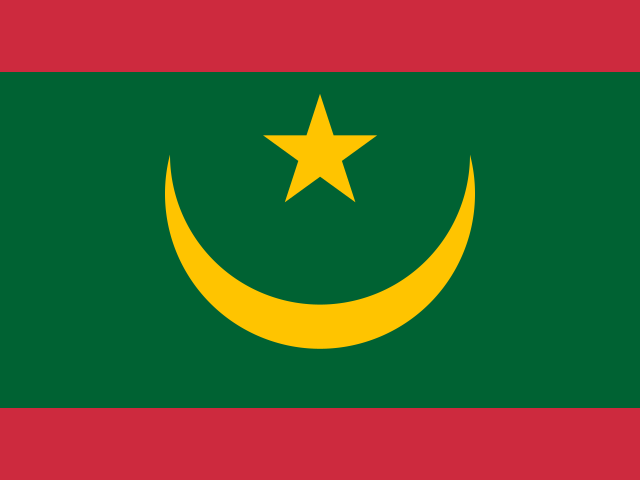
Mauritania
In 2019, Mauritania’s energy mix was dominated by oil products (65%) and biofuels and waste (32%). In 2020, 43% of the population had access to clean cooking which is the highest share in West Africa. In 2020, 47% of the population had access to electricity. For electricity access, the country targets universal access in urban areas and doubling of the current rate in rural areas by 2024, with country-wide universal access by 2030. For clean cooking, the target is 100% access to LPG in urban areas and 50% access to LPG in rural areas by 2030.
- Overview
- Energy mix
- Emissions
- Electricity
-
+ 5 pages
![Mauritania Flag]()
-
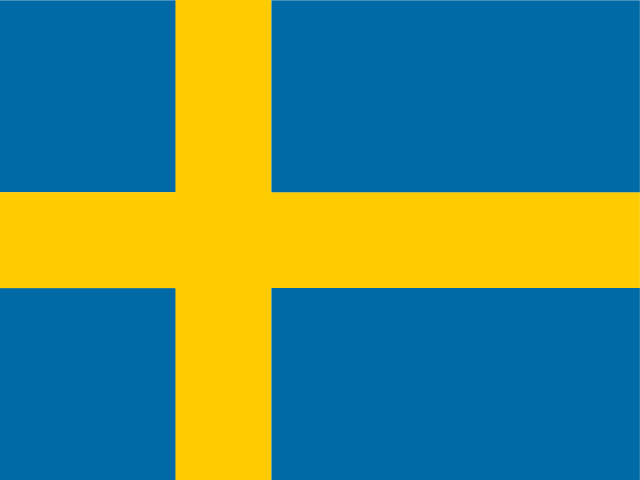
Sweden
Sweden is a global leader in decarbonisation and has targets to cut greenhouse gas emissions 59% by 2030 compared with 2005, and to have a net-zero carbon economy by 2045. Sweden was the first country to introduce carbon pricing and has the highest carbon price in the world, which has proven effective at driving decarbonisation. Most of Sweden’s electricity supply comes from hydro and nuclear, along with a growing contribution from wind. Heating is supplied mainly through bioenergy-based district heating and heat pumps.
Most of Sweden’s greenhouse gas emissions come from the transport sector, which remains…- Overview
- Energy mix
- Emissions
- Electricity
-
+ 5 pages

![Sweden Flag]()
-
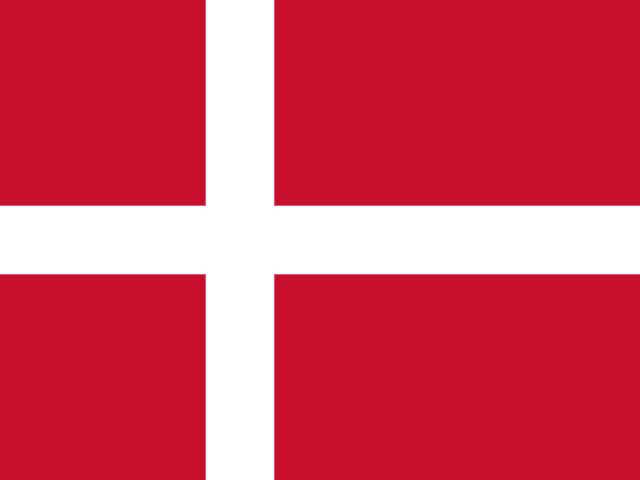
Denmark
Denmark has been an early leader in decarbonisation and in 2022 the government announced a net zero by 2045 target, aiming at 110% emissions reductions by 2050. Denmark’s technology leadership is important in the areas of offshore wind, biomethane and district heating. The government has expanded these categories to adopt a strategic focus on carbon capture and storage (CCUS) and hydrogen. The government has a robust energy and climate governance under the Danish Ministry of Climate, Energy and Utilities and ‘the year wheel’ of Climate Act of 2020 ensures annual policy actions and funding. Among IEA countries, Denmark has…
- Overview
- Energy mix
- Emissions
- Electricity
-
+ 5 pages
![Denmark Flag]()
-
France
France has a very low-carbon electricity mix owing to its large nuclear fleet, the second-largest after the United States. As an early leader in setting out an ambitious energy transition, France legislated a net zero emissions target for 2050 in its 2019 Energy and Climate Act and aims at reducing by 55% its greenhouse gas emissions by 2030. A national low-carbon strategy with 5-year carbon budgets and a multiannual plan for energy investments implement the long-term target.
Acknowledging the need to maintain electricity security in the longer term and a low-carbon footprint France invests…- Overview
- Energy mix
- Emissions
- Electricity
-
+ 5 pages
![France Flag]()
-
Mauritius
The energy mix in Mauritius is dominated by coal and oil. Almost 10% of the country's final energy consumption is generated by modern renewable sources of energy – a share that has gradually decreased for the past 20 years.
- Overview
- Energy mix
- Emissions
- Electricity
-
+ 5 pages
![Mauritius Flag]()
-
Madagascar
Around a quarter of the population of Madagascar has access to electricity, and only 1.5% has access to clean cooking facilities. In 2019, Madagascar’s energy mix was dominated by biofuels and wastes (85%), with oil products (11%), coal and hydro accounting for the rest of the total energy supply. In 2020, less than 5% of the population had access to clean cooking and 27% had access to electricity. The Government of Madagascar has set a target of reaching 70% electricity access rate by 2030.
- Overview
- Energy mix
- Emissions
- Electricity
-
+ 5 pages
![Madagascar Flag]()
-
Chad
In Chad, only 4% of the population has access to electricity. This goes hand-in-hand with low rates of access to basic services such as drinking water, basic sanitation and paved roads. Meanwhile, crude oil has become the country’s primary source of export earnings. In 2019, Chad’s energy mix was dominated by biofuels and wastes (85%) with oil products accounting for the rest of the total energy supply. In 2020, less than 5% of the population had access to clean cooking and 8% had access to electricity. The electrification rate is one of the lowest in Sub…
- Overview
- Energy mix
- Emissions
- Electricity
-
+ 5 pages
![Chad Flag]()
-
Czechia
Czechia has decoupled economic growth from energy consumption since 2009, yet the country’s energy and carbon intensity remain above the IEA average, which highlights the need to make energy efficiency the “first principle” of energy policy. Fossil fuels are still essential building blocks of the energy mix with coal as the single largest fuel for total energy supply and electricity generation. The country is committed to phase-out coal by 2033 and is putting in place a framework for an inclusive transition. Nuclear is the second largest electricity source and the government plans to build new nuclear units at…
- Overview
- Energy mix
- Emissions
- Electricity
-
+ 5 pages
![Czechia Flag]()
-
Romania
By 2020, the objective of Romania is to guarantee the efficient operation of its energy system under security conditions. Romania also plans to meet the obligations set by EU in terms of greenhouse gas emissions through its legislative package “Climate changes – renewable energies”.
- Overview
- Energy mix
- Emissions
- Electricity
-
+ 5 pages
![Romania Flag]()