Delivering electricity and clean cooking for all
Energy Access

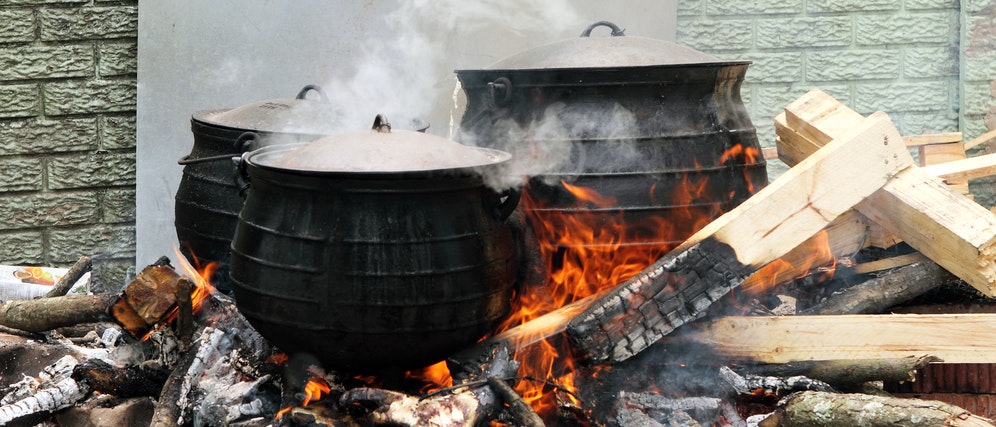
Today, 730 million people around the world live without access to electricity, while over 2 billion people continue to rely on harmful cooking fuels such as charcoal, wood, agricultural waste and animal dung – the use of which is a leading cause of premature death and serious health issues in many of the poorest regions of the world.
The IEA is at the forefront of efforts to track and address global gaps in energy access. For more than two decades, the Agency has collected and published data on this subject – with a focus on making energy access universal, secure and affordable. To support financial and policy momentum towards these goals, the IEA and its partners hosted the landmark 2024 Summit on Clean Cooking in Africa, which led to $2.2 billion in financial commitments from governments and industry for clean cooking. The second IEA Summit on Clean Cooking in Africa will take place in Nairobi, Kenya, in early 2027.
Access to electricity
New scenario shows pathway to universal electricity access within a decade
That said, replicating the fastest electrification progress achieved, universal access to electricity could be reached within just a decade. The IEA’s ACCESS Scenario sees an average of 80 million people gain access to electricity each year to 2035. This hinges on the rapid deployment of grids, mini-grids and stand-alone systems – especially in sub-Saharan Africa, where 80% of people without access to electricity live today.
Population without access to electricity in sub-Saharan Africa by scenario, 2010-2050
OpenInsufficient capital remains one of the biggest barriers to expanding electricity access for the roughly 600 million people in Africa who currently live without it
Annual average investment need in ACCESS scenario, sub-Saharan Africa, 2019-2035
OpenClean cooking in Africa
Roadmap shows how Africa could reach full access to clean cooking by 2040
But African countries can close one of the continent’s most harmful energy and development gaps in just 15 years if they replicate the progress seen in other developing economies, according to recent IEA analysis, which shows how universal access to clean cooking could be achieved across sub-Saharan Africa by 2040.
Population without access to clean cooking in sub-Saharan Africa by scenario, 2010-2050
OpenSummit on Clean Cooking in Africa: Towards a turning point on clean cooking
More than 1 billion people who currently lack access to clean cooking are in sub-Saharan Africa. Co-chaired by the leaders of the governments of Tanzania and Norway, and the African Development Bank and the IEA, the Summit on Clean Cooking in Africa, held in May 2024, aimed to address this major inequity and deliver a turning point on this crucial issue.
The Summit – which drew delegates from close to 60 countries, as well as companies and development institutions – set out concrete ways in which these groups can work together to solve the clean cooking challenge this decade. It also mobilised $2.2 billion in financial pledges from governments and the private sector, a record sum dedicated to clean cooking access at a single gathering.
Nearly $740 million of those commitments has already been disbursed, IEA analysis published in July 2026 shows. In parallel, all 12 African governments that took part in the Summit have enacted or implemented new clean cooking policies, and almost 90% of people in Africa without access to clean cooking now live in countries that strengthened their policy frameworks since 2024.
"This Summit has delivered an emphatic commitment to an issue that has been ignored by too many people, for too long. We still have a long way to go, but the outcome of this Summit, $2.2 billion committed, can help support fundamental rights such as health, gender equality and education while also reducing emissions and restoring forests."
Additional information and outputs
- Update to Tracking Disbursements from IEA Summit on Clean Cooking for Africa Pledges
- Watch key sessions from the Summit
- Landmark summit mobilises $2.2 billion to make 2024 a turning point for clean cooking access in Africa
- Summit Outcome Document and Action Plan
- The Clean Cooking Declaration
- Chairs' Summary

Next steps in clean cooking
At its 2026 Ministerial Meeting, the IEA announced that its Member governments have approved hosting the Clean Cooking Alliance (CCA) as a multilateral initiative. The IEA and CCA will partner with governments and industry to tackle one of the world’s most pressing development challenges through strengthened in-country policy support, enhanced coordination with industry and the mobilisation of additional investment.
The announcement comes as the IEA prepares to host its second major international Summit on Clean Cooking in Africa, which will take place in Nairobi in early 2027, co-chaired by President William Ruto of Kenya, Prime Minister Jonas Gahr Støre of Norway, United States Secretary of Energy Chris Wright and IEA Executive Director Fatih Birol.
Energy affordability
Electrification, renewables and efficiency are key to energy affordability around the world
Deploying energy technologies that support electrification, renewables and efficiency can improve the affordability of energy and relieve pressures on the cost of living more broadly. IEA data shows that scaling up and deploying such technologies requires additional investment initially – but it also reduces the global energy system's operating costs by more than half over the next decade, compared with a trajectory based on today’s policy settings. This results in a more affordable energy system for consumers.
Energy delivery costs by scenario, 2023 and 2035
OpenProgrammes and partnerships
Promoting sustainable and inclusive economic growth through energy data management and long-term planning in sub-Saharan Africa.
Promoting sustainable and inclusive economic growth through energy data management and long-term planning in sub-Saharan Africa.
“An Affordable and Sustainable Energy System for Sub-Saharan Africa” (Energy Sub-Saharan Africa) is a five-year programme (2019-2024) funded by the European Union. It supports work with Benin, the Democratic Republic of the Congo, Ethiopia, Ghana, Kenya, Nigeria, Rwanda, Senegal, Uganda and Zambia, with the aim of promoting sustainable and inclusive economic growth through the transition towards a low-carbon and climate-resilient energy sector, while delivering universal and affordable energy access to all.
Supporting African governments as they develop improved programmes and policies to accelerate electricity access.
Supporting African governments as they develop improved programmes and policies to accelerate electricity access.
The project by the IEA and Power Africa draws on the IEA’s expertise to support governments with data-driven insights as they work to expand electricity access.
Enhancing geospatial analysis to show pathways to universal electricity access.
Enhancing geospatial analysis to show pathways to universal electricity access.
This open-source GIS tool, developed in collaboration with the MIT Energy Initiative, was designed to estimate and forecast electricity demand at the building-level in developing economies. The tool leverages a machine learning model trained on geo-referenced data of electricity consumption sourced from utility meters in three pilot countries – Ghana, Senegal and Uganda. It can then predict electricity demand for buildings that lack meter data or have yet to be electrified with high resolution and high accuracy. The tool can be applied to satellite images of entire countries, and produce significantly improved estimates for planners, utilities, and off-grid solar companies to identify target customers and communities.