-
Northwest European Hydrogen Monitor 2025
Northwest Europe is at the forefront of low-emissions hydrogen development. This region accounts for around 40% of Europe’s total hydrogen demand, and it has vast and untapped renewable energy and carbon storage potential in the North Sea. It also has a well-developed, interconnected gas network that could be partially repurposed to facilitate the transmission and distribution of low-emissions hydrogen from production sites to demand centres.The development of the low-emissions hydrogen market in Northwest Europe could gradually scale up in the short- to medium-term. Northwest European countries now have ambition to develop up to…

-
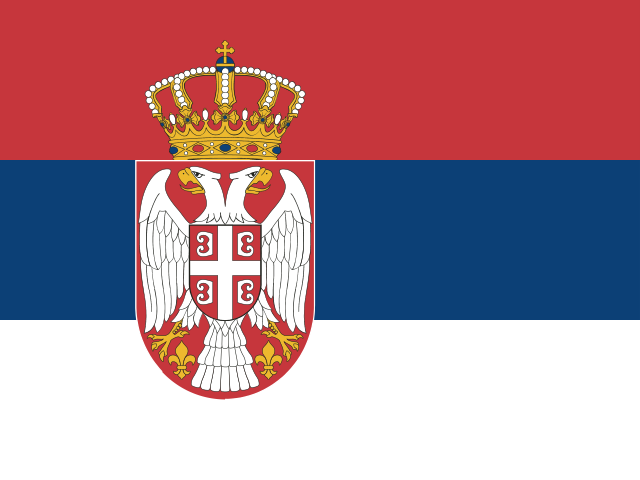
Serbia
In Serbia, the National Renewable Energy Action Plan set targets of renewable energy sources use until 2020, as well as the pathway to achieve them. Among other things, it enhances investments towards the development of renewables.
Data for Serbia includes Montenegro until 2004.- Overview
- Energy mix
- Emissions
- Electricity
-
+ 5 pages

![Serbia Flag]()
-
Advancing Methane Emissions Reductions by National Oil Companies
National oil companies (NOCs) are responsible for around half of all global oil and gas production today and their actions strongly influence methane abatement prospects. More than 30 NOCs have joined the Oil and Gas Decarbonization Charter (OGDC) and are engaging in initiatives to tackle methane emissions and flaring. There is a major opportunity for NOCs looking to implement best practices in methane management to learn from the experience of peers in order to deploy strategies that are adapted and tailored to their circumstances. Best practices include adopting measures to limit flaring and venting, implementing leak detection and repair programmes…

-
Montenegro
The Energy Development Strategy of Montenegro sets out objectives and defines mechanisms for the transition from the current energy system to a safe, competitive and environmentally acceptable energy paradigm by 2025. It also provides guidelines for the development of the energy sector with the aim of attracting investors.
Data for Montenegro is included under Serbia until 2004.- Overview
- Energy mix
- Emissions
- Electricity
-
+ 5 pages
![Montenegro Flag]()
-
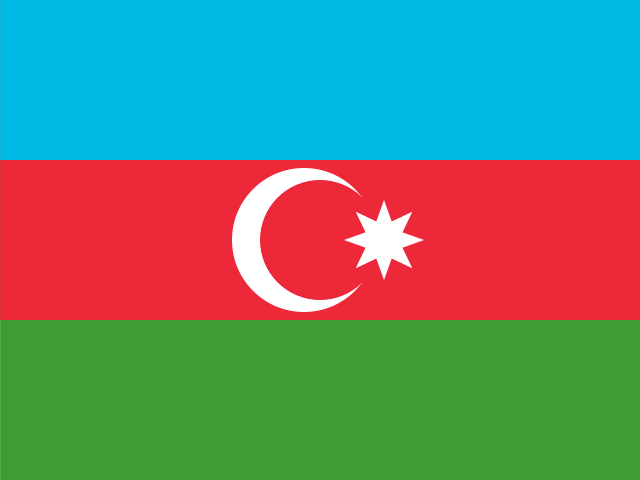
Azerbaijan
Azerbaijan has one of the highest energy self-sufficiency ratios in the world as a major crude oil and natural gas producer. While the renewable sector has not seen as much attention, the government is now looking to stimulate investment and accelerate deployment, allowing for diversification of domestic energy consumption. In addition, the government is working on a new energy strategy that will set the stage for further policy shifts. Azerbaijan is part of the EU4Energy Programme, an initiative focused on evidence-based policymaking for the energy sector.
- Overview
- Energy mix
- Emissions
- Electricity
-
+ 5 pages

![Azerbaijan Flag]()
-
Delivering on the EU’s electrification ambitions
EU paper The EU has ambitious goals for electrification Electrification is a key pillar of the EU’s energy security, industrial competitiveness, and climate strategy. Today, imported fuels account for around 60% of the EU’s total energy demand and cost the bloc EUR 380 billion in 2024. The risks associated with the EU’s reliance on fuel imports have been highlighted by recent market disruptions linked to the near-closure of the Strait of Hormuz amid the conflict in the Middle East, bringing renewed attention to the EU’s target of increasing electrification from 24% today to 32% of…
-
Global Energy and Climate Model Accelerating Clean Cooking and Electricity Services Scenario (ACCESS)
Even as global energy demand continues to rise, billions of people in around 100 countries remain without access to basic modern energy services. Today nearly 2 billion people lack access to clean cooking and 730 million people lack access to electricity. Millions of households, businesses and public institutions such as clinics and schools operate without reliable modern energy. This limits productivity and hinders socioeconomic development. It also perpetuates the use of traditional biomass, with damaging consequences for health and the environment.The Accelerating Clean Cooking and Electricity Services Scenario (ACCESS) charts a path to achieve universal access to clean cooking and electricity based…

-
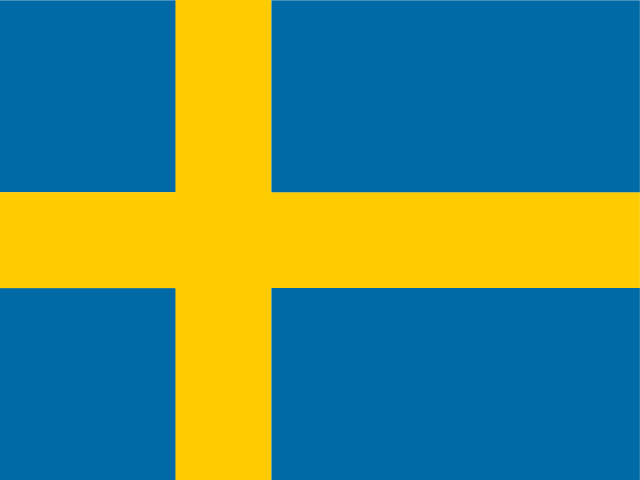
Sweden
Sweden is a global leader in decarbonisation and has targets to cut greenhouse gas emissions 59% by 2030 compared with 2005, and to have a net-zero carbon economy by 2045. Sweden was the first country to introduce carbon pricing and has the highest carbon price in the world, which has proven effective at driving decarbonisation. Most of Sweden’s electricity supply comes from hydro and nuclear, along with a growing contribution from wind. Heating is supplied mainly through bioenergy-based district heating and heat pumps.
Most of Sweden’s greenhouse gas emissions come from the transport sector, which remains…- Overview
- Energy mix
- Emissions
- Electricity
-
+ 5 pages
![Sweden Flag]()
-
The State of Energy Innovation 2026
The second edition of The State of Energy Innovation turns the spotlight on the technologies, policies and funders at the forefront of energy technology development. It provides a comprehensive assessment of recent progress and emerging challenges in energy technology innovation, drawing on over 150 innovation highlights from 2025 and a survey of practitioners across more than 40 countries. It analyses trends in public and corporate R&D spending, venture capital flows, patenting and policy, as well as providing an update on progress towards the 18 IEA Races to First in energy innovation. This data-driven approach informs policy makers, industry…

-
Global Critical Minerals Outlook 2025 Broader view on energy-related strategic minerals: What risks to anticipate?
Many energy-related minerals are used across multiple sectors, including digital technologies, aerospace and high-performance materials While critical minerals are often associated with electrification, renewables and battery storage, their significance extends well beyond energy, underpinning a broad array of industrial and technological applications. From AI and robotics to high-performance materials and aerospace, these minerals’ contribution to industrial and technological development is increasing, with broad economic implications. The range of strategic materials with significant implications for the energy sector should not be underestimated. Superalloys – which require a diverse array of input metals – illustrate this: approximately two-thirds of global…