-
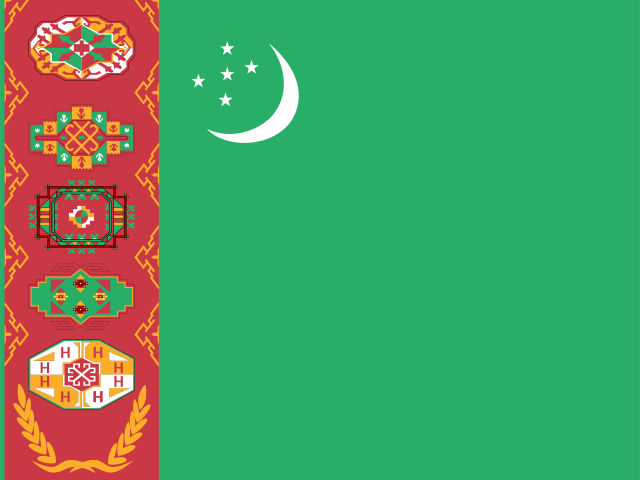
Turkmenistan
Turkmenistan’s government is continuously investing in oil and gas, to modernise and expand the electricity and heat sector by 2020. Moreover, the energy sector is almost fully subsidised, with citizens receiving free electricity, heat and gas up to a certain level of consumption, until 2030, but the government is taking steps to reduce subsidies to curb domestic demand and increase exports. Turkmenistan is part of the EU4Energy Programme, an initiative focused on evidence-based policymaking for the energy sector.
- Overview
- Energy mix
- Emissions
- Electricity
-
+ 5 pages

![Turkmenistan Flag]()
-
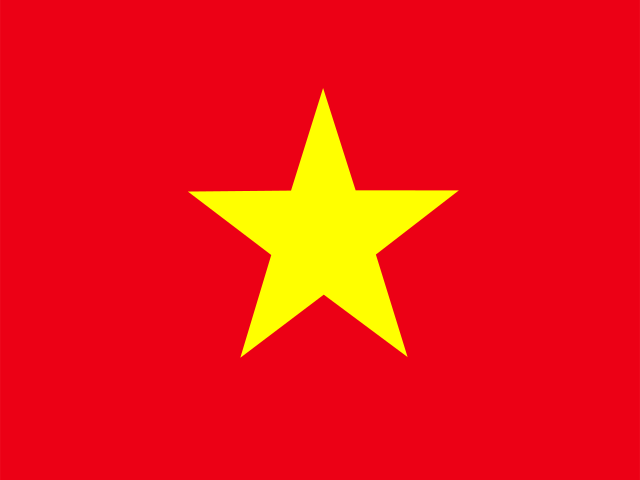
Viet Nam
In recent years, Viet Nam has increased its non-hydro renewable capacity targets in its power development plan, from 9.4% to 21% of total installed capacity in 2030, and decreased the share of coal-fired capacity from 52% to 43%.
- Overview
- Energy mix
- Emissions
- Electricity
-
+ 5 pages

![Viet Nam Flag]()
-
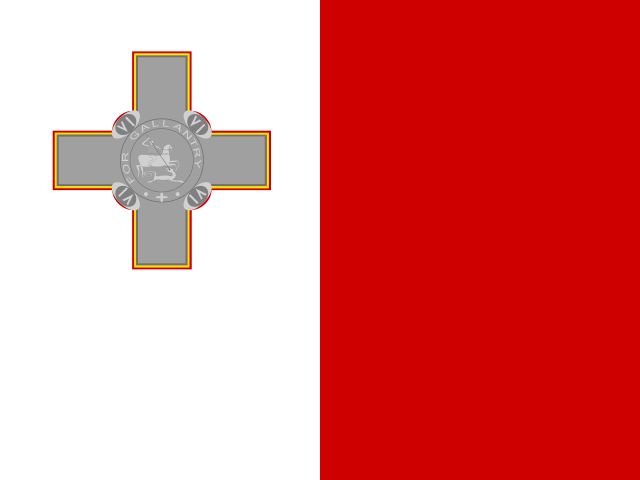
Malta
The National energy policy of Malta was launched in December 2012. It lists decisions and actions that have already been implemented as well as measures aiming to ensure the sustainability of Malta's energy sector.
- Overview
- Energy mix
- Emissions
- Electricity
-
+ 5 pages

![Malta Flag]()
-
Southeast Asia Energy Outlook 2026 Executive summary
Southeast Asia is a very dynamic region that is set to be a major driver of global energy demand growth, but the Middle East conflict has provided a stark wake-up call for the region’s energy system. Southeast Asia accounts for 9% of the world’s population and 4% of its GDP, but nearly 20% of global energy demand growth to 2035 under today’s policy settings. The disruption in global fuel markets has exposed deep structural vulnerabilities linked to import dependence, limited diversification and concentrated supply routes. Before the crisis, around 60% of Southeast Asia’s imports of…

-
Chinese Taipei
The Taiwanese government enacted in the late 2010s the Statute for Renewable Energy Development to reduce CO2 emissions, improve energy diversification and promote green-energy industries. The government is seeking to generate 8% of electricity from renewables by 2025.
- Overview
- Energy mix
- Emissions
- Electricity
-
+ 5 pages
![Chinese Taipei Flag]()
-
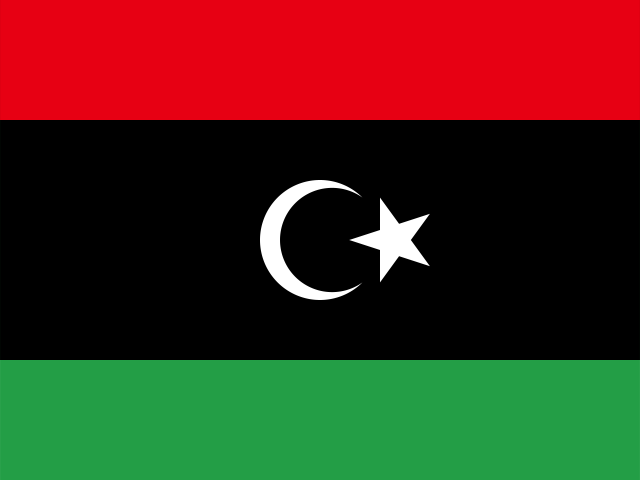
Libya
In 2013, the Libyan government launched the Renewable Energy Strategic 2013-2025 Plan, which aims to achieve 7% renewable energy contribution to the electric energy mix by 2020 and 10% by 2025. This will come from wind, Concentrated Solar Power, solar PV and solar heat.
- Overview
- Energy mix
- Emissions
- Electricity
-
+ 5 pages

![Libya Flag]()
-
Affordability
Multiple benefits of Energy Efficiency 2025 Energy efficiency provides multiple benefits. This page explores affordability. Why is energy efficiency important for affordability? Energy efficiency measures can reduce energy bills for households, decrease energy poverty, and make access to energy services more affordable. Key facts Energy efficiency measures can reduce average household energy bills in advanced economies by up to one-third. In emerging economies, they can also improve access to energy services. For many products, such as refrigerators, highly efficient models use less than half of the energy of inefficient models. A best-in-class model can save up to…

-
Policy options to accelerate distributed solar PV in Ukraine Distributed solar PV in Ukraine
This report explores the current policy landscape for distributed solar PV in Ukraine and outlines three potential policy options to accelerate the deployment of this technology. It focuses on expanding the capacity of distributed solar PV to achieve the modelled results from IEA report Empowering Ukraine through a Decentralised Energy System, which outlines a pathway to rebuild and modernise Ukraine’s power sector amid ongoing attacks on energy infrastructure.The IEA estimates Ukraine would need to add around 4 GW of distributed PV per year until 2030 (over 24 GW in total) to create a more decentralised and secure power…

-
Russia
Russia is the world’s second-largest producer of natural gas, behind the United States, and has the world’s largest gas reserves. Russia is the world’s largest gas exporter. In 2021 the country produced 762 bcm of natural gas, and exported approximately 210 bcm via pipeline.
- Overview
- Energy mix
- Emissions
- Electricity
-
+ 5 pages
![Russia Flag]()
-
Spain
Spain is at the forefront of the energy transition due to its energy and climate change policies. The current Spanish framework for energy and climate is based on the 2050 objectives of national climate neutrality, 100% renewable energy in the electricity mix and 97% renewable energy in the total energy mix. As such, it is centred on the massive development of renewable energy, particularly solar, wind and renewable hydrogen, increasing energy efficiency and improving electrification. This is an opportunity for the country to not only stimulate the economy and by creating jobs through the modernisation of industry, but also to…
- Overview
- Energy mix
- Emissions
- Electricity
-
+ 5 pages
![Spain Flag]()