-
Nigeria
Nigeria is the largest economy and the richest oil resource centre of the African continent. The country also remains the largest gas consumer and producer of West Africa. Notable power sector reforms are underway in Nigeria, including plans for electrification.
- Overview
- Energy mix
- Emissions
- Electricity
-
+ 5 pages

![Nigeria Flag]()
-
Southeast Asia Energy Outlook 2026 Executive summary
Southeast Asia is a very dynamic region that is set to be a major driver of global energy demand growth, but the Middle East conflict has provided a stark wake-up call for the region’s energy system. Southeast Asia accounts for 9% of the world’s population and 4% of its GDP, but nearly 20% of global energy demand growth to 2035 under today’s policy settings. The disruption in global fuel markets has exposed deep structural vulnerabilities linked to import dependence, limited diversification and concentrated supply routes. Before the crisis, around 60% of Southeast Asia’s imports of…

-
Financing the ASEAN Power Grid Executive summary
Southeast Asia’s electricity sector is on the cusp of major changes that underscore the case for regional integration Rapidly growing electricity demand alongside accelerating momentum behind renewables deployment will require major investment in grids across Southeast Asia. Electricity consumption in the Association of Southeast Asian Nations (ASEAN) region has increased ninefold since 1990 and is projected to continue to grow at annual rate of 3 to 4% through to 2040, considerably faster than the global average. ASEAN member states have committed to a massive expansion of new generation capacity to meet this demand. By 2040, total generation capacity is…

-
Energy Transition Review for Enhancing Co-operation
The Philippines’ power sector This report is part of ongoing IEA collaboration with Asia Zero Emission Community (AZEC) partners to better understand the particular challenges these partners face in their energy transition and to provide a platform for co-operation among the AZEC partners. The report seeks to build a shared understanding of the challenges and opportunities facing the Philippine power sector, and to identify practical pathways that can help to strengthen its energy security, improve affordability and enable the country to achieve its long-term clean energy goals.This review has been prepared in collaboration with the Department of Energy…

-
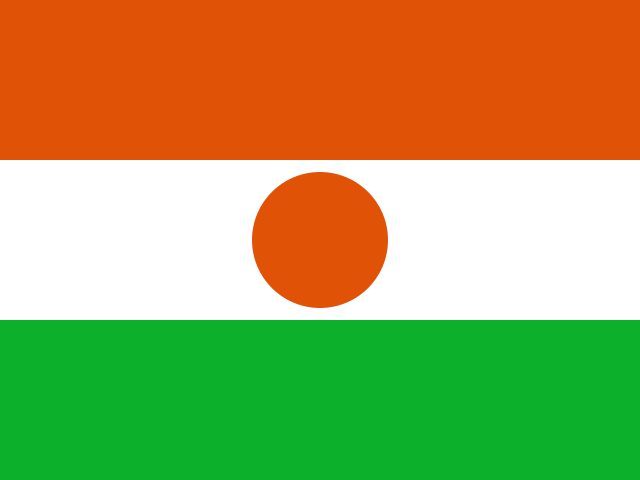
Niger
Access to electricity remains a challenge in Niger and the country is reliant on electricity imports for a significant share of its supply. The country is an oil resource centre and it is one of the ten-largest uranium resource-holders in the world.
- Overview
- Energy mix
- Emissions
- Electricity
-
+ 5 pages
![Niger Flag]()
-
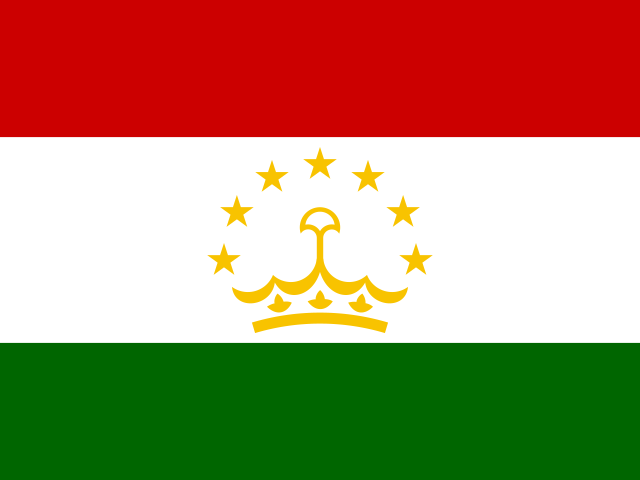
Tajikistan
Hydropower is the main source of energy in Tajikistan, followed by imported oil, gas and coal. However, Tajikistan's energy sector is prone to supply shocks, due to seasonal shortages. Energy policy focuses on providing uninterrupted energy access to all users while improving regional co‑operation and energy sector efficiency, but significant domestic and foreign investment will be necessary for continued energy sector development. Tajikistan is part of the EU4Energy Programme, an initiative focused on evidence-based policymaking for the energy sector.
- Overview
- Energy mix
- Emissions
- Electricity
-
+ 5 pages

![Tajikistan Flag]()
-
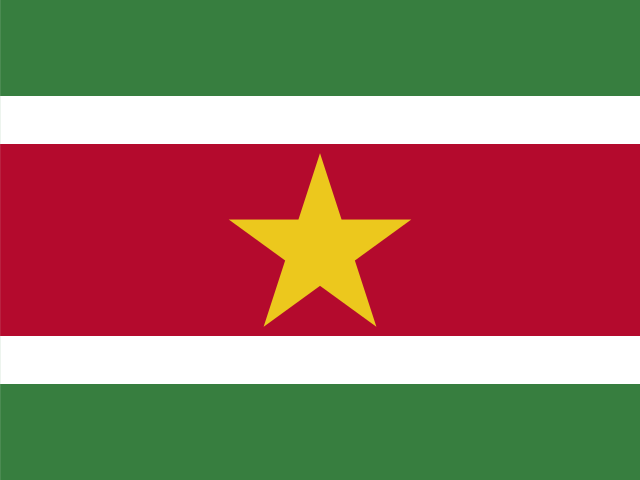
Suriname
The Intended Nationally Determined Contribution of Suriname to the Paris Agreement included commitments to improve sustainable forest management with the goal of enhancing the country's carbon sink potential, but no targets in terms of absolute or relative GHG emissions by 2030.
- Overview
- Energy mix
- Emissions
- Electricity
-
+ 5 pages

![Suriname Flag]()
-
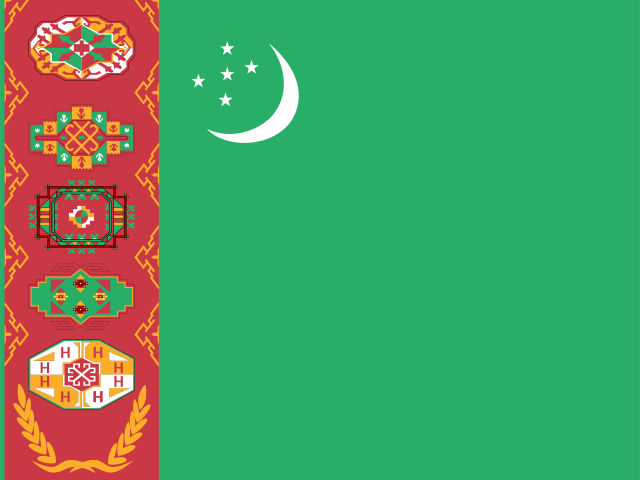
Turkmenistan
Turkmenistan’s government is continuously investing in oil and gas, to modernise and expand the electricity and heat sector by 2020. Moreover, the energy sector is almost fully subsidised, with citizens receiving free electricity, heat and gas up to a certain level of consumption, until 2030, but the government is taking steps to reduce subsidies to curb domestic demand and increase exports. Turkmenistan is part of the EU4Energy Programme, an initiative focused on evidence-based policymaking for the energy sector.
- Overview
- Energy mix
- Emissions
- Electricity
-
+ 5 pages
![Turkmenistan Flag]()
-
Sudan
Most of Sudan’s electricity generation comes from hydropower, and more than half of the Eastern African region’s total oil-based capacity is located in the country. Sudan is also contemplating scaling up projects on solar power in the coming years.
- Overview
- Energy mix
- Emissions
- Electricity
-
+ 5 pages
![Sudan Flag]()
-
Slovenia
Slovenia has put in place a National Renewable Action Plan to 2020, which targets a 25% share of energy generation from renewable sources in gross final energy consumption and 39% of electricity demand met by electricity generated from renewable energy sources.
- Overview
- Energy mix
- Emissions
- Electricity
-
+ 5 pages

![Slovenia Flag]()