Cite report
IEA (2026), Energy Efficiency Policy Toolkit, IEA, Paris https://www.iea.org/reports/energy-efficiency-policy-toolkit, Licence: CC BY 4.0
Report options
Clean Efficient Cooking
Policy Packages – Clean Efficient Cooking
A successful strategy to achieve clean cooking goals needs to consider all available technologies and fuels.
For rural communities, replacing traditional stoves with improved solid fuel stoves is an important first step to better population health.
By 2030, around 75% of the global population could have access to clean cooking under today’s policy settings.
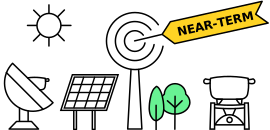
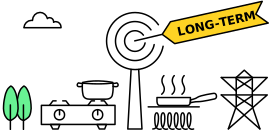
Globally long-term policies prioritise electrical cooking appliances to reach climate goals. By 2050 reduced indoor air pollution due to clean cooking will result in 2.3 million fewer premature deaths per year.
Regulation
- Strong government regulation of energy markets can help ensure clean energy supplies are available for consumers.
- Minimum Energy Performance Standards for clean cooking stoves and other cooking equipment remove the least efficient products from the market.
- Targeted subsidies for the most vulnerable consumers can help ensure equal access to clean cooking, such as efficient LPG or electric cooking.
- Building codes and obligations on landlords can ensure adequate ventilation and other health and safety requirements are met.
Information
- Consumer information campaigns help people make more informed decisions. They are most effective when based on behavioural insights and targeted strategies.
- Local information provision through field offices in rural areas and advisory centres can improve the standing of programmes among the local population.
- Demonstrations highlighting traditional dishes successfully cooked using new technologies can help transform perceptions.
- Labelling and certification help consumers to identify the most energy-efficient clean cooking technologies. This can create a market for efficient technologies and provides motivation for manufacturers to improve the efficiency of their products.
Incentives
- Measures such as rebates, grants and tax reductions motivate consumers to choose efficient clean cooking appliances.
- Appliance replacement programmes encourage households to replace their old, inefficient cooking stoves with more efficient models including induction stoves.
- Clean cooking initiatives can be included in carbon credit and offset schemes.
- Restructuring energy tariffs, including those for electricity, to include provisions favouring clean cooking can incentivise consumers to switch from traditional biomass and other fossil fuels.