Cite report
IEA (2026), Energy Efficiency Policy Toolkit, IEA, Paris https://www.iea.org/reports/energy-efficiency-policy-toolkit, Licence: CC BY 4.0
Report options
Buildings
Introduction
Buildings account for about 30% of final energy consumption globally and more than half of electricity consumption. Doubling the global annual energy intensity improvement by 2030 would require buildings to become more efficient rapidly. An integrated policy approach combining regulation, information and incentives is the most effective way to achieve this goal.
Regulatory standards such as building energy codes are among the most effective policies to not only boost energy performance and reduce emissions, but also to improve occupants' health, comfort and productivity – while enhancing climate resilience and mitigating energy price fluctuations. Buildings built after a code is introduced can use up to 50% less energy.
Information instruments such as energy performance certificates provide transparency about a building's energy use, allowing consumers to make better-informed decisions. They can also help deliver insights to governments on a country’s building stock, which in turn can inform new policy including regulatory updates to the building energy code. Other information tools include campaigns to raise awareness and acceptance among stakeholders and one-stop-shops that facilitate easy access to grants and other incentives, alongside guidance and quality assurance.
Incentives such as retrofit grants can promote efficient technologies by lowering the upfront cost of the investment, making an energy efficiency upgrade more accessible and affordable. Grants can direct investments from stakeholders towards specific energy efficiency measures and motivate them to exceed minimum standards by reducing the upfront costs, adopting innovative technologies, and engaging in best practices. Incentives can promote the most efficient technologies or target a specific subset of the population that needs the support the most.
More information
This toolkit provides an overview of the most important elements of each policy instrument, but you can find more by exploring additional resources.
- IEA Overview on Buildings
- IEA Working Group on Building Energy Codes
- IEA Efficient Grid-Interactive Buildings
- GlobalABC Roadmap for Buildings and Construction 2020-2050
Policy Packages - Buildings Energy Efficiency
Replacing fossil fuel boilers with high efficiency heat pumps can reduce energy use by up to 75%.
By 2030, double both the global building retrofit rate and the coverage of building energy codes by 2030.
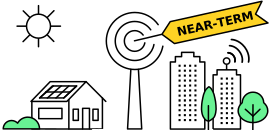
Implementing all energy efficient measures, electrification and low- carbon energy could reduce total CO2 emissions from the sector by more than 95% by 2050.
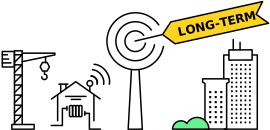
Regulation
- Targets for energy efficiency in buildings, including for renovation rates, fosters market growth and facilitates long-term investment decisions.
- Building energy codes for new and existing buildings can cost-effectively accelerate the transition to zero-carbon-ready buildings. It is important that they are regularly updated to increase coverage and stringency.
- Minimum energy efficiency requirements for existing buildings help guarantee performance and accelerate the process of renovation through instruments such as the standardisation of processes.
- Regulations can ensure that buildings are equipped with smart interactive technologies and can become demand response ready.
Information
- Information on building performance allows consumers to identify the most efficient options when buying or renovating buildings. Examples include energy performance certificates, disclosure programmes, one-stop shops for upgrades and renovation passports.
- Smart interactive technologies can show real-time energy performance, help adjust occupants’ behaviour and optimise energy use based on signals from the grid.
- Training and education programmes for building sector workers are important to ensure a suitably skilled workforce.
- Public awareness campaigns designed to include behavioural insights encourage low-cost actions, such as thermostat adjustment and use of smart technologies.
Incentives
- Financial incentives such as green mortgages, energy performance-based preferential loans and tax rebates and grants can motivate consumers and developers to increase investment in energy efficient solutions.
- Expedited administrative procedures, including accelerated permitting, targeted at high performing new build or retrofit projects, encourage the implementation of energy efficient measures.
- Award and recognition programmes encourage the development of highly energy efficient buildings.