Cite report
IEA (2026), Energy Efficiency Policy Toolkit, IEA, Paris https://www.iea.org/reports/energy-efficiency-policy-toolkit, Licence: CC BY 4.0
Report options
Appliances
Introduction
Appliances represent 45% of electricity demand in buildings and are responsible for almost 3 gigatons (Gt) of CO₂ emissions. Doubling the global annual energy intensity improvement by 2030 would require appliances to become 30% to 40% more efficient. An integrated policy approach combining regulation, information and incentives is the most effective way to achieve this goal.
Regulations such as minimum energy performance standards (MEPS) can ensure that the least efficient equipment is not sold on the market. MEPS also encourage suppliers to increase the efficiency of the appliances they produce, accelerating the improvement of efficiency on the market. In countries where standards and labelling programmes have been implemented, appliances are now typically consuming 30% less energy than they would have otherwise
Information instruments such as appliance energy labels are important tools to collect data for market analysis, providing an evidence base for the implementation of other programmes, such as minimum energy performance standards and incentives. They also provide valuable information for consumers when they are making purchase decisions and for retailers when they are selecting products to offer in their stores.
Incentives such as rebate and loan programmes can lower the upfront costs of investing in appliances and can persuade consumers to buy more efficient products, while motivating technology suppliers to innovate and produce high efficiency alternatives. By offering incentives, policy makers can accelerate the transition to highly efficient appliances.
More information
This toolkit provides an overview of the most important elements of each policy instrument, but you can find more by exploring additional resources.
- IEA Appliance Energy Efficiency Policy online training
- IEA TCEP for Appliances and Equipment
- United for Efficiency (U4E) Energy Efficient Appliances
- IEA Energy Efficiency 2024
- IEA 4E TCP Annual Report 2024
- IEA & 4E Programme Achievements
- CLASP World’s Best MEPS
Policy Packages – Appliance Energy Efficiency
In most cases, it is possible to buy appliances that are twice as efficient as those typically purchased.
By 2030, appliances could consume 25% less energy.

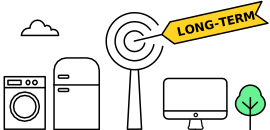
Long-term appliance policies can halve the consumption of appliances without raising their purchase cost.
Regulation
- Minimum Energy Performance Standards exclude the least efficient products from the market. They should be in line with international best practices, while reflecting local circumstances; and be regularly updated. Regulations are essential for moving the market towards the best available technology in line with achieving net zero targets.
- Regulation can ensure that new appliances are demand response ready in order to offer flexibility to the end-user and the overall system, and reduce peak demand.
- Regulating the import and performance of used appliances appliances can help avoid inefficient appliances entering the market.
Information
- Comparative labels help consumers, to identify the most efficient appliances and encourage purchases based on lifetime costs. Ensuring labels are appropriately displayed is also key.
- High Efficiency Performance Specifications identify the best performing products and are often used as the basis for labels and incentives.
- Education and capacity building encourage industry and retailers to produce and supply more efficient products.
- Consumer information campaigns help people make informed decisions. These are most effective when based on behavioural insights and targeted strategies.
Incentives
- Rebates, grants and other financial offers motivate consumers to buy highly efficient appliances. These could come directly from governments or schemes such as energy efficiency obligations.
- Finance or taxation measures on sales and imports can encourage manufacturers to produce appliances that are more efficient.
- Dynamic electricity pricing helps incentivise flexible demand.
- Product lists help companies and households identify efficient products which are eligible for loans, tax reductions, or other financial incentives.
- Awards promote the most efficient appliances and equipment.