Critical Minerals Security Programme
Enhancing emergency preparedness and accelerating supply chain diversification
Critical minerals have risen rapidly up the policy agenda as a cornerstone of energy and economic security. These minerals are not only crucial for energy technologies but also play a vital role in high-tech industries, aerospace, defence, AI data centres, semiconductors and advanced manufacturing, making them central not only to energy security but also to broader national and economic resilience.
IEA Critical Minerals Security Programme
Emergency preparedness and response

Market Disruption Monitoring and Emergency Response Procedure
Supply chain resilience and diversification

Short-term resilience
Stockpiling
Longer-term diversification
Critical Minerals Information Dashboard
Longer-term diversification
Policy Tools for Diversification

Critical minerals country reviews

The IEA Critical Minerals Security Programme is the Agency’s flagship framework designed to help countries strengthen mineral security. Building on the IEA’s leading analytical capabilities in critical minerals markets and its long-standing experience in safeguarding energy security, the Programme was first established at the 2022 IEA Ministerial and has since been substantially expanded. In 2026, IEA Ministers commended the significant progress made under the Programme and adopted a Declaration Supporting the IEA’s Work on Critical Minerals Security, directing the IEA as a key international platform to support countries in enhancing preparedness for potential supply disruptions and accelerating supply diversification.
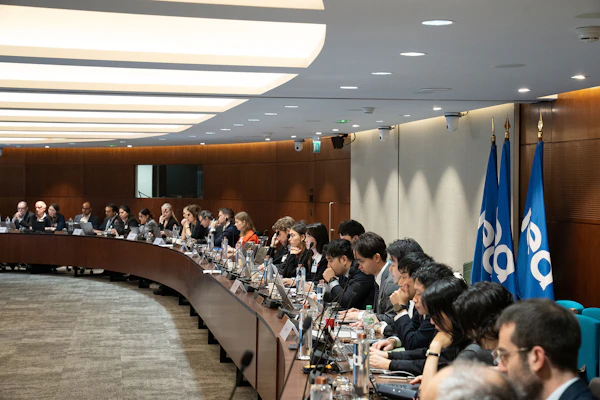
The Programme’s work on emergency preparedness and response includes organising regular Table-Top Exercises, strengthening market monitoring and coordinating emergency actions. It also supports countries seeking to establish or expand critical mineral stockpiling systems, and includes activities aimed at achieving tangible progress on supply diversification by facilitating dialogue on strategic diversification opportunities and policy tools. These efforts are supported by the Critical Minerals Information Dashboard, as well as dedicated analysis on Policy Tools for Diversification.
The IEA’s Working Party on Critical Minerals oversees the implementation of the Programme.

Table-Top Exercises
The export controls on rare earth elements enacted in 2025 caused major consequences for critical minerals and manufacturing supply chains across the world, with some automotive production plants having to temporarily halt production. This served as a wake-up call for the world on critical minerals security. These developments underscore the urgent need to increase emergency preparedness to any future supply shocks.
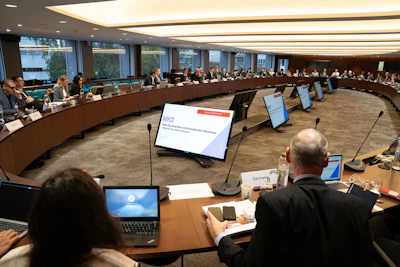
The IEA has been conducting regular tabletop exercises (TTX) with member governments, simulating realistic supply shocks for specific materials. The exercises aim to enhance emergency preparedness, also providing a platform to test emergency response measures and explore opportunities for international cooperation. The IEA has held two major TTXs, one on graphite in 2024 and another on rare earths in 2025.
Market disruption monitoring and emergency response procedure
When supply disruptions occur, rapid assessment of their implications is essential to deploying effective stopgap measures. Timely market monitoring and disruption assessments provide the intelligence needed to inform decisive and well-targeted actions. An effective, data-driven emergency system also needs to be well coordinated with the private sector.
The IEA closely monitors major events that can have significant impacts on mineral supplies, such as export controls, trade restrictions, natural disasters in key producing regions, social unrests and major project suspensions, and regularly updates its Members on the evolution of critical minerals markets.
The IEA is coordinating with its Members to develop a structured emergency response procedure. This framework consists of a series of steps that can be progressively activated to coordinate responses to supply disruptions and export restrictions, leveraging the secure information-sharing mechanisms established under the Programme.
Stockpiling
With mounting risks to mineral supply chains, governments are looking for ways to protect strategic industries from market shocks. While supply diversification remains essential to addressing structural vulnerabilities, short-term emergency response measures such as stockpiling can provide an important buffer against sudden disruptions.
Strategic stockpiling of critical minerals – held specifically for emergency purposes with the involvement of the government – can serve as an important protective measure to safeguard countries from supply shocks and disruptions while they develop new, diversified sources of supply. Even when they are not used, they send a signal to markets that sudden supply shocks or export restrictions need not immediately cripple the system.
The IEA has been supporting its Members that seek to establish and expand critical minerals stockpiling systems, including through guidance on technical and operational considerations. It has convened a series of technical workshops examining key strategic aspects such as the choice of materials to stockpile, governance models, associated costs and financing mechanisms.
Supply chain diversification - Critical Minerals Information Dashboard
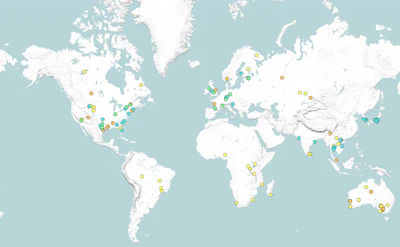
Diversifying supply chains is the most fundamental measure to reduce structural risks around mineral supply chains. The IEA regularly holds diversification workshops that are designed to identify strategic project opportunities, explore strategic partnerships, evaluate effective policy tools and discuss pathways for innovation, recycling and broader ecosystem development. Information about strategic project opportunities is one of the key enablers in making informed investment decisions and achieving successful diversification outcomes. The IEA has developed a secure data platform (Critical Minerals Information Dashboard) that provides detailed project-level information and essential market information to help Member countries identify strategic opportunities for diversification.
Supply chain diversification - Policy Tools for Diversification
Supply diversification requires well-designed policy support. As part of the diversification workshops, the Programme facilitates productive dialogue to examine effective policy tools (e.g. equity investment, price floor, take-or-pay, etc.) and review market frameworks that can incentivise diversified supplies. These efforts are enabled by in-depth analysis and simulation tools by the IEA Secretariat.
Critical Minerals Country Reviews
As critical minerals rise higher on governments agendas worldwide, the need to share best practices, align policy priorities and regularly review policy frameworks has never been more important.
Since 2023, the IEA has been conducting in-depth country reviews of critical mineral policies and security frameworks. These reviews examine short-, medium- and long-term national measures aimed at strengthening supply chain resilience. They also provide the opportunity for countries to showcase effective policy practices, exchange lessons learned and deepen cooperation on innovation, technology and supply chain security.
Global Critical Minerals Outlook 2026
Read the detailed assessment of the latest market and investment trends, along with their implications for critical minerals security.
