-
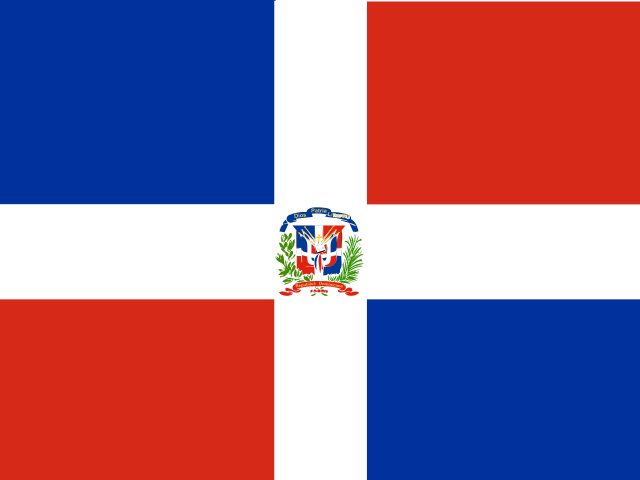
Dominican Republic
Dominican Republic has adopted a law on incentives for the development of renewable energy sources, which aims to increase the diversity of energy sources, reduce dependence on imported fossil fuels and stimulate investment in renewable energy.
- Overview
- Energy mix
- Emissions
- Electricity
-
+ 5 pages

![Dominican Republic Flag]()
-
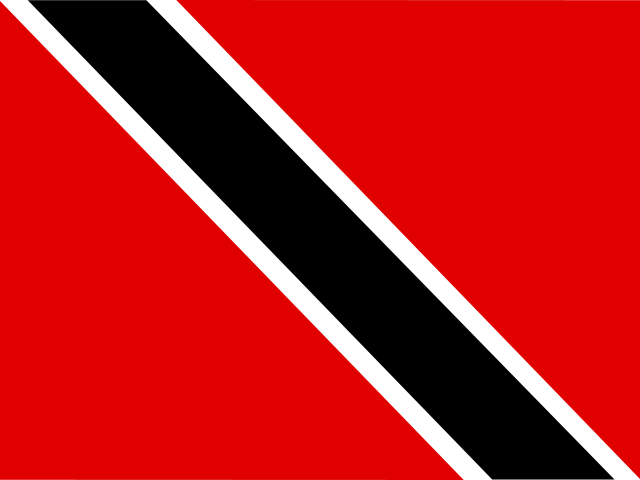
Trinidad and Tobago
Trinidad and Tobago
- Overview
- Energy mix
- Emissions
- Electricity
-
+ 5 pages
![Trinidad and Tobago Flag]()
-
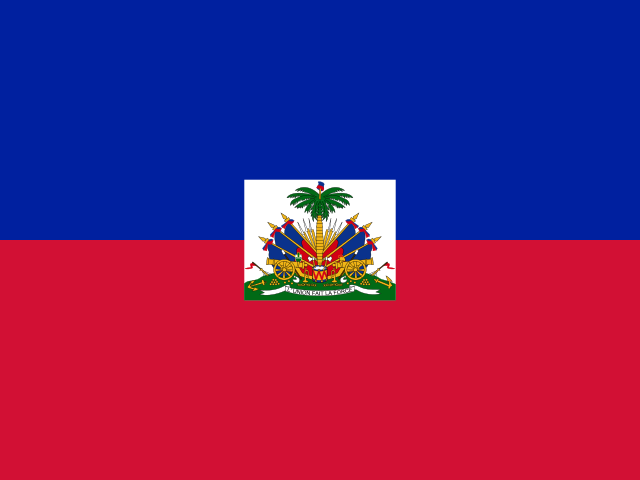
Haiti
Haiti
- Overview
- Energy mix
- Emissions
- Electricity
-
+ 5 pages
![Haiti Flag]()
-
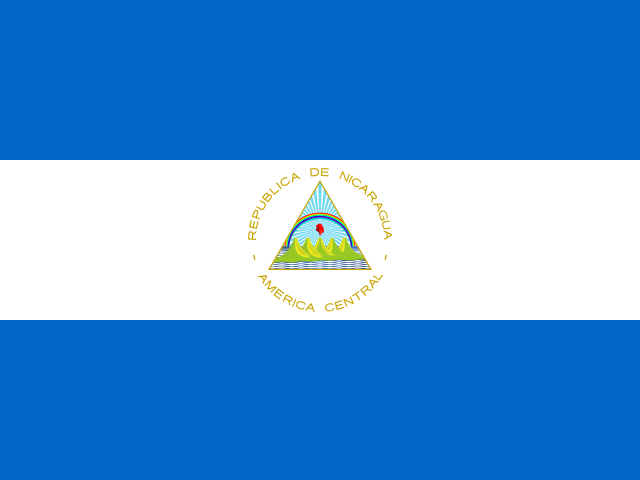
Nicaragua
The National Energy Policy of Nicaragua establishes a policy framework for the development and exploitation of renewable sources. The law sets the objective of prioritizing the use of renewable energy in the national energy mix and of stabilizing energy prices using renewables.
- Overview
- Energy mix
- Emissions
- Electricity
-
+ 5 pages
![Nicaragua Flag]()
-
Democratic Republic of the Congo
The Democratic Republic of the Congo has huge hydropower potential while also dealing with extreme energy poverty. Foreign investors are currently partially lifting constraints on the country’s hydropower capacity, which is bringing down the costs of power supply and reducing the share of oil-fired power.
- Overview
- Energy mix
- Emissions
- Electricity
-
+ 5 pages

![Democratic Republic of the Congo Flag]()
-
Revised/Updated NDC of Dominican Republic
Dominican Republic aims to reduce its GHG emissions by 7% relative to a business-as-usual trajectory by 2030, and by up to 27% by the same date conditional on the provision of international support.
-
Dominican Republic - Central America Free Trade Agreement (CAFTA-DR)
The CAFTA-DR is a comprehensive free trade agreement which provides for the elimination of border tariffs for the following goods, among others:Electric generation equipment Mechanical equipment including pumps, appliances, and other advanced machineryElectric motors, transformers, batteries, and capacitorsMotor vehiclesMineral ore and processed products including manganese, copper, aluminium, and nickelVarious products manufactured using above minerals and metals such as sheets, powders, bars, and platesPhotovoltaic cells (except importing into the US)The Agreement includes rules of origin requiring goods to be wholly produced/manufactured in, and imported directly from one or more of the countries involved to qualify for preferential tariff…
-
First NDC of Dominican Republic
Dominican Republic aims to reduce its emissions per capita by 25% below 2010 levels by 2030, conditional on the provision of international support.
-
Dominican Republic Net-Metering Regulation 2011
Regulation to establish the conditions for access to the Net Metering Program in the Dominican Republic. The Regulation establishes the rights and responsibilities of the Distribution Companies and the Customers. The main goals are:
(1) Establish the procedure for applications and requirements that should be known by the customers with self-generation systems using renewable sources of energy and wish to participate in the Net Metering Program, interconnecting to the Distribution Company or Transmission.
(2) Define how it is reflected in the invoice of the Customer the collection of energy consumed or the accreditation of the generated and exported energy… -
Partial Economic Agreement Panama- Dominican Republic
The Partial Economic Agreement between Panama and Dominican Republic was put into force on 6 December 2002 to eliminate full or partial tariff liberalisations on the goods traded between the countries.