-
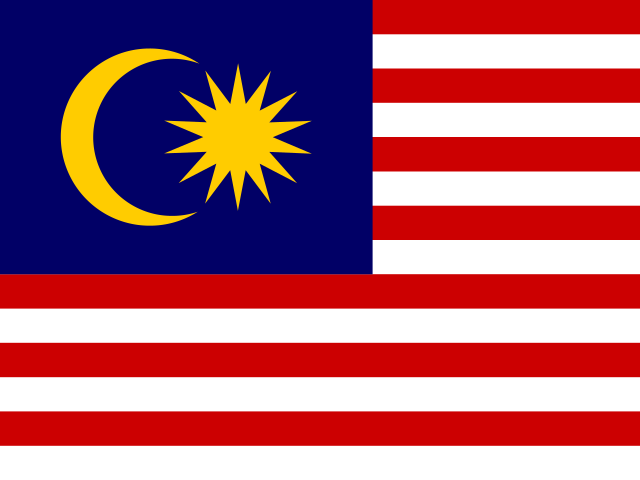
Malaysia
In Malaysia, the share of gas in the power mix decreased from 67% in 2005 to 47% in 2015, led by policies to switch to coal in response to declining domestic gas production. The country holds a large share of Southeast Asia’s fossil fuel resources.
- Overview
- Energy mix
- Emissions
- Electricity
-
+ 5 pages

![Malaysia Flag]()
-
Oman
Oman’s energy supply is entirely generated by nationally-produced natural gas and oil products and the country is a large exporter of oil and gas. The government has recently launched the “Residential PV Initiative" to foster the private use of solar PV.
- Overview
- Energy mix
- Emissions
- Electricity
-
+ 5 pages

![Oman Flag]()
-
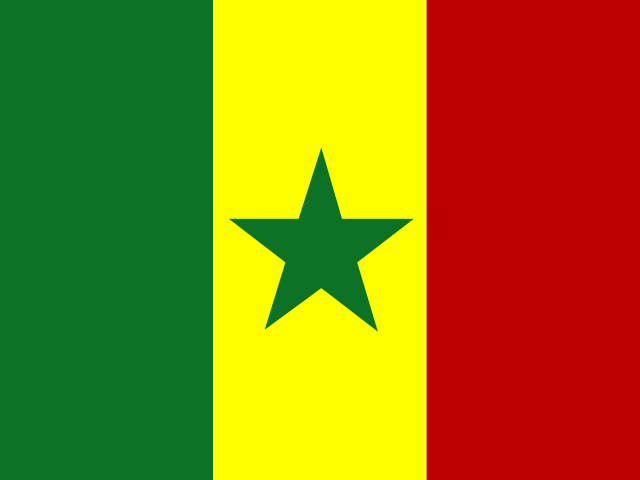
Senegal
In Senegal, 65% of the population has access to electricity. Strong policies and incentives have supported liquefied petroleum gas (LPG) use and less than 25% of the urban population now relies on solid biomass for cooking.
- Overview
- Energy mix
- Emissions
- Electricity
-
+ 5 pages

![Senegal Flag]()
-
Czechia
Czechia has decoupled economic growth from energy consumption since 2009, yet the country’s energy and carbon intensity remain above the IEA average, which highlights the need to make energy efficiency the “first principle” of energy policy. Fossil fuels are still essential building blocks of the energy mix with coal as the single largest fuel for total energy supply and electricity generation. The country is committed to phase-out coal by 2033 and is putting in place a framework for an inclusive transition. Nuclear is the second largest electricity source and the government plans to build new nuclear units at…
- Overview
- Energy mix
- Emissions
- Electricity
-
+ 5 pages

![Czechia Flag]()
-
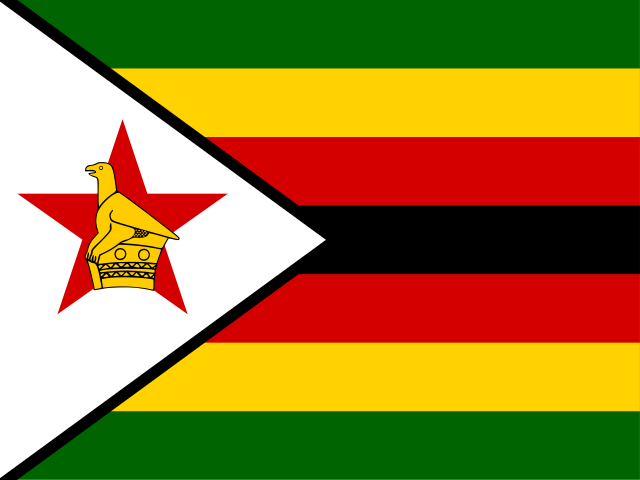
Zimbabwe
Zimbabwe holds large coal reserves and production is set to increase. The country has also significantly untapped its hydropower potential, even though the share of hydropower generation is gradually decreasing.
- Overview
- Energy mix
- Emissions
- Electricity
-
+ 5 pages
![Zimbabwe Flag]()
-
Integrating Solar and Wind in Southeast Asia
Status and outlook for secure and efficient strategies Southeast Asia is experiencing one of the fastest electricity demand growths globally, with consumption set to double by 2050. While renewable deployment has accelerated in recent years, the region’s growing reliance on imported fossil-fuels for electricity generation, exposes countries to volatile fuel prices, potential supply disruptions and rising emissions. At the same time, the region possesses vast and diverse renewable resource potential. Variable renewable energy (VRE) - solar and wind - are now among the most cost-competitive generation options and are playing an increasingly important role in the region’s power…

-
Yemen
In Yemen, less than half of the population has access to electricity. In 2010, the government launched a National Strategy for renewable energy and energy efficiency, which aims to develop grid and off-grid renewable energy and targets a 15% share of renewable electricity generation by 2025.
- Overview
- Energy mix
- Emissions
- Electricity
-
+ 5 pages
![Yemen Flag]()
-
Congo
In Congo, 3 out of 5 people do not have access to electricity. As a country with a very low population density, Congo faces particularly severe challenges in bringing energy of any kind to its rural communities.
- Overview
- Energy mix
- Emissions
- Electricity
-
+ 5 pages
![Congo Flag]()
-
Mongolia
Coal is the first source of electricity generation in Mongolia, but the country has recently begun using hydro, solar and wind power, and has adopted a law aiming to increase and regulate the use of renewables.
- Overview
- Energy mix
- Emissions
- Electricity
-
+ 5 pages
![Mongolia Flag]()
-
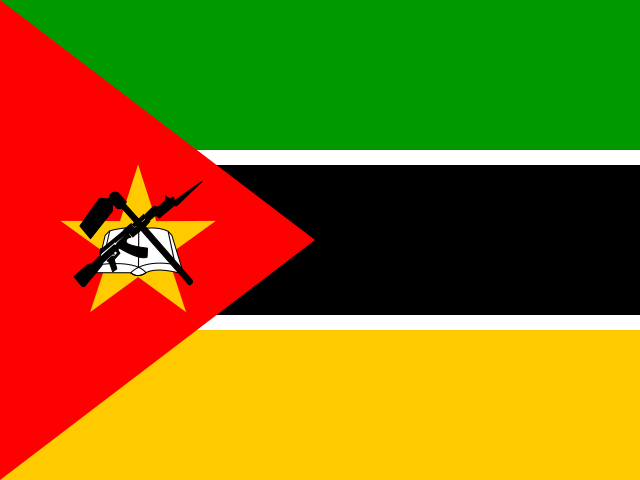
Mozambique
In Mozambique, around 40% of people have access to electricity, through the grid or mini/off-grid systems. The government has promoted solar PV solutions in rural areas, reporting that 700 schools and 800 other public buildings now have electricity from solar.
- Overview
- Energy mix
- Emissions
- Electricity
-
+ 5 pages
![Mozambique Flag]()