-
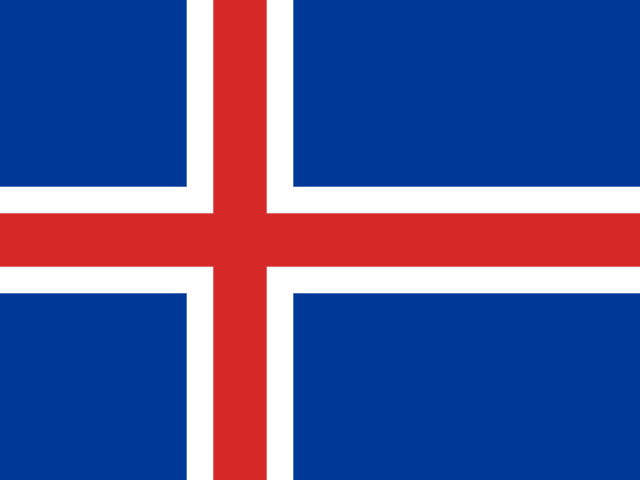
Iceland
In 2007, the Icelandic government released a Climate Change Strategy conceived as a framework for action and government involvement in climate change issues, and setting forth a long-term goal of reducing net greenhouse gas emissions by 50 to 75% of 1990 levels by 2050.
- Overview
- Energy mix
- Emissions
- Electricity
-
+ 5 pages

![Iceland Flag]()
-
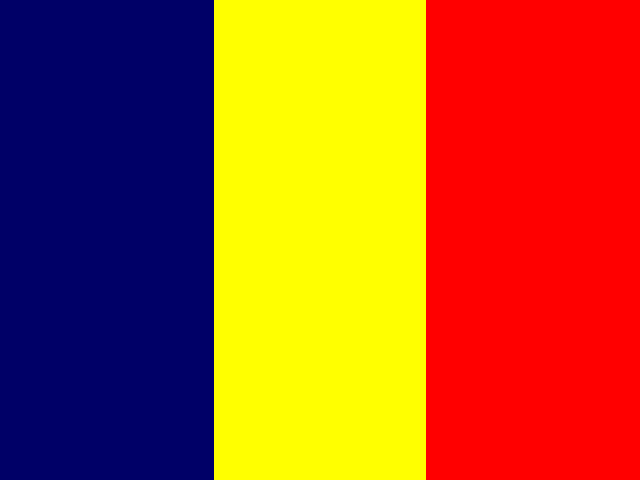
Chad
…basic services such as drinking water, basic sanitation and paved roads. Meanwhile, crude oil has become the country’s primary source of export earnings. In 2019, Chad’s energy mix was dominated by biofuels and wastes (85%) with oil products accounting for the rest of the total energy supply. In 2020, less than 5% of the population had access to clean cooking and 8% had access to electricity. The electrification rate is one of the lowest in Sub-Saharan Africa. The country has 30% electricity access target by 2023 and up to 53% by 2030, with a 20% rural access…
- Overview
- Energy mix
- Emissions
- Electricity
-
+ 5 pages

![Chad Flag]()
-
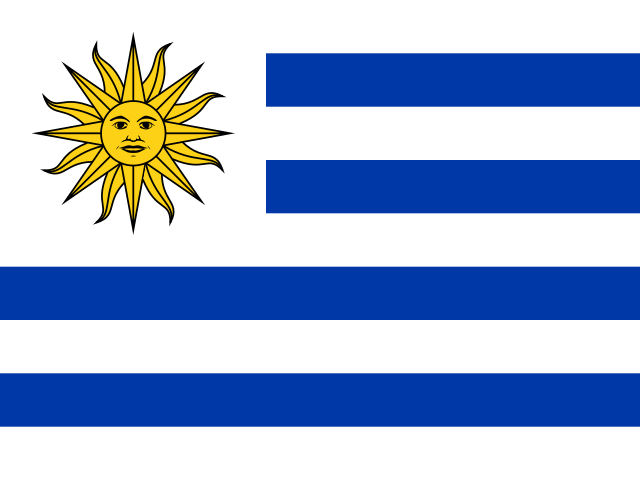
Uruguay
In 2010 the Ministry of Energy, Mining and Industry of Uruguay approved Decree 354 on the Promotion of Renewable Energies meant to increase dramatically the share of electricity generation from renewable sources in the country.
- Overview
- Energy mix
- Emissions
- Electricity
-
+ 5 pages

![Uruguay Flag]()
-
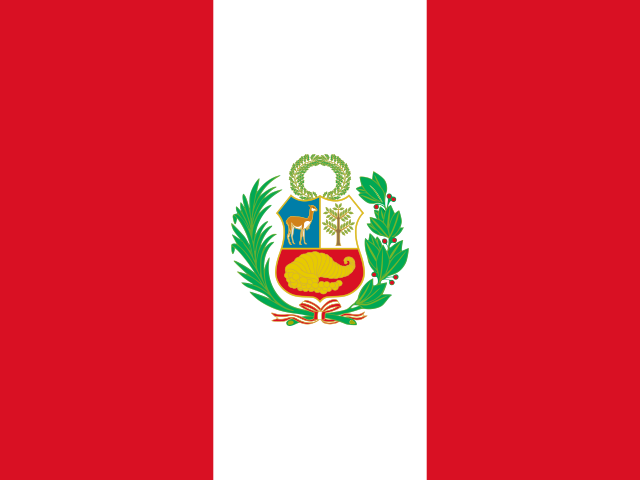
Peru
Peru’s government identified the development of electricity from renewable energy sources as a public necessity of national interest. The country established a National Renewable Energy Development Plan to be funded by the Annual Budget Law, external debt operations, direct investments and contributions from international institutions.
- Overview
- Energy mix
- Emissions
- Electricity
-
+ 5 pages
![Peru Flag]()
-
Bolivia
A quarter of the electricity generated in Bolivia comes from renewables. On the other hand, 12% of the population still does not have access to electricity. The government has launched the Bolivia Electric Plan 2020-2025 to support the expansion of the electricity grid with a strong emphasis on renewables.
- Overview
- Energy mix
- Emissions
- Electricity
-
+ 5 pages
![Bolivia Flag]()
-
Ukraine
Ukraine is a key country for European and global energy security. Russia’s invasion of Ukraine has pushed it to fundamentally reshape its past dependence on energy imports from Russia.
As the invasion continues, Ukraine is focused on tracking large-scale energy supply disruptions and actively working to recover power and heating for civilians. It is also putting together an ambitious recovery and reconstruction plan, with a strong focus on energy security. In the medium-term, Ukraine’s energy strategy remains focused on European integration, while it aims to an energy system that is ready for a Net Zero future…- Overview
- Energy mix
- Emissions
- Electricity
-
+ 5 pages
![Ukraine Flag]()
-
Türkiye
Rapid economic and population growth in Türkiye over the past two decades have not only driven strong growth in energy demand, but also an associated increase in import dependency. As a result, Türkiye has pursued a restructuring of its energy system with the aim of rationalising energy demand growth, lowering energy prices and slowing the pace of import growth.
These reforms have included measures targeted at modernisation, liberalisation and increased domestic production capacity. Notably, Türkiye has seen considerable diversification of its energy mix in the past decade. Renewable electricity generation has tripled in the past decade and the commissioning of…- Overview
- Energy mix
- Emissions
- Electricity
-
+ 5 pages
![Türkiye Flag]()
-
Venezuela
The Venezuela Plan for the National Electric System aims to integrate renewables in the power system by including it in medium and long-term strategies. It aims to develop the use of renewables within isolated rural communities including solar, small hydro and biogas.
- Overview
- Energy mix
- Emissions
- Electricity
-
+ 5 pages
![Venezuela Flag]()
-
Uganda
In 2019, Uganda’s energy mix was dominated by fuel wood and charcoal followed by a small share of oil products. The country produces electricity mainly from hydroelectric plants. Between 2017 and 2019, electrification outpaced population growth in Uganda. However in 2020, less than 5% of the population had access to clean cooking.
The Electricity Connection Policy was introduced in 2018 with the ambition of increasing Uganda’s electricity access to 60 percent by 2027 through connection subsidies for consumers located close to the existing network. About 300,000 households and businesses have received free electricity connections, benefiting 1.5…- Overview
- Energy mix
- Emissions
- Electricity
-
+ 5 pages
![Uganda Flag]()
-
Tanzania
Electricity access in Tanzania increased from around 13% in 2008 to 32% in 2017. The government is supporting the private sector to develop its electricity market, enhancing the role of renewable energy in the energy mix and increasing rural electricity access.
- Overview
- Energy mix
- Emissions
- Electricity
-
+ 5 pages
![Tanzania Flag]()