-
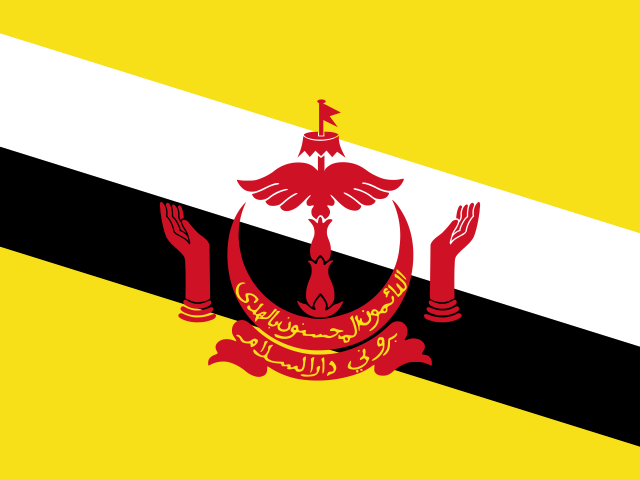
Brunei Darussalam
In 2014, Brunei adopted a strategic plan to achieve 10% share of renewables in the national energy mix by 2035. The plan provides the outline to introduce renewable energy policy and regulatory frameworks and to scale-up market deployment of solar PV.
- Overview
- Energy mix
- Emissions
- Electricity
-
+ 5 pages

![Brunei Darussalam Flag]()
-
Wind
…Although wind power continues to face supply chain issues, rising costs and permitting delays today, global capacity is still expected to nearly double to over 2 000 gigawatts (GW) by 2030 as both advanced and developing economies tackle these barriers.
Around 85% of capacity additions for wind are set to be onshore, with capacity expected to rise by more than 730 GW (or 45%) through 2030. Offshore wind additions of 140 GW are expected over the same period. Further boosting offshore capacity, which is particularly sensitive to macroeconomic and supply chain pressures, would require effective auction design and supportive policy.
-
Sheltering From Oil Shocks Road transport fuels
…to work from home, where possible, and close public buildings on certain days.Policy examples: In response to the 2026 crisis in the Middle East, several countries have announced measures to encourage working from home. For example, the Philippines and Pakistan have mandated 4-day workweeks for government workers, while Sri Lanka has closed public offices on Wednesdays, and Lao PDR, Thailand and Viet Nam are all actively promoting remote work. Many European governments also encouraged working from home in response to the energy crisis in 2022-23, including through the joint IEA-EU Playing my Part Campaign. For example…

-
Uzbekistan
Despite being energy self-sufficient thanks to its gas sector, Uzbekistan's ageing infrastructure struggles to meet growing domestic demand. Losses, overuse and financing remain problematic. Wide-ranging reforms focused on improving and diversification the energy sector are being introduced and the government has adopted the Strategy of Actions 2017-2021, which prioritizes improving energy efficiency and increasing generating capacity and use of renewables. Uzbekistan is part of the EU4Energy Programme, an initiative focused on evidence-based policymaking for the energy sector.
- Overview
- Energy mix
- Emissions
- Electricity
-
+ 5 pages

![Uzbekistan Flag]()
-
El Salvador
The National Energy Policy to 2024 of El Salvador guides the national actions on energy, following main principles: ensure high quality level and continuous and affordable energy access, decrease fossil fuel dependency and mitigate environmental and social impacts of energy projects.
- Overview
- Energy mix
- Emissions
- Electricity
-
+ 5 pages

![El Salvador Flag]()
-
Switzerland
Switzerland has notably decoupled economic growth from energy use despite strong population growth. This trend should continue, and the energy efficiency first principle should be reflected in all climate and energy legislation. Reaching the 2050 net zero emissions target and addressing the growing winter electricity gap between demand and production requires an unprecedented volume of additional renewable generation capacity, especially wind and hydro. For this, the country needs to shorten the complex and extended administrative and legal permitting process. This will also help advancing investments in grid infrastructure to prepare for more decentralised and variable generation. Switzerland should also align…
- Overview
- Energy mix
- Emissions
- Electricity
-
+ 5 pages

![Switzerland Flag]()
-
Italy
…and energy efficiency, aiming to reach 30% of renewables in total energy consumption and 55% of renewables in electricity generation. The country has experienced notable growth in the renewable energy sector and has successfully integrated large volumes of variable renewable generation. Natural gas is a major source for electricity and heating, therefore Italy has strengthened its energy security by diversifying natural gas supply, making use of the pipeline and LNG infrastructure that it has built up over the last decade. Reducing overall demand for natural gas through an accelerated shift to alternative energy sources and a stronger focus on energy…
- Overview
- Energy mix
- Emissions
- Electricity
-
+ 5 pages
![Italy Flag]()
-
Hungary
Hungary was among the first countries globally, in June 2020, to make a legal commitment to become carbon neutral by 2050 and plans to phase out coal by 2030 at the latest. Enhanced energy efficiency, increased renewable and nuclear electricity and electrification of end-use sectors are identified as the key drivers towards the 2050 target. Hungary plans to build two new nuclear unit and while solar PV has grown notably, wind lacks behind its potential but the change in siting limits for wind turbines are likely to have a positive impact on the sector.
- Overview
- Energy mix
- Emissions
- Electricity
-
+ 5 pages
![Hungary Flag]()
-
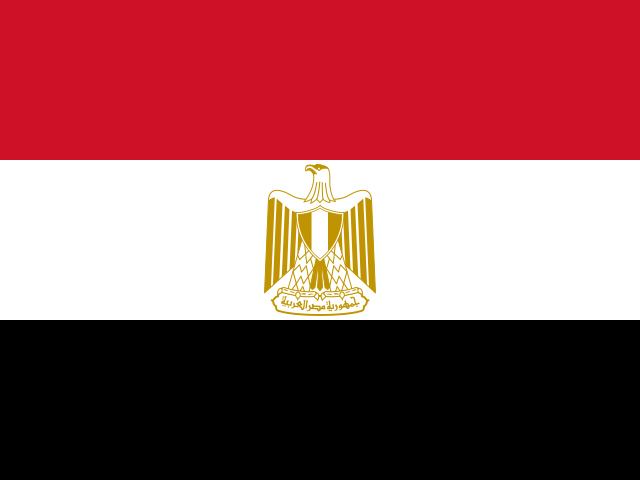
Egypt
Egypt has initiated a number of energy sector reforms, gradually reducing electricity subsidies and introducing feed-in tariffs to promote renewable energy production. The energy sector reforms recently initiated by the country have resulted in a significant increase in investments which have boosted electricity production over the last 5 years and ensured a stable supply across the country.
Egypt also has plans to increase the share of renewables in the electricity mix to 42% by 2035.- Overview
- Energy mix
- Emissions
- Electricity
-
+ 5 pages

![Egypt Flag]()
-
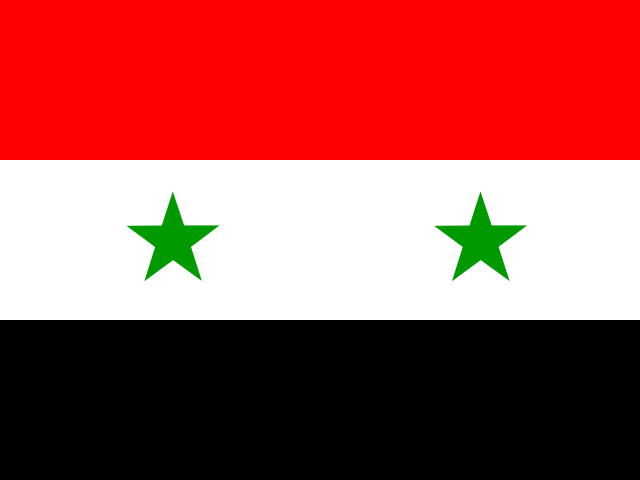
Syria
The 2009 Syrian Law on Energy Conservation aims to fulfil the sustainable development requirements of the country and deploy various renewable energy applications. Private and public institutions must commit to energy efficiency practices, use renewables and high energy- efficiency equipment.
- Overview
- Energy mix
- Emissions
- Electricity
-
+ 5 pages

![Syria Flag]()