-
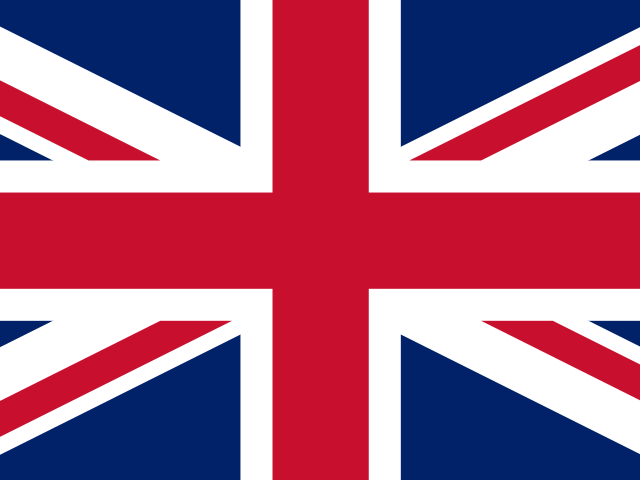
United Kingdom
The United Kingdom has been an early player in the energy transition, being among the first countries to set a net zero target by 2050 and to put in place carbon budgets. UK emissions have already fallen by around 50% since 1990, indicating a strong start. Looking ahead, an important pillar of the energy transition will be decarbonising the power sector through sizeable new investments in renewables and nuclear while also focusing on new technologies such as CCUS, hydrogen and small modular reactors. As a historic oil and gas producer, the UK is looking to address declining North Sea production…
- Overview
- Energy mix
- Emissions
- Electricity
-
+ 5 pages

![United Kingdom Flag]()
-
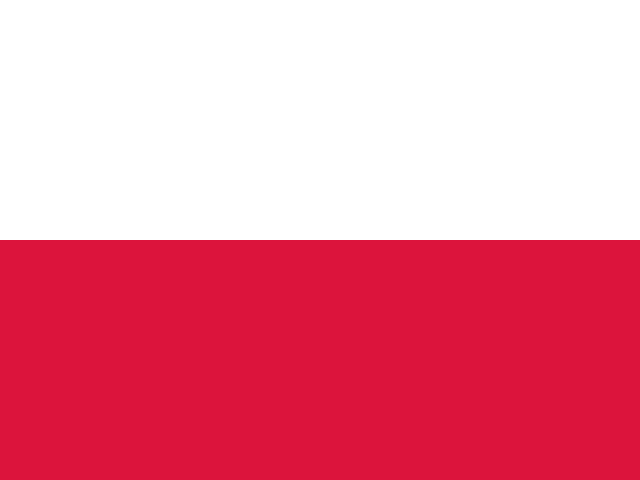
Poland
Poland’s energy system has seen progress on energy transition, despite its reliance on domestic hard coal and lignite. For example, Poland has one of the fastest growing solar PV markets in the European Union and has also seen a strong uptake of heat pumps. Poland is pushing to become a major player in offshore wind, aiming for at least 3.4 GW of capacity by 2030. However, stronger efforts are needed across all sectors to accelerate energy transition and Poland would benefit from greater electricity interconnections with the rest of Europe.
- Overview
- Energy mix
- Emissions
- Electricity
-
+ 5 pages
![Poland Flag]()
-
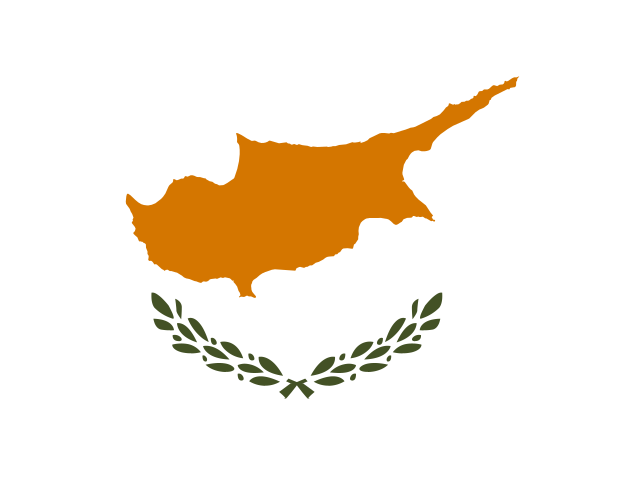
Cyprus
Cyprus adopted the Law on the Promotion of Renewable Energy and Energy Efficiency in the early 2010s, which creates a fund that finances the premium tariff and other costs related to renewable electricity generation.
Note by the Republic of Türkiye (Türkiye): The information in this document with reference to Cyprus relates to the southern part of the Island. There is no single authority representing both Turkish and Greek Cypriot people on the Island. Türkiye recognises the Turkish Republic of Northern Cyprus (TRNC). Until a lasting and equitable solution is found within the context of United Nations, Türkiye shall preserve its…- Overview
- Energy mix
- Emissions
- Electricity
-
+ 5 pages
![Cyprus Flag]()
-
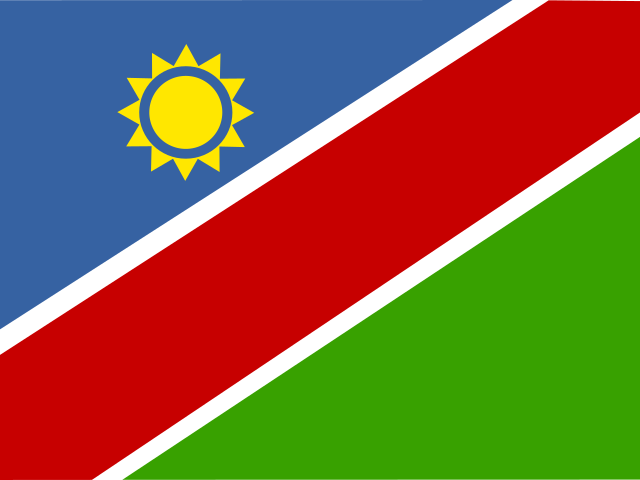
Namibia
Most of Namibia’s electricity is generated by hydropower. The country is also one of the ten-largest uranium resource-holders in the world and provides 8.2% of global production. The country has stated its interest in introducing nuclear power into its domestic mix.
- Overview
- Energy mix
- Emissions
- Electricity
-
+ 5 pages

![Namibia Flag]()
-
Ireland
Ireland put in place an ambitious and comprehensive set of policies and targets to reach net zero by 2050 and 80% of renewable electricity generation by 2030, but now their implementation needs to accelerate. Natural gas will remain an important part of the energy mix at least until the mid-2030s, especially to meet peak electricity demand, but offshore renewable energy will become the cornerstone of Ireland’s energy transition beyond 2030. Given Ireland’s current exclusive reliance on energy imports from the United Kingdom, energy security is a major concern to the government while transitioning to a (variable) renewables…
- Overview
- Energy mix
- Emissions
- Electricity
-
+ 5 pages
![Ireland Flag]()
-
Romania
By 2020, the objective of Romania is to guarantee the efficient operation of its energy system under security conditions. Romania also plans to meet the obligations set by EU in terms of greenhouse gas emissions through its legislative package “Climate changes – renewable energies”.
- Overview
- Energy mix
- Emissions
- Electricity
-
+ 5 pages
![Romania Flag]()
-
Malta
The National energy policy of Malta was launched in December 2012. It lists decisions and actions that have already been implemented as well as measures aiming to ensure the sustainability of Malta's energy sector.
- Overview
- Energy mix
- Emissions
- Electricity
-
+ 5 pages
![Malta Flag]()
-
Colombia
Colombia launched the Energy Plan 2050 in 2016 , which aims to diversify the country’s energy resources and ensure a reliable energy supply by including wind power plants, solar PV and geothermal energy generation in the country's electric mix.
- Overview
- Energy mix
- Emissions
- Electricity
-
+ 5 pages

![Colombia Flag]()
-
Congo
In Congo, 3 out of 5 people do not have access to electricity. As a country with a very low population density, Congo faces particularly severe challenges in bringing energy of any kind to its rural communities.
- Overview
- Energy mix
- Emissions
- Electricity
-
+ 5 pages
![Congo Flag]()
-
United Arab Emirates
The majority of the energy produced in the United Arab Emirates is from natural gas and oil. The country is also a major exporter of oil and gas and it started using its strong solar PV potential in 2014 to produce electricity.
- Overview
- Energy mix
- Emissions
- Electricity
-
+ 5 pages

![United Arab Emirates Flag]()