-
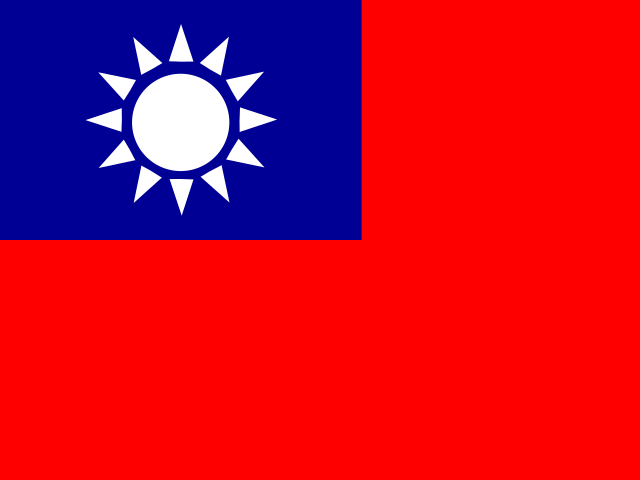
Chinese Taipei
The Taiwanese government enacted in the late 2010s the Statute for Renewable Energy Development to reduce CO2 emissions, improve energy diversification and promote green-energy industries. The government is seeking to generate 8% of electricity from renewables by 2025.
- Overview
- Energy mix
- Emissions
- Electricity
-
+ 5 pages

![Chinese Taipei Flag]()
-
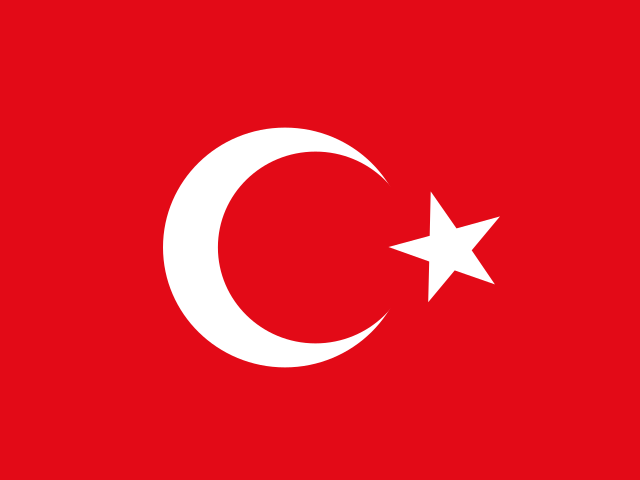
Türkiye
…has pursued a restructuring of its energy system with the aim of rationalising energy demand growth, lowering energy prices and slowing the pace of import growth.
These reforms have included measures targeted at modernisation, liberalisation and increased domestic production capacity. Notably, Türkiye has seen considerable diversification of its energy mix in the past decade. Renewable electricity generation has tripled in the past decade and the commissioning of Turkey’s first nuclear power facility will further diversify the country’s fuel mix. Still, fossil fuels continue to drive Türkiye’s economy, with a heavy dependency on imports, especially oil and gas.- Overview
- Energy mix
- Emissions
- Electricity
-
+ 5 pages

![Türkiye Flag]()
-
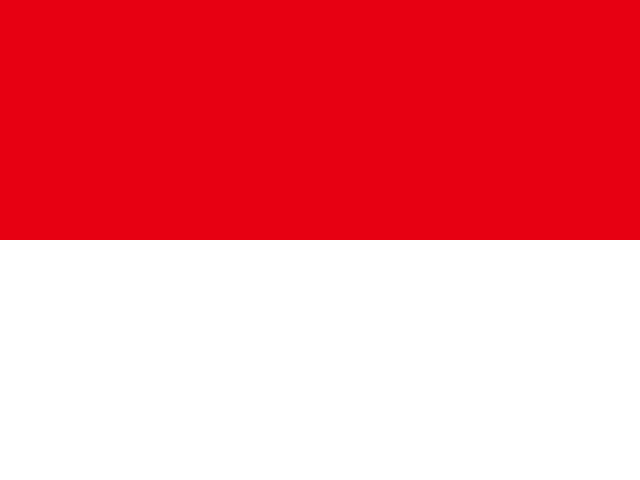
Indonesia
Indonesia’s imports of oil have rapidly increased in recent years. This resource-rich nation is the world’s fourth-largest producer of coal and Southeast Asia’s biggest gas supplier. The country is the largest producer of biofuels worldwide and it is scaling up efforts to exploit its renewable energy potential. Indonesia's importance is underscored by its sizeable population of 250 million people – the fourth-largest in the world – and its significant role as a major producer and consumer of energy in regional and international markets. Indonesia is also the largest economy in ASEAN and an active member…
- Overview
- Energy mix
- Emissions
- Electricity
-
+ 5 pages
![Indonesia Flag]()
-
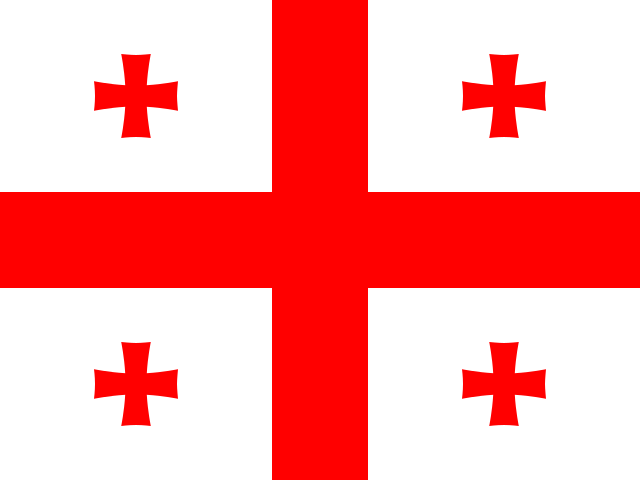
Georgia
Georgia has developed an energy sector based largely on hydropower and fuelwood, in addition to imports of fossil fuels. It is also an important transit country for the region, with major oil and gas pipelines running across Georgian territory. Efforts are required to improve energy efficiency and capitalise on the country’s renewable energy potential.
Georgia has made solid progress in the past decade, both in improving the security of its energy supply and in transitioning to a cleaner, more sustainable energy system. Although Georgia is still confronted with many challenges in its transition to a more secure, sustainable and…- Overview
- Energy mix
- Emissions
- Electricity
-
+ 5 pages

![Georgia Flag]()
-
Argentina
…Argentina relies on natural gas (65%), hydropower (18%), followed by nuclear 8%, wind (7%) and solar (1%). A set of public policies have boosted utility-scale projects in variable renewables, taking advantage of its rich solar and wind resources. The country has set a goal for non-hydro renewables to reach 20% of the power mix by 2025 and recent efforts have triggered increased deployment (2021: 12.5%).
Argentina is the world’s fourth largest lithium producer, a mineral critical for the manufacture of battery storage systems and, therefore, for the energy transition. Argentina is among the first Latin American…- Overview
- Energy mix
- Emissions
- Electricity
-
+ 5 pages

![Argentina Flag]()
-
India
…improved through the creation of one national power system and major investments in clean energy. India is now working on integrating higher shares of variable renewable energy into the energy mix. For the period 2016-2018, the share of solar PV and wind doubled in the electricity generation mix from 4% to 8%. Energy efficiency increases have enabled the avoidance of an additional 15% of energy demand and 300 MtCO2 emissions over the period 2000-2018.
India has also been prioritizing access to electricity and clean cooking. Progress in both have been remarkable: 700 million people gained access to electricity…- Overview
- Energy mix
- Emissions
- Electricity
-
+ 5 pages
![India Flag]()
-
Burkina Faso
In 2019, Burkina Faso’s energy mix was dominated by biofuels and wastes, with oil products accounting for one-third of the total energy supply. In 2020, 11% of the population had access to clean cooking and only 21% had access to electricity, making Burkina Faso one of the world’s least-electrified countries. For electricity, the country has a target of 95% access for urban areas and 50% for rural areas by 2030. For clean cooking, Burkina Faso has a universal access target for urban areas and 65% in rural areas by 2030. The target for LPG urban penetration…
- Overview
- Energy mix
- Emissions
- Electricity
-
+ 5 pages

![Burkina Faso Flag]()
-
Guatemala
The National Energy Plan of Guatemala defines the promotion of renewables as a priority. The plan aims to promote the use of clean and environmentally friendly energy for domestic consumption without losing sight of energy security and the need for supplying electricity at competitive prices.
- Overview
- Energy mix
- Emissions
- Electricity
-
+ 5 pages
![Guatemala Flag]()
-
Pakistan
In Pakistan, most of the primary energy supply comes from oil and natural gas. Hydropower is the main renewable source of energy in the country but wind and solar PV’s shares are slowly growing. More than 40 million people remain without access to electricity and half the population lack access to clean cooking facilities.
- Overview
- Energy mix
- Emissions
- Electricity
-
+ 5 pages
![Pakistan Flag]()
-
Uruguay
In 2010 the Ministry of Energy, Mining and Industry of Uruguay approved Decree 354 on the Promotion of Renewable Energies meant to increase dramatically the share of electricity generation from renewable sources in the country.
- Overview
- Energy mix
- Emissions
- Electricity
-
+ 5 pages
![Uruguay Flag]()