-
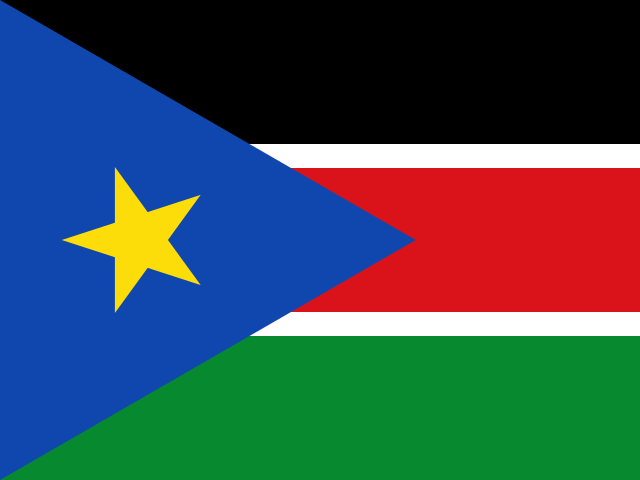
South Sudan
South Sudan is one of Eastern Africa's major oil resource holders but exported more than 85% of its production in 2014. Only 1% of the population had access to electricity in the country in 2017.
- Overview
- Energy mix
- Emissions
- Electricity
-
+ 5 pages

![South Sudan Flag]()
-
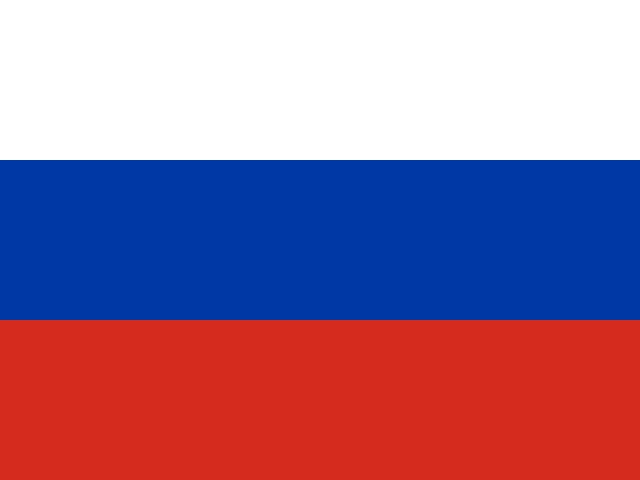
Russia
Russia is the world’s second-largest producer of natural gas, behind the United States, and has the world’s largest gas reserves. Russia is the world’s largest gas exporter. In 2021 the country produced 762 bcm of natural gas, and exported approximately 210 bcm via pipeline.
- Overview
- Energy mix
- Emissions
- Electricity
-
+ 5 pages

![Russia Flag]()
-
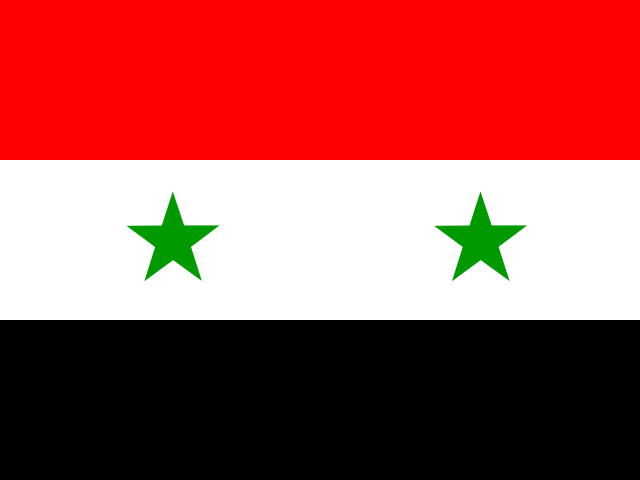
Syria
The 2009 Syrian Law on Energy Conservation aims to fulfil the sustainable development requirements of the country and deploy various renewable energy applications. Private and public institutions must commit to energy efficiency practices, use renewables and high energy- efficiency equipment.
- Overview
- Energy mix
- Emissions
- Electricity
-
+ 5 pages

![Syria Flag]()
-
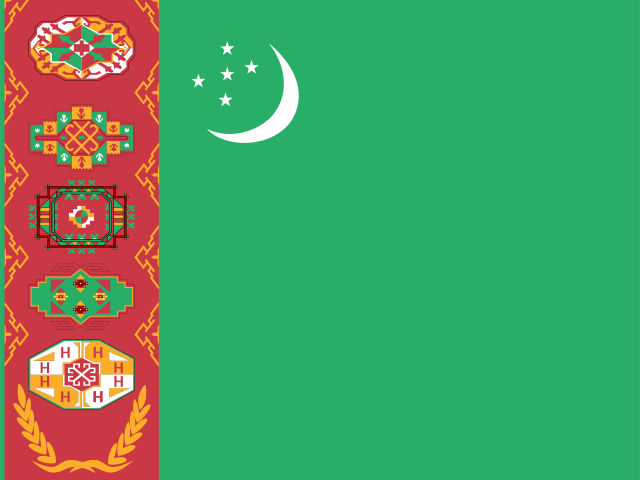
Turkmenistan
Turkmenistan’s government is continuously investing in oil and gas, to modernise and expand the electricity and heat sector by 2020. Moreover, the energy sector is almost fully subsidised, with citizens receiving free electricity, heat and gas up to a certain level of consumption, until 2030, but the government is taking steps to reduce subsidies to curb domestic demand and increase exports. Turkmenistan is part of the EU4Energy Programme, an initiative focused on evidence-based policymaking for the energy sector.
- Overview
- Energy mix
- Emissions
- Electricity
-
+ 5 pages
![Turkmenistan Flag]()
-
Austria 2026
Energy Policy Review Government action plays a pivotal role in ensuring secure and sustainable energy transitions. Energy policy is critical not just for the energy sector but also for meeting environmental, economic and social goals. Governments need to respond to their country’s specific needs, adapt to regional contexts and help address global challenges. In this context, the International Energy Agency (IEA) conducts Energy Policy Reviews to support governments in developing more impactful energy and climate policies.This Energy Policy Review was prepared in partnership between the Government of Austria and the IEA. It draws on the IEA’s extensive…

-
Gabon
Almost two-thirds of the population of Gabon has access to electricity. The country can partially rely on its 150 thousand barrels per day hydrocarbon liquids production and has recently implemented a new petroleum legislation.
- Overview
- Energy mix
- Emissions
- Electricity
-
+ 5 pages
![Gabon Flag]()
-
Togo
Less than half of the Togolese population has access to electricity. The country has a relatively diversified energy mix and more than 13% of its final energy consumption comes from renewable supplies of energy, mainly hydropower.
- Overview
- Energy mix
- Emissions
- Electricity
-
+ 5 pages
![Togo Flag]()
-
Eritrea
Less than half of the population of Eritrea has access to electricity. Most of the country's electricity generation comes from imported oil.
- Overview
- Energy mix
- Emissions
- Electricity
-
+ 5 pages
![Eritrea Flag]()
-
Peru
Peru’s government identified the development of electricity from renewable energy sources as a public necessity of national interest. The country established a National Renewable Energy Development Plan to be funded by the Annual Budget Law, external debt operations, direct investments and contributions from international institutions.
- Overview
- Energy mix
- Emissions
- Electricity
-
+ 5 pages

![Peru Flag]()
-
Armenia
Imports of oil and gas cover 77% of Armenia’s energy needs. Current energy policy is focused on developing indigenous energy sources, mainly renewable, and on replacing the country’s main nuclear reactor. Energy Efficiency policy has also become a bigger priority as energy security and reliability remain key focus areas. Armenia is part of the EU4Energy Programme, an initiative focused on evidence-based policymaking for the energy sector.
- Overview
- Energy mix
- Emissions
- Electricity
-
+ 5 pages
![Armenia Flag]()