-
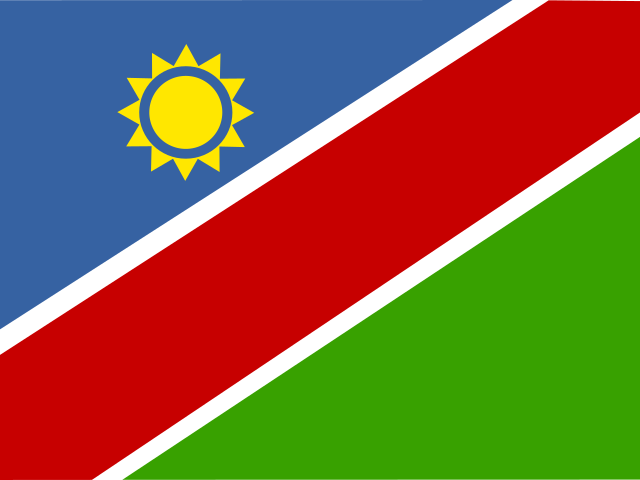
Namibia
Most of Namibia’s electricity is generated by hydropower. The country is also one of the ten-largest uranium resource-holders in the world and provides 8.2% of global production. The country has stated its interest in introducing nuclear power into its domestic mix.
- Overview
- Energy mix
- Emissions
- Electricity
-
+ 5 pages

![Namibia Flag]()
-
7 certainties about energy for this age of uncertainty
ED commentary The energy sector, like many others, is contending with a blizzard of uncertainties, complicating the work of policymakers, business leaders and investors.Geopolitical twists and turns are straining long-established relationships and upending deeply held assumptions. The World Uncertainty Index, devised by economists from the IMF and Stanford University, has hit unprecedented levels in recent months.But in this time of flux, there are still some important trends that we can identify with some confidence. Here are seven that can help us keep our bearings: The world has entered the age of electricity Oil and gas will still…
-
Copper
Outlook for key energy transition minerals This report provides an outlook for demand and supply for key energy minerals including copper, lithium, nickel, cobalt, graphite and rare earth elements. Demand projections encompass both key energy technologies and other uses under different IEA Scenarios. Supply projections are based on a detailed review of all announced projects. They show how today's geographical concentration evolves over time, for both mining and refining and how expected supply compares with primary supply requirements.
-
Oil Market Report - January 2026
The IEA Oil Market Report (OMR) is one of the world's most authoritative and timely sources of data, forecasts and analysis on the global oil market – including detailed statistics and commentary on oil supply, demand, inventories, prices and refining activity, as well as oil trade for IEA and selected non-IEA countries. Highlights Global oil demand growth is forecast to average 930 kb/d in 2026, up from 850 kb/d in 2025, reflecting a normalisation of economic conditions after last year’s tariff turmoil and lower oil prices than a year ago. A recovery in petrochemical feedstocks demand…

-
The energy crisis creates even stronger impetus for EU electrification
draft title Electrification is central to meeting the European Union’s goals on energy security, competitiveness, affordability, and emissions reductions. The closure of the Strait of Hormuz has highlighted the risks of over-dependence on imported fuels and concentrated supply routes, making the case for electrification even stronger.In the EU, around 70% of electricity generation is already supplied from domestic, low-emissions sources. And yet end-users (industry, buildings and transport sectors), source less than one quarter of their energy consumption from electricity. Today, around two-thirds of end-use energy consumption relies on fossil fuels, of which the…
-
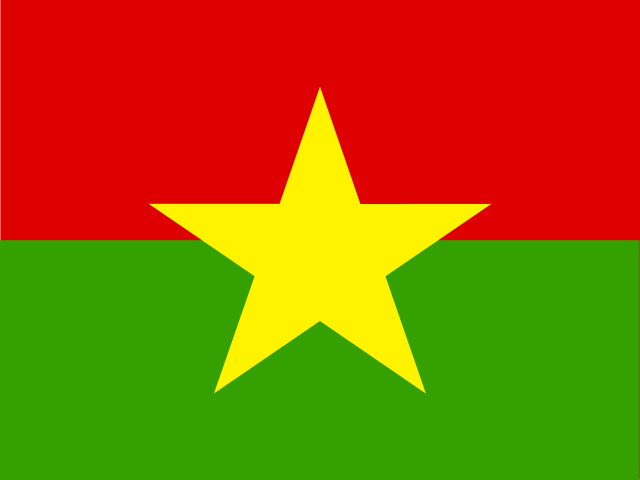
Burkina Faso
In 2019, Burkina Faso’s energy mix was dominated by biofuels and wastes, with oil products accounting for one-third of the total energy supply. In 2020, 11% of the population had access to clean cooking and only 21% had access to electricity, making Burkina Faso one of the world’s least-electrified countries. For electricity, the country has a target of 95% access for urban areas and 50% for rural areas by 2030. For clean cooking, Burkina Faso has a universal access target for urban areas and 65% in rural areas by 2030. The target for LPG urban penetration…
- Overview
- Energy mix
- Emissions
- Electricity
-
+ 5 pages
![Burkina Faso Flag]()
-
Lithium
Outlook for key energy transition minerals This report provides an outlook for demand and supply for key energy minerals including copper, lithium, nickel, cobalt, graphite and rare earth elements. Demand projections encompass both key energy technologies and other uses under different IEA Scenarios. Supply projections are based on a detailed review of all announced projects. They show how today's geographical concentration evolves over time, for both mining and refining and how expected supply compares with primary supply requirements.
-
El Salvador
The National Energy Policy to 2024 of El Salvador guides the national actions on energy, following main principles: ensure high quality level and continuous and affordable energy access, decrease fossil fuel dependency and mitigate environmental and social impacts of energy projects.
- Overview
- Energy mix
- Emissions
- Electricity
-
+ 5 pages

![El Salvador Flag]()
-
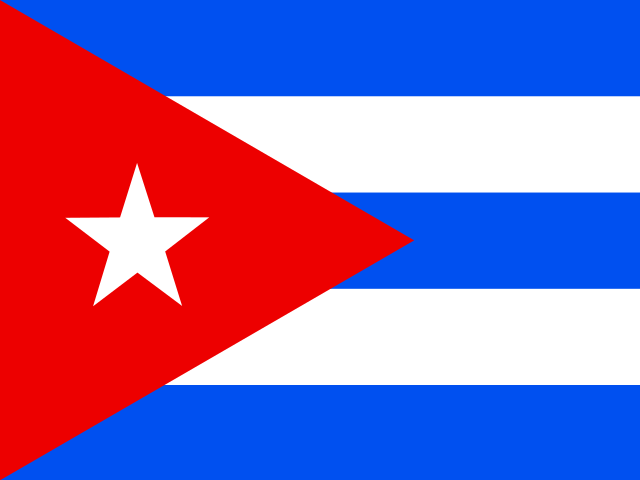
Cuba
Cuba’s energy supply mainly comes from oil products, accounting for over 80% of power generation.
- Overview
- Energy mix
- Emissions
- Electricity
-
+ 5 pages
![Cuba Flag]()
-
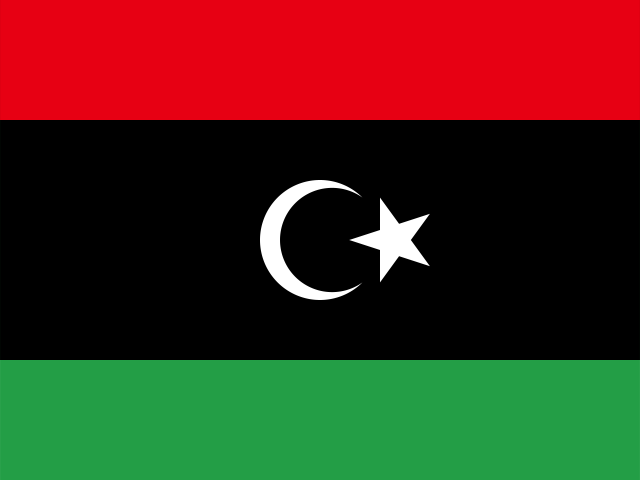
Libya
In 2013, the Libyan government launched the Renewable Energy Strategic 2013-2025 Plan, which aims to achieve 7% renewable energy contribution to the electric energy mix by 2020 and 10% by 2025. This will come from wind, Concentrated Solar Power, solar PV and solar heat.
- Overview
- Energy mix
- Emissions
- Electricity
-
+ 5 pages
![Libya Flag]()