-
Philippines
The Philippines has made significant progress in delivering electricity access, boosting the household electrification rate past 90% in 2016. The country is on track to meet the target of achieving universal electrification by 2022, as set out in the Philippine Development Plan 2017-2022.
- Overview
- Energy mix
- Emissions
- Electricity
-
+ 5 pages

![Philippines Flag]()
-
Myanmar
In Myanmar, a steep increase in the share of gas-fired power generation reflects a push to take advantage of its abundant domestic resources. The country however has ample scope to rely on renewables in its electrification strategy.
- Overview
- Energy mix
- Emissions
- Electricity
-
+ 5 pages
![Myanmar Flag]()
-
Malta
The National energy policy of Malta was launched in December 2012. It lists decisions and actions that have already been implemented as well as measures aiming to ensure the sustainability of Malta's energy sector.
- Overview
- Energy mix
- Emissions
- Electricity
-
+ 5 pages

![Malta Flag]()
-
Honduras
In 2014, Honduras approved a new Law of Electrical Industry, which establishes technology-specific auctions for renewable energy. 75% of the population has access to electricity in the country and only 48% can rely on clean cooking facilities.
- Overview
- Energy mix
- Emissions
- Electricity
-
+ 5 pages

![Honduras Flag]()
-
Congo
In Congo, 3 out of 5 people do not have access to electricity. As a country with a very low population density, Congo faces particularly severe challenges in bringing energy of any kind to its rural communities.
- Overview
- Energy mix
- Emissions
- Electricity
-
+ 5 pages

![Congo Flag]()
-
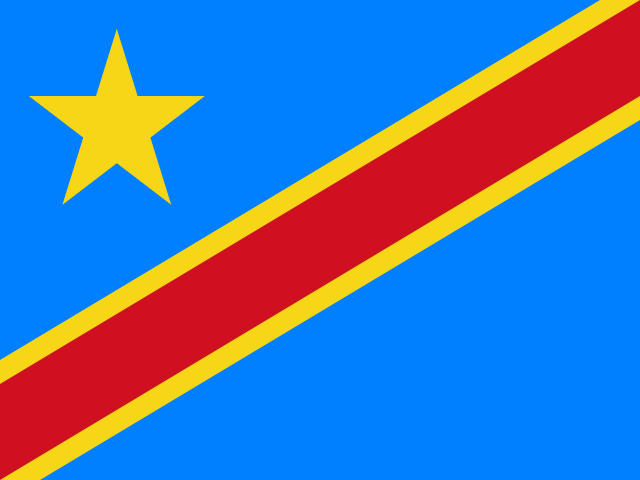
Democratic Republic of the Congo
The Democratic Republic of the Congo has huge hydropower potential while also dealing with extreme energy poverty. Foreign investors are currently partially lifting constraints on the country’s hydropower capacity, which is bringing down the costs of power supply and reducing the share of oil-fired power.
- Overview
- Energy mix
- Emissions
- Electricity
-
+ 5 pages
![Democratic Republic of the Congo Flag]()
-
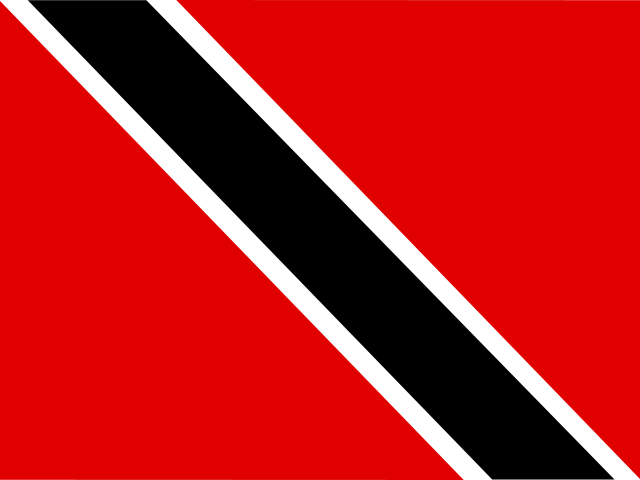
Trinidad and Tobago
Trinidad and Tobago
- Overview
- Energy mix
- Emissions
- Electricity
-
+ 5 pages
![Trinidad and Tobago Flag]()
-
Accelerating Renewables Growth in ASEAN
Challenges and policy suggestions Eight of the 11 member states of the Association of Southeast Asian Nations (ASEAN) have adopted net zero emissions targets, and recent national energy plans outline substantially higher ambitions for renewable capacity. Achieving these goals will require timely, sustained and strongly co-ordinated policy action to unlock the scale of renewable energy deployment needed by 2030 and beyond.This report examines the key challenges hindering a faster capacity deployment of renewable power in ASEAN and outlines potential policy solutions informed by successful international experience. It also provides an assessment of renewable-energy auction design options, an…

-
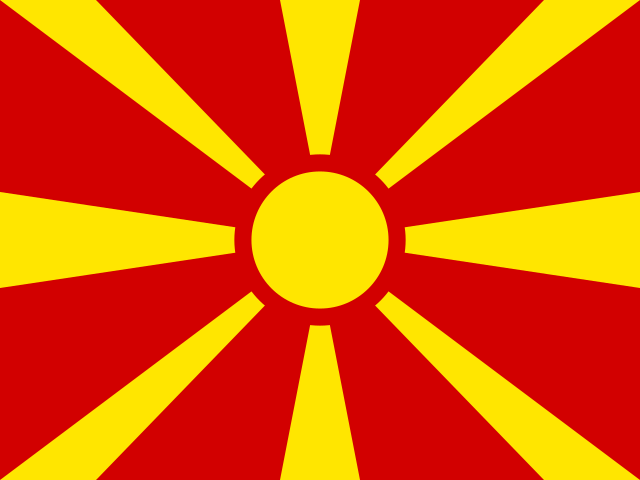
North Macedonia
North Macedonia
- Overview
- Energy mix
- Emissions
- Electricity
-
+ 5 pages
![North Macedonia Flag]()
-
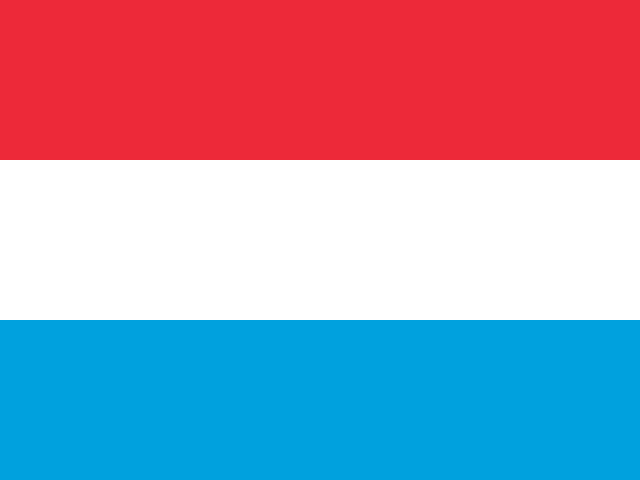
Luxembourg
Luxembourg has a fossil fuel intensive energy mix driven by a high demand for transportation fuels, notably from transiting freight trucks and commuters. Despite this demand, the country is committed to reducing emissions. Its climate law sets targets for a 55% emission reduction by 2030 and climate neutrality target by 2050. The government has adopted numerous measures to push for energy transition, including a carbon tax which was introduced in 2020 and encouraging renewable generation through subsidies and auctions. Several programmes also support energy efficiency in buildings, industry and transportation, with a target for 49% of all passenger cars to…
- Overview
- Energy mix
- Emissions
- Electricity
-
+ 5 pages
![Luxembourg Flag]()