-
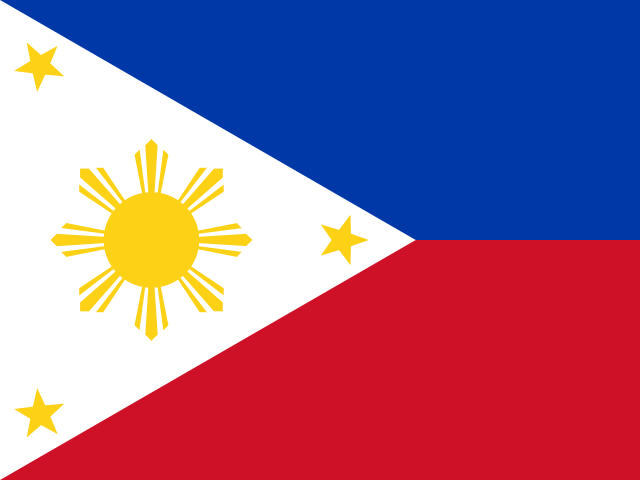
Philippines
The Philippines has made significant progress in delivering electricity access, boosting the household electrification rate past 90% in 2016. The country is on track to meet the target of achieving universal electrification by 2022, as set out in the Philippine Development Plan 2017-2022.
- Overview
- Energy mix
- Emissions
- Electricity
-
+ 5 pages

![Philippines Flag]()
-
Mozambique 2024
Energy Policy Review Government action plays a pivotal role in ensuring secure and sustainable energy transitions. Energy policy is critical not just for the energy sector but also for meeting environmental, economic and social goals. Governments need to respond to their country’s specific needs, adapt to regional contexts and help address global challenges. In this context, the International Energy Agency (IEA) conducts Energy Policy Reviews to support governments in developing more impactful energy and climate policies.This Energy Policy Review was prepared in partnership between the Government of Mozambique and the IEA. It draws on the IEA’s extensive…

-
Energy System Resilience
Lessons learned from Ukraine Ensuring energy security encompasses both long-term and short-term dimensions. The long-term dimension involves securing sufficient infrastructure investment and diverse supply sources. The short-term dimension – resilience – focuses on systems’ ability to cope with events exceeding standard planning conditions. Since Russia’s full-scale invasion in 2022, Ukraine has worked to protect its energy sector and to increase its ability to withstand and rapidly recover from Russia’s attacks on its energy infrastructure. The report explores the lessons that Ukraine has been learning as it works to bolster system resilience and identifies measures that…

-
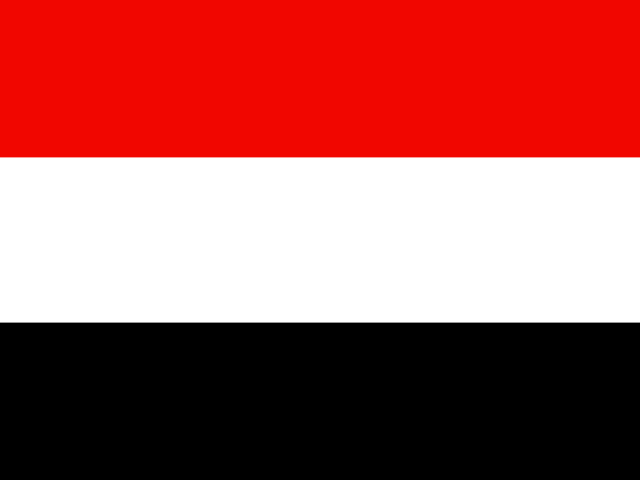
Yemen
In Yemen, less than half of the population has access to electricity. In 2010, the government launched a National Strategy for renewable energy and energy efficiency, which aims to develop grid and off-grid renewable energy and targets a 15% share of renewable electricity generation by 2025.
- Overview
- Energy mix
- Emissions
- Electricity
-
+ 5 pages

![Yemen Flag]()
-
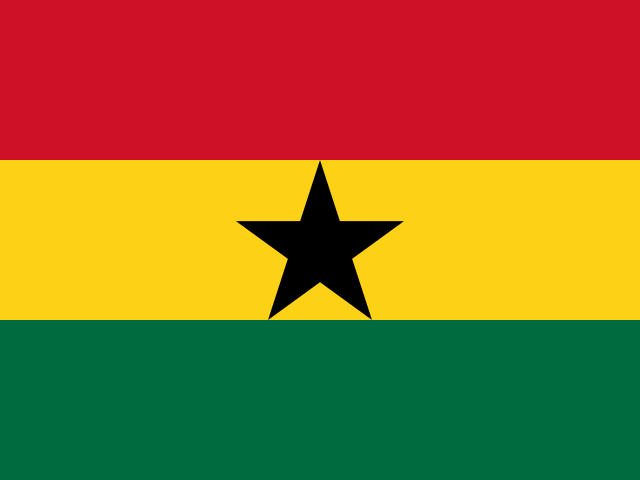
Ghana
In Ghana, electrification rates have gradually increased over the past 20 years, reaching almost 85% in 2017 and building on successful electrification plans. The country relies on a diversified energy mix and hosts the largest hydropower project of the Western African region.
- Overview
- Energy mix
- Emissions
- Electricity
-
+ 5 pages

![Ghana Flag]()
-
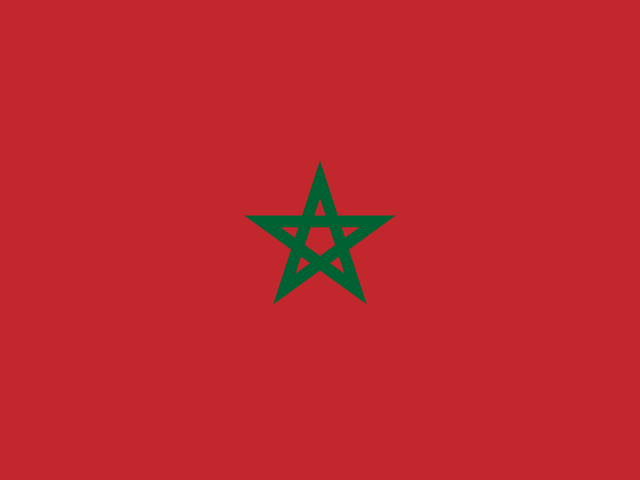
Morocco
The government has stepped up its role in international action on climate change, ratifying the Paris Agreement, setting a new national climate policy and hosting the United Nations Conference of Parties (COP22) summit in Marrakesh in 2016.
The development of renewables is helping to improve energy security as well as deliver on Morocco’s clean energy and climate change commitments. Morocco is making strong progress towards affordable, reliable, sustainable and modern energy in line with the United Nations Sustainable Development Goals (SDG 7). The government has achieved almost full access to electricity for its rural population, and it is developing…- Overview
- Energy mix
- Emissions
- Electricity
-
+ 5 pages
![Morocco Flag]()
-
Qatar
Qatar is a major producer and exporter of natural gas, oil and oil products. Its domestic oil and gas productions entirely cover the country’s energy needs.
- Overview
- Energy mix
- Emissions
- Electricity
-
+ 5 pages
![Qatar Flag]()
-
Algeria
Algeria is a large oil and gas producer and exporter. In 2015, the country updated its Renewable Energy and Energy Efficiency Development Plan to 2030, and put greater focus on the deployment of large-scale renewables, including solar PV and onshore wind installations, through various incentive measures.
- Overview
- Energy mix
- Emissions
- Electricity
-
+ 5 pages
![Algeria Flag]()
-
Sustainable Transport for Georgia: A Roadmap
The International Energy Agency (IEA) developed this Sustainable Transport Policy for Georgia roadmap under the European Union-funded five-year EU4Energy programme, which supports evidence-based energy policy and data capabilities in Eastern Partnership countries, including Georgia.The roadmap supports sustainable transport planning at national and city levels, summarising legislation, planning documents, and research on passenger and freight transport. Key metrics include accessibility, safety, convenience, equity, energy efficiency, emissions reduction, congestion and service reliability. Policies and targets are proposed to help Georgia meet the United Nations’ Sustainable Development Goals and achieve its Nationally Determined Contribution (NDC) pledges.The government of…

-
Albania
Albania’s Ministry of Energy recently launched an auction round for the construction of the country’s first large-scale solar plant. The country also has a National Strategy of Energy, which aims to develop an effective energy sector that guarantees security of energy supply and efficient use of energy.
- Overview
- Energy mix
- Emissions
- Electricity
-
+ 5 pages

![Albania Flag]()