-
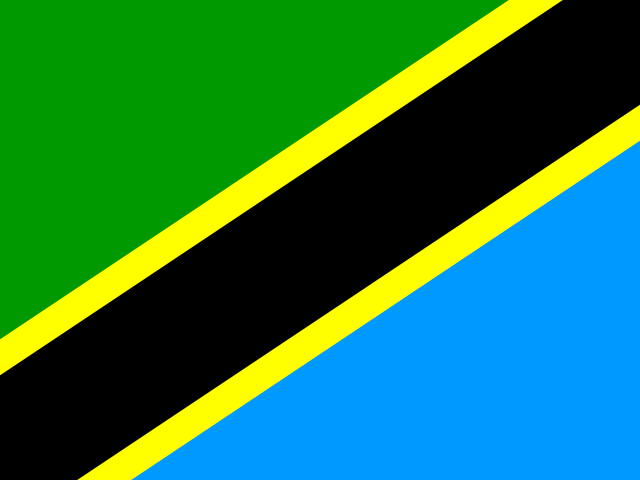
Tanzania
Electricity access in Tanzania increased from around 13% in 2008 to 32% in 2017. The government is supporting the private sector to develop its electricity market, enhancing the role of renewable energy in the energy mix and increasing rural electricity access.
- Overview
- Energy mix
- Emissions
- Electricity
-
+ 5 pages

![Tanzania Flag]()
-
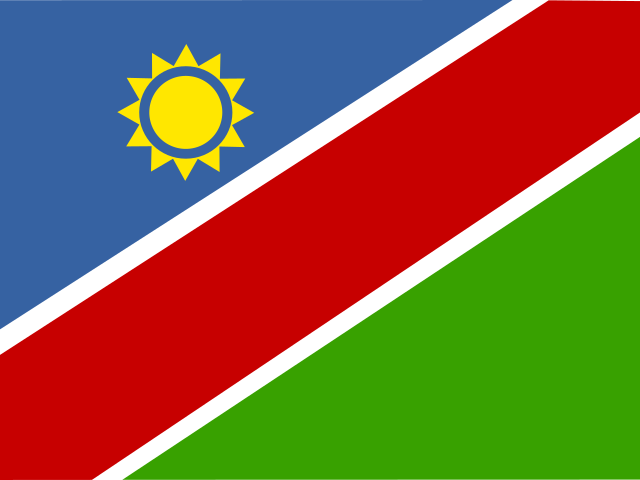
Namibia
Most of Namibia’s electricity is generated by hydropower. The country is also one of the ten-largest uranium resource-holders in the world and provides 8.2% of global production. The country has stated its interest in introducing nuclear power into its domestic mix.
- Overview
- Energy mix
- Emissions
- Electricity
-
+ 5 pages
![Namibia Flag]()
-
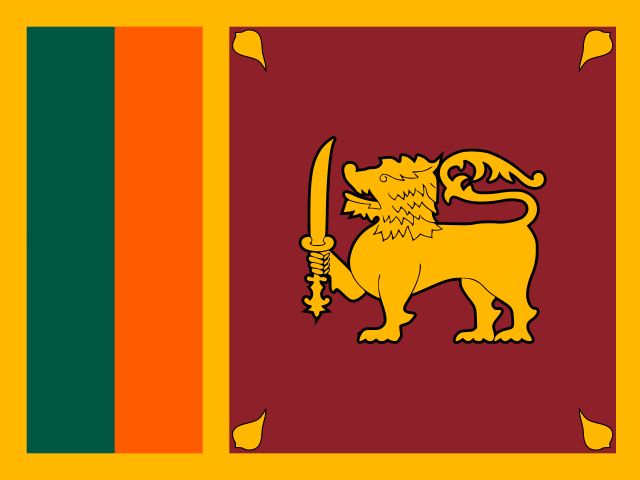
Sri Lanka
Sri Lanka’s primary energy supply mainly comes from oil and coal. Almost 40% of Sri Lanka’s electricity came from hydropower in 2017 but coal’s shares in power generation has been increasing since 2010. Sri Lanka is reaching universal access to electricity but clean cooking remain an issue with 15 million people still relying on biomass to cook.
- Overview
- Energy mix
- Emissions
- Electricity
-
+ 5 pages

![Sri Lanka Flag]()
-
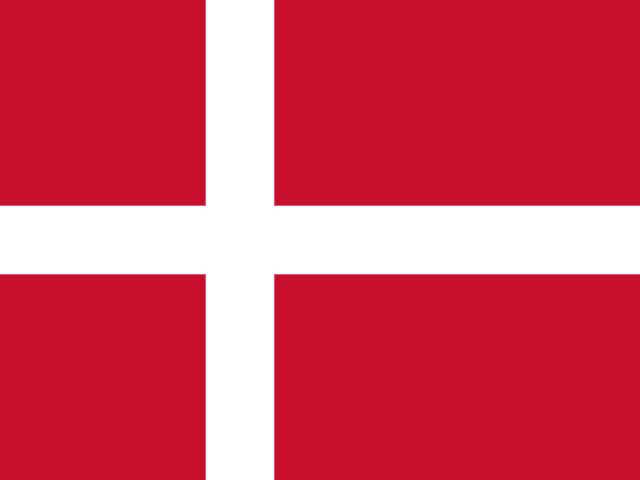
Denmark
…carbon capture and storage (CCUS) and hydrogen. The government has a robust energy and climate governance under the Danish Ministry of Climate, Energy and Utilities and ‘the year wheel’ of Climate Act of 2020 ensures annual policy actions and funding. Among IEA countries, Denmark has the highest share of wind electricity, which together with bioenergy and solar photovoltaic make up over 80% of the electricity mix. The district heating sector has practically phased out coal, contributing to lower reliance on fossil fuels in Denmark’s total energy supply than IEA average. Denmark is committed to end fossil fuel production by…
- Overview
- Energy mix
- Emissions
- Electricity
-
+ 5 pages

![Denmark Flag]()
-
Luxembourg
Luxembourg has a fossil fuel intensive energy mix driven by a high demand for transportation fuels, notably from transiting freight trucks and commuters. Despite this demand, the country is committed to reducing emissions. Its climate law sets targets for a 55% emission reduction by 2030 and climate neutrality target by 2050. The government has adopted numerous measures to push for energy transition, including a carbon tax which was introduced in 2020 and encouraging renewable generation through subsidies and auctions. Several programmes also support energy efficiency in buildings, industry and transportation, with a target for 49% of all passenger cars to…
- Overview
- Energy mix
- Emissions
- Electricity
-
+ 5 pages
![Luxembourg Flag]()
-
Jamaica
The government of Jamaica adopted a national Energy Policy in 2010 , which establishes a goal of 20% of renewable energy in the energy mix by 2030. This Strategic Framework also addresses both the supply and demand energy issues that the country faces.
- Overview
- Energy mix
- Emissions
- Electricity
-
+ 5 pages

![Jamaica Flag]()
-
Gabon
Almost two-thirds of the population of Gabon has access to electricity. The country can partially rely on its 150 thousand barrels per day hydrocarbon liquids production and has recently implemented a new petroleum legislation.
- Overview
- Energy mix
- Emissions
- Electricity
-
+ 5 pages
![Gabon Flag]()
-
France
…fleet, the second-largest after the United States. As an early leader in setting out an ambitious energy transition, France legislated a net zero emissions target for 2050 in its 2019 Energy and Climate Act and aims at reducing by 55% its greenhouse gas emissions by 2030. A national low-carbon strategy with 5-year carbon budgets and a multiannual plan for energy investments implement the long-term target.
Acknowledging the need to maintain electricity security in the longer term and a low-carbon footprint France invests in efficiency, six new nuclear power plants and renewable energy, notably offshore wind…- Overview
- Energy mix
- Emissions
- Electricity
-
+ 5 pages
![France Flag]()
-
Russia
Russia is the world’s second-largest producer of natural gas, behind the United States, and has the world’s largest gas reserves. Russia is the world’s largest gas exporter. In 2021 the country produced 762 bcm of natural gas, and exported approximately 210 bcm via pipeline.
- Overview
- Energy mix
- Emissions
- Electricity
-
+ 5 pages

![Russia Flag]()
-
Nicaragua
The National Energy Policy of Nicaragua establishes a policy framework for the development and exploitation of renewable sources. The law sets the objective of prioritizing the use of renewable energy in the national energy mix and of stabilizing energy prices using renewables.
- Overview
- Energy mix
- Emissions
- Electricity
-
+ 5 pages
![Nicaragua Flag]()