-
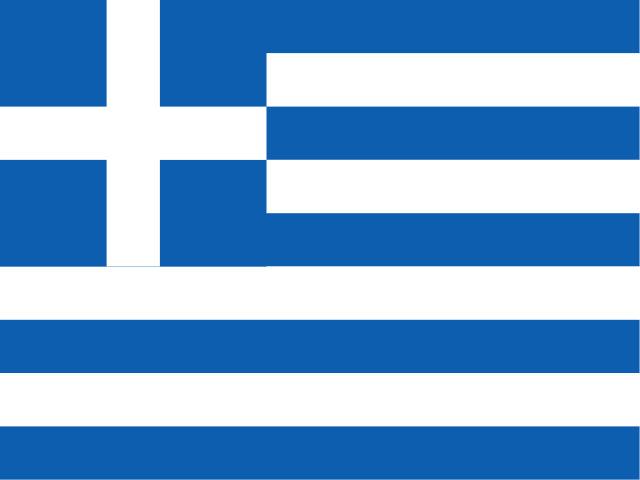
Greece
Greece is making progress on its energy transition, including implementing reforms to standardise and simplify licensing procedures for renewable projects and investigating options for offshore wind. Coal fired generation, once the main source of electricity, will be phased out by 2028 at the latest and EUR 5 billion has been committed to assist impacted communities. Auctions are driving strong deployment of solar PV, onshore wind and battery storage. There are also projects for interconnections and renewables to decarbonise electricity on Greek islands. However, more effort is needed boost electrification and improve efficiency in transport and buildings.
- Overview
- Energy mix
- Emissions
- Electricity
-
+ 5 pages

![Greece Flag]()
-
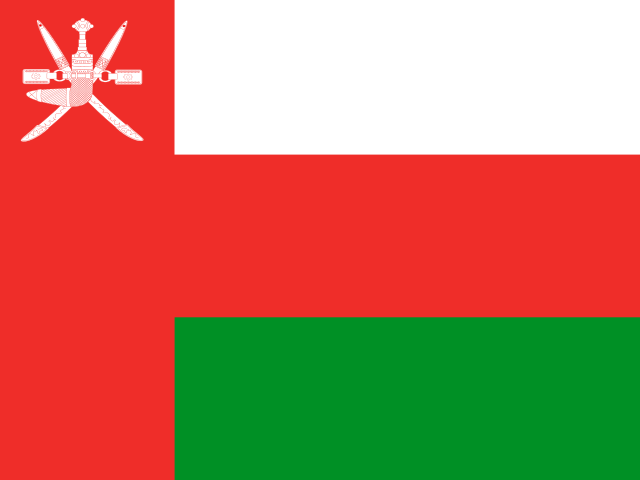
Oman
Oman’s energy supply is entirely generated by nationally-produced natural gas and oil products and the country is a large exporter of oil and gas. The government has recently launched the “Residential PV Initiative" to foster the private use of solar PV.
- Overview
- Energy mix
- Emissions
- Electricity
-
+ 5 pages

![Oman Flag]()
-
Latvia
Latvia is undertaking its energy transition with some promising results to date, with the goal to reduce total greenhouse gas emissions (without land use, land-use change and forestry) by 65% from 1990 levels by 2030 and to achieve net zero by 2050. It has made inroads on the share of renewable energy in its fuel mix, with sizeable shares of bioenergy and hydropower.
Renewable energy sources dominate its electricity mix, in particular, accounting for around three-quarters of domestic generation. Other sectors, notably transport and buildings, continue to consume large amounts of energy and rely on dated infrastructure that…- Overview
- Energy mix
- Emissions
- Electricity
-
+ 5 pages
![Latvia Flag]()
-
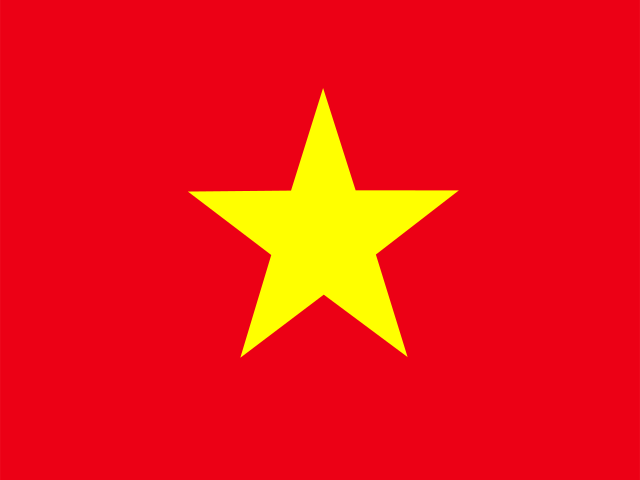
Viet Nam
In recent years, Viet Nam has increased its non-hydro renewable capacity targets in its power development plan, from 9.4% to 21% of total installed capacity in 2030, and decreased the share of coal-fired capacity from 52% to 43%.
- Overview
- Energy mix
- Emissions
- Electricity
-
+ 5 pages

![Viet Nam Flag]()
-
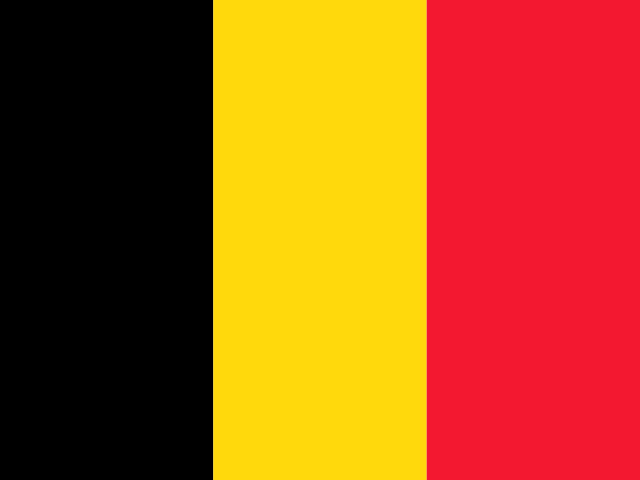
Belgium
Belgium’s energy policy is focused on transitioning to a low-carbon economy while ensuring energy security, lowering costs for consumers and increasing market competition. Belgium has made progress on these goals, notably as a global leader in offshore wind. The country is also seeing a rapid uptake of electric vehicles. However, Belgium remains reliant on fossil fuels and more aggressive policies are needed accelerate emissions reductions, especially for the industry sector.
- Overview
- Energy mix
- Emissions
- Electricity
-
+ 5 pages
![Belgium Flag]()
-
Montenegro
The Energy Development Strategy of Montenegro sets out objectives and defines mechanisms for the transition from the current energy system to a safe, competitive and environmentally acceptable energy paradigm by 2025. It also provides guidelines for the development of the energy sector with the aim of attracting investors.
Data for Montenegro is included under Serbia until 2004.- Overview
- Energy mix
- Emissions
- Electricity
-
+ 5 pages
![Montenegro Flag]()
-
Denmark
Denmark has been an early leader in decarbonisation and in 2022 the government announced a net zero by 2045 target, aiming at 110% emissions reductions by 2050. Denmark’s technology leadership is important in the areas of offshore wind, biomethane and district heating. The government has expanded these categories to adopt a strategic focus on carbon capture and storage (CCUS) and hydrogen. The government has a robust energy and climate governance under the Danish Ministry of Climate, Energy and Utilities and ‘the year wheel’ of Climate Act of 2020 ensures annual policy actions and funding. Among IEA countries, Denmark has…
- Overview
- Energy mix
- Emissions
- Electricity
-
+ 5 pages
![Denmark Flag]()
-
Germany
Germany’s Climate Law sets out the framework for reaching net zero emissions by 2045. In order to achieve the ambitious Energiewende by 2030, 80% of all electricity supply will need to come from renewable energy sources (and 100% by 2035) and coal is to be completely phased out. Germany has been an early leader in offshore wind and solar PV and phased out nuclear power in 2023. Major legislative reforms in renewable energy planning and siting support targets of 100-110 GW of onshore wind, 30 GW offshore wind and 200 GW solar, alongside investments in 10 GW of…
- Overview
- Energy mix
- Emissions
- Electricity
-
+ 5 pages
![Germany Flag]()
-
Curacao
Curacao
- Overview
- Energy mix
- Emissions
- Electricity
-
+ 5 pages

![Curacao Flag]()
-
South Africa
Coal is the mainstay of the South African energy system, meeting around 70% of installed power generation capacity. The 2019 Integrated Resource Plan however sets out a long-term diversification of the power mix by 2030 and moves towards lightening the carbon footprint of the energy sector while meeting growing energy demand and ensuring a socio-economically just transition. While the options to diversify the country's electricity mix appear diverse, the affordability of electricity supply looms as a key concern and a potential constraint on diversification. The structure of consumption and of spending on electricity is skewed towards higher…
- Overview
- Energy mix
- Emissions
- Electricity
-
+ 5 pages

![South Africa Flag]()