-
Honduras
In 2014, Honduras approved a new Law of Electrical Industry, which establishes technology-specific auctions for renewable energy. 75% of the population has access to electricity in the country and only 48% can rely on clean cooking facilities.
- Overview
- Energy mix
- Emissions
- Electricity
-
+ 5 pages

![Honduras Flag]()
-
United Arab Emirates
The majority of the energy produced in the United Arab Emirates is from natural gas and oil. The country is also a major exporter of oil and gas and it started using its strong solar PV potential in 2014 to produce electricity.
- Overview
- Energy mix
- Emissions
- Electricity
-
+ 5 pages

![United Arab Emirates Flag]()
-
Ireland
Ireland put in place an ambitious and comprehensive set of policies and targets to reach net zero by 2050 and 80% of renewable electricity generation by 2030, but now their implementation needs to accelerate. Natural gas will remain an important part of the energy mix at least until the mid-2030s, especially to meet peak electricity demand, but offshore renewable energy will become the cornerstone of Ireland’s energy transition beyond 2030. Given Ireland’s current exclusive reliance on energy imports from the United Kingdom, energy security is a major concern to the government while transitioning to a (variable) renewables…
- Overview
- Energy mix
- Emissions
- Electricity
-
+ 5 pages

![Ireland Flag]()
-
Panama
Panama's National Energy Plan 2015–2050 outlines long-term strategy for the country’s energy sector development, including renewables. The Plan established that 15% of Panama’s generation capacity will come from renewables by 2030 and 50% by 2050.
- Overview
- Energy mix
- Emissions
- Electricity
-
+ 5 pages
![Panama Flag]()
-
Estonia
Estonia has achieved a notable reduction in greenhouse gas emissions thanks mainly to lowering its reliance on electricity generation from domestic oil shale, an energy rich sedimentary rock. However, oil shale remains the main energy source and imported fossil fuels still plan a major role, especially in transport. Estonia’s forests, which historically offset significant greenhouse gas emissions, have become a net emissions source. Estonia is aiming to accelerate its clean energy transition with a target to cover 100% of annual electricity demand with renewables by 2030 as part of a larger package to achieve climate neutrality by 2050. It…
- Overview
- Energy mix
- Emissions
- Electricity
-
+ 5 pages
![Estonia Flag]()
-
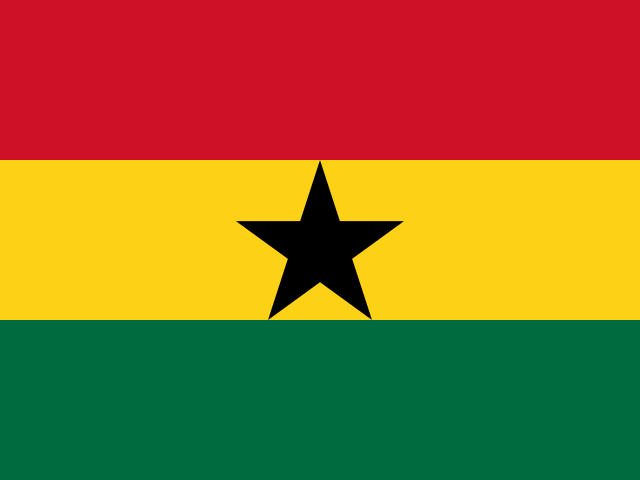
Ghana
In Ghana, electrification rates have gradually increased over the past 20 years, reaching almost 85% in 2017 and building on successful electrification plans. The country relies on a diversified energy mix and hosts the largest hydropower project of the Western African region.
- Overview
- Energy mix
- Emissions
- Electricity
-
+ 5 pages

![Ghana Flag]()
-
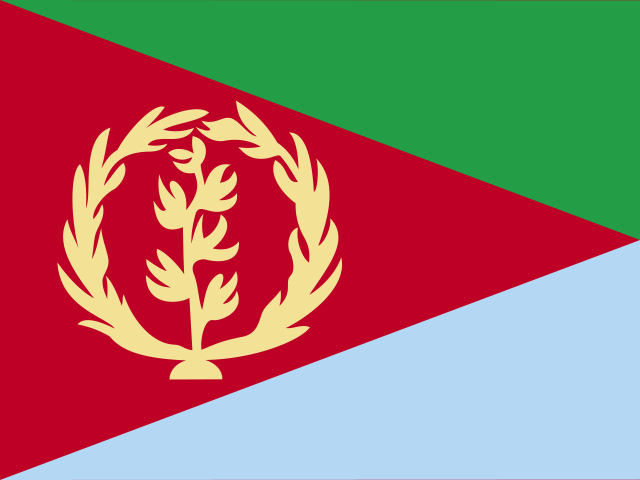
Eritrea
Less than half of the population of Eritrea has access to electricity. Most of the country's electricity generation comes from imported oil.
- Overview
- Energy mix
- Emissions
- Electricity
-
+ 5 pages
![Eritrea Flag]()
-
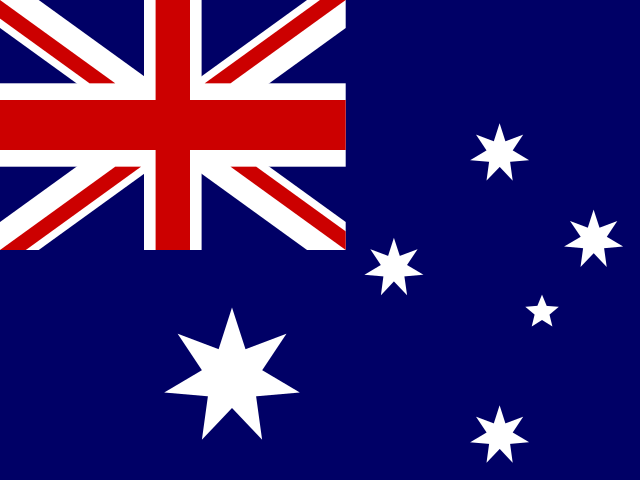
Australia
Established under the 2022 Climate Change Act, Australia's climate goals include doubling emissions reductions by 2030 and reaching Net Zero emissions by 2050, while ensuring a just and inclusive energy transition through the guidance of the Net Zero Authority under the Prime Minister’s office. By 2030, the government aims to reach the clean electricity target of 82% of renewable energy. In addition to this target, Australia is implementing a new 2030 critical minerals strategy and gas market reforms to boost energy security during the transition. Flexibility, fuel availability and resilient infrastructure will become even more vital as Australia…
- Overview
- Energy mix
- Emissions
- Electricity
-
+ 5 pages

![Australia Flag]()
-
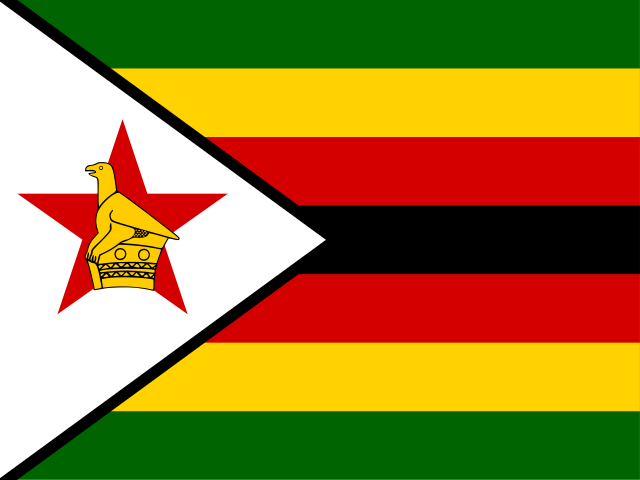
Zimbabwe
Zimbabwe holds large coal reserves and production is set to increase. The country has also significantly untapped its hydropower potential, even though the share of hydropower generation is gradually decreasing.
- Overview
- Energy mix
- Emissions
- Electricity
-
+ 5 pages
![Zimbabwe Flag]()
-
Slovenia
Slovenia has put in place a National Renewable Action Plan to 2020, which targets a 25% share of energy generation from renewable sources in gross final energy consumption and 39% of electricity demand met by electricity generated from renewable energy sources.
- Overview
- Energy mix
- Emissions
- Electricity
-
+ 5 pages
![Slovenia Flag]()