-
Dominican Republic
Dominican Republic has adopted a law on incentives for the development of renewable energy sources, which aims to increase the diversity of energy sources, reduce dependence on imported fossil fuels and stimulate investment in renewable energy.
- Overview
- Energy mix
- Emissions
- Electricity
-
+ 5 pages

![Dominican Republic Flag]()
-
Eswatini
Eswatini
- Overview
- Energy mix
- Emissions
- Electricity
-
+ 5 pages

![Eswatini Flag]()
-
Uganda
In 2019, Uganda’s energy mix was dominated by fuel wood and charcoal followed by a small share of oil products. The country produces electricity mainly from hydroelectric plants. Between 2017 and 2019, electrification outpaced population growth in Uganda. However in 2020, less than 5% of the population had access to clean cooking.
The Electricity Connection Policy was introduced in 2018 with the ambition of increasing Uganda’s electricity access to 60 percent by 2027 through connection subsidies for consumers located close to the existing network. About 300,000 households and businesses have received free electricity connections, benefiting 1.5…- Overview
- Energy mix
- Emissions
- Electricity
-
+ 5 pages
![Uganda Flag]()
-
Venezuela
The Venezuela Plan for the National Electric System aims to integrate renewables in the power system by including it in medium and long-term strategies. It aims to develop the use of renewables within isolated rural communities including solar, small hydro and biogas.
- Overview
- Energy mix
- Emissions
- Electricity
-
+ 5 pages
![Venezuela Flag]()
-
Ethiopia
In Ethiopia, while electricity reaches less than half of the population, great progress has been made over the past two decades. The National Electrification Program, launched in 2017, outlines a plan to reach universal access by 2025, aiming to supply 35% of the population with off-grid solutions. Meanwhile, Ethiopia is diversifying its hydro-dominated installed generation mix in favour of solar, wind and geothermal to pursue a more climate-resilient power system and reach economic development objectives.
- Overview
- Energy mix
- Emissions
- Electricity
-
+ 5 pages
![Ethiopia Flag]()
-
Sweden
Sweden is a global leader in decarbonisation and has targets to cut greenhouse gas emissions 59% by 2030 compared with 2005, and to have a net-zero carbon economy by 2045. Sweden was the first country to introduce carbon pricing and has the highest carbon price in the world, which has proven effective at driving decarbonisation. Most of Sweden’s electricity supply comes from hydro and nuclear, along with a growing contribution from wind. Heating is supplied mainly through bioenergy-based district heating and heat pumps.
Most of Sweden’s greenhouse gas emissions come from the transport sector, which remains…- Overview
- Energy mix
- Emissions
- Electricity
-
+ 5 pages

![Sweden Flag]()
-
Italy
Italy aims for carbon neutrality by 2050 and is on track to reach its 2030 targets for emissions reductions and energy efficiency, aiming to reach 30% of renewables in total energy consumption and 55% of renewables in electricity generation. The country has experienced notable growth in the renewable energy sector and has successfully integrated large volumes of variable renewable generation. Natural gas is a major source for electricity and heating, therefore Italy has strengthened its energy security by diversifying natural gas supply, making use of the pipeline and LNG infrastructure that it has built up over the last decade. Reducing…
- Overview
- Energy mix
- Emissions
- Electricity
-
+ 5 pages
![Italy Flag]()
-
Iran
Iran has in place legislation obliging the Minister of Energy to increase the share of renewables and clean power plants to at least 5% of the country's capacity until the end of 2021.
- Overview
- Energy mix
- Emissions
- Electricity
-
+ 5 pages

![Iran Flag]()
-
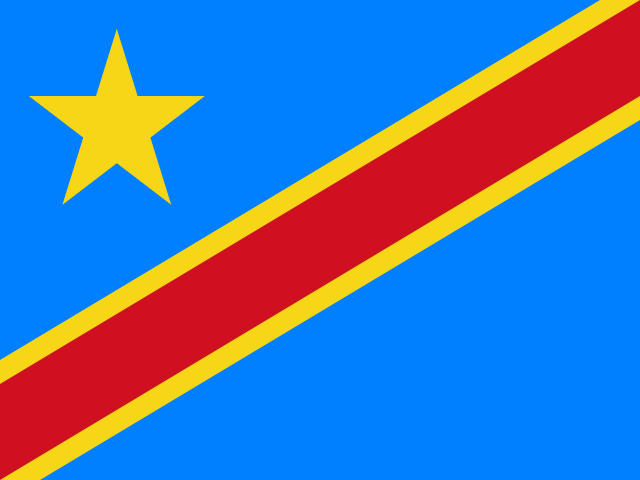
Democratic Republic of the Congo
The Democratic Republic of the Congo has huge hydropower potential while also dealing with extreme energy poverty. Foreign investors are currently partially lifting constraints on the country’s hydropower capacity, which is bringing down the costs of power supply and reducing the share of oil-fired power.
- Overview
- Energy mix
- Emissions
- Electricity
-
+ 5 pages
![Democratic Republic of the Congo Flag]()
-
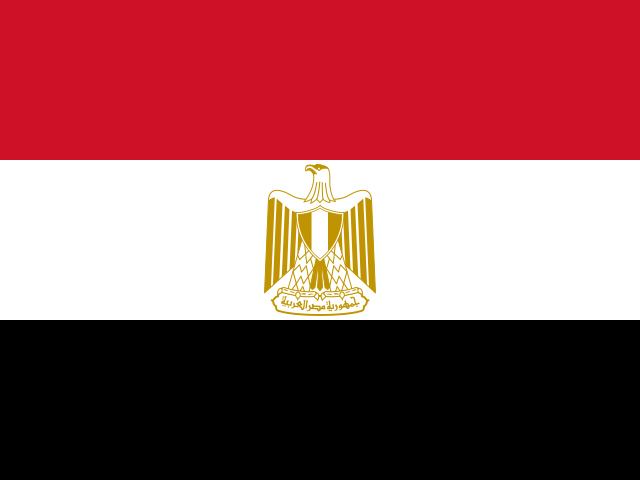
Egypt
Egypt has initiated a number of energy sector reforms, gradually reducing electricity subsidies and introducing feed-in tariffs to promote renewable energy production. The energy sector reforms recently initiated by the country have resulted in a significant increase in investments which have boosted electricity production over the last 5 years and ensured a stable supply across the country.
Egypt also has plans to increase the share of renewables in the electricity mix to 42% by 2035.- Overview
- Energy mix
- Emissions
- Electricity
-
+ 5 pages
![Egypt Flag]()