-
Laos
Laos’ 2011 Renewable Energy Development Strategy aims to achieve a renewable energy share of 30% in total energy consumption by 2025. The policy encourages investment in renewables and small power development for self-sufficiency and grid connection.
- Overview
- Energy mix
- Emissions
- Electricity
-
+ 5 pages

![Laos Flag]()
-
Australia
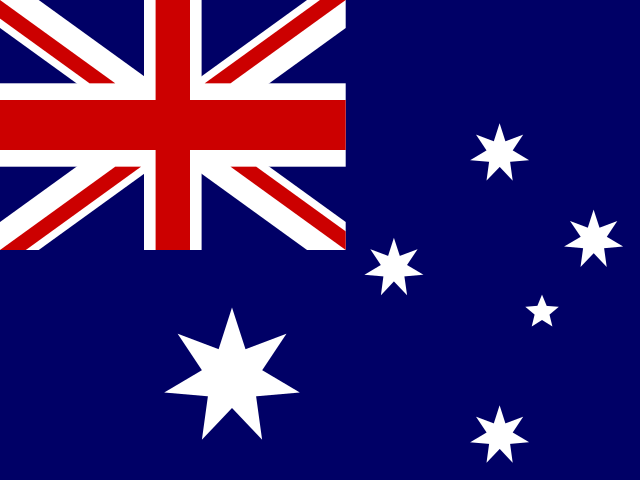
Established under the 2022 Climate Change Act, Australia's climate goals include doubling emissions reductions by 2030 and reaching Net Zero emissions by 2050, while ensuring a just and inclusive energy transition through the guidance of the Net Zero Authority under the Prime Minister’s office. By 2030, the government aims to reach the clean electricity target of 82% of renewable energy. In addition to this target, Australia is implementing a new 2030 critical minerals strategy and gas market reforms to boost energy security during the transition. Flexibility, fuel availability and resilient infrastructure will become even more vital as Australia…
- Overview
- Energy mix
- Emissions
- Electricity
-
+ 5 pages
![Australia Flag]()
-
Jordan
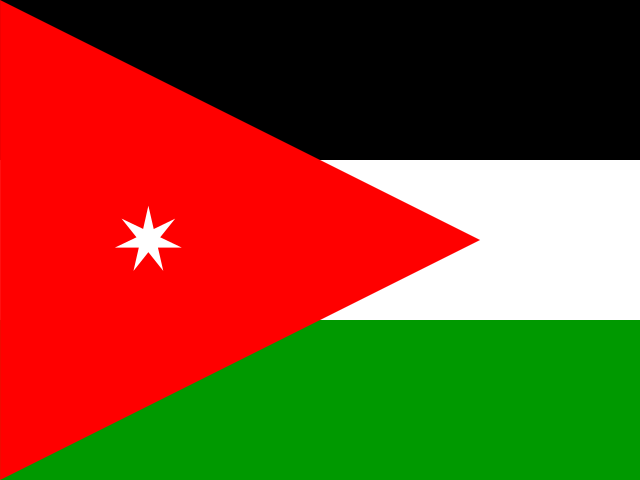
The government of Jordan targets 10% of energy mix to come from renewables by 2020. The country has set up a fund, as well as duties and taxes exemptions on all manufactured locally and imported renewable energy sources equipment and systems.
- Overview
- Energy mix
- Emissions
- Electricity
-
+ 5 pages

![Jordan Flag]()
-
Poland
Poland’s energy system has seen progress on energy transition, despite its reliance on domestic hard coal and lignite. For example, Poland has one of the fastest growing solar PV markets in the European Union and has also seen a strong uptake of heat pumps. Poland is pushing to become a major player in offshore wind, aiming for at least 3.4 GW of capacity by 2030. However, stronger efforts are needed across all sectors to accelerate energy transition and Poland would benefit from greater electricity interconnections with the rest of Europe.
- Overview
- Energy mix
- Emissions
- Electricity
-
+ 5 pages

![Poland Flag]()
-
Argentina
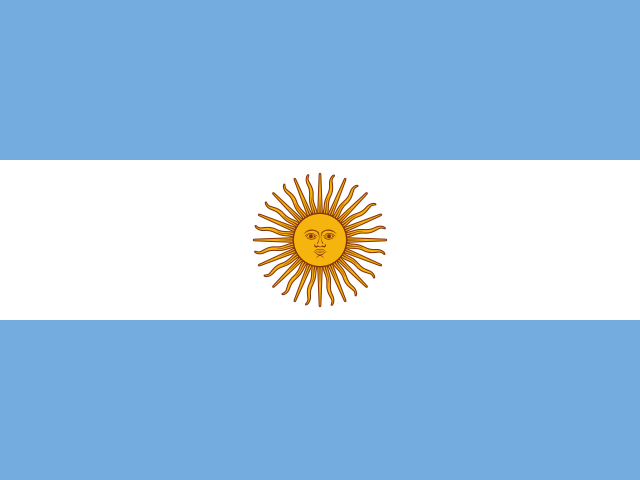
Argentina’s total primary energy mix is dominated by natural gas (55%) and oil (33%), with bioenergy contributing 5%, and hydropower and nuclear another 3% each. Argentina has the 2nd largest reserve of shale gas and the 4th largest reserve of shale oil worldwide. In 2019, the country produced 500,000 bpd of oil, of which 89,000 bpd was exported, but the country remains a net importer of oil products. In terms of power generation, Argentina relies on natural gas (65%), hydropower (18%), followed by nuclear 8%, wind (7%) and solar (1%). A set of public policies have boosted…
- Overview
- Energy mix
- Emissions
- Electricity
-
+ 5 pages

![Argentina Flag]()
-
Libya
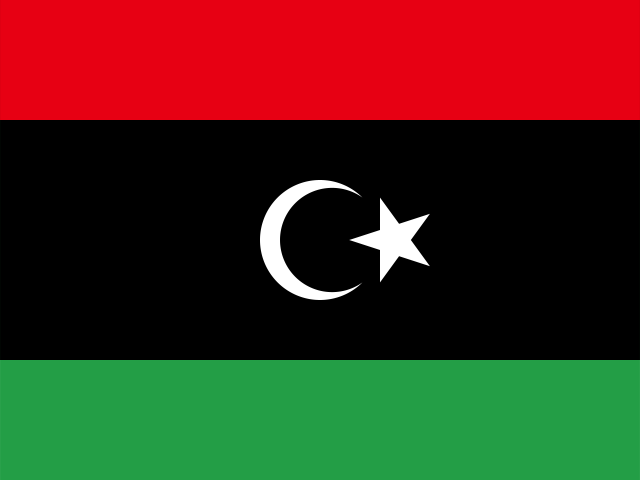
In 2013, the Libyan government launched the Renewable Energy Strategic 2013-2025 Plan, which aims to achieve 7% renewable energy contribution to the electric energy mix by 2020 and 10% by 2025. This will come from wind, Concentrated Solar Power, solar PV and solar heat.
- Overview
- Energy mix
- Emissions
- Electricity
-
+ 5 pages

![Libya Flag]()
-
Italy
Italy aims for carbon neutrality by 2050 and is on track to reach its 2030 targets for emissions reductions and energy efficiency, aiming to reach 30% of renewables in total energy consumption and 55% of renewables in electricity generation. The country has experienced notable growth in the renewable energy sector and has successfully integrated large volumes of variable renewable generation. Natural gas is a major source for electricity and heating, therefore Italy has strengthened its energy security by diversifying natural gas supply, making use of the pipeline and LNG infrastructure that it has built up over the last decade. Reducing…
- Overview
- Energy mix
- Emissions
- Electricity
-
+ 5 pages
![Italy Flag]()
-
Viet Nam
In recent years, Viet Nam has increased its non-hydro renewable capacity targets in its power development plan, from 9.4% to 21% of total installed capacity in 2030, and decreased the share of coal-fired capacity from 52% to 43%.
- Overview
- Energy mix
- Emissions
- Electricity
-
+ 5 pages
![Viet Nam Flag]()
-
Tunisia
Tunisia mostly relies on gas imports to meet its primary energy needs: almost 97% of its electricity generation came from gas in 2016. However, energy policy puts the emphasis on renewable energy. Electricity generation from wind power strongly increased since 2014.
- Overview
- Energy mix
- Emissions
- Electricity
-
+ 5 pages
![Tunisia Flag]()
-
Bahrain
Bahrain's energy supply comes largely from the exploitation of its domestic fossil fuels resources. The country is also a major producer and exporter of oil, petroleum products and natural gas.
- Overview
- Energy mix
- Emissions
- Electricity
-
+ 5 pages
![Bahrain Flag]()