-
Luxembourg
Luxembourg has a fossil fuel intensive energy mix driven by a high demand for transportation fuels, notably from transiting freight trucks and commuters. Despite this demand, the country is committed to reducing emissions. Its climate law sets targets for a 55% emission reduction by 2030 and climate neutrality target by 2050. The government has adopted numerous measures to push for energy transition, including a carbon tax which was introduced in 2020 and encouraging renewable generation through subsidies and auctions. Several programmes also support energy efficiency in buildings, industry and transportation, with a target for 49% of all passenger cars to…
- Overview
- Energy mix
- Emissions
- Electricity
-
+ 5 pages

![Luxembourg Flag]()
-
Morocco
The government has stepped up its role in international action on climate change, ratifying the Paris Agreement, setting a new national climate policy and hosting the United Nations Conference of Parties (COP22) summit in Marrakesh in 2016.
The development of renewables is helping to improve energy security as well as deliver on Morocco’s clean energy and climate change commitments. Morocco is making strong progress towards affordable, reliable, sustainable and modern energy in line with the United Nations Sustainable Development Goals (SDG 7). The government has achieved almost full access to electricity for its rural population, and it is developing…- Overview
- Energy mix
- Emissions
- Electricity
-
+ 5 pages

![Morocco Flag]()
-
Norway
Norway has set ambitious targets for reducing greenhouse gas emissions and establishing a low-emissions society by 2050. As an energy-rich country, Norway is in a unique starting position with respect to the energy transition. An abundance of affordable hydropower has enabled the development of energy-intensive industries and a high level of electrification of homes and businesses with limited greenhouse gas emissions. At the same time, as a major oil and gas producer and exporter, Norway will need to support an evolution of its energy sector amid the global energy transition. Altogether, Norway has the opportunity to lead…
- Overview
- Energy mix
- Emissions
- Electricity
-
+ 5 pages
![Norway Flag]()
-
Slovenia
Slovenia has put in place a National Renewable Action Plan to 2020, which targets a 25% share of energy generation from renewable sources in gross final energy consumption and 39% of electricity demand met by electricity generated from renewable energy sources.
- Overview
- Energy mix
- Emissions
- Electricity
-
+ 5 pages
![Slovenia Flag]()
-
Rwanda
Rwanda included strong commitments to its intended nationally determined contribution (INDC) to the Paris Agreement. The country plans to increase its carbon sink capacity through sustainable forest management practices and to reduce emissions from the agricultural sector. In 2019, Rwanda’s energy mix was dominated by biomass and waste (74%) and oil products (20%), while natural gas, coal and hydro account for the rest of the energy supply. In 2020, less than 5% of the population had access to clean cooking and 50% had access to electricity. With annual access growth of more than 3 percentage points, Rwanda has shown…
- Overview
- Energy mix
- Emissions
- Electricity
-
+ 5 pages
![Rwanda Flag]()
-
Mexico
Mexico’s energy and economic profile presents both challenges and opportunities as a major oil producer, exporter and through its growing domestic energy demand. Mexico was the first large oil producing emerging economy to adopt climate legislation in 2012 and has seen growth in renewable electricity generation from wind and solar, which almost tripled from 2015 to 2022. However, strong action is needed across all sectors to reduce reliance on fossil fuels and bring down greenhouse gas emissions.
- Overview
- Energy mix
- Emissions
- Electricity
-
+ 5 pages

![Mexico Flag]()
-
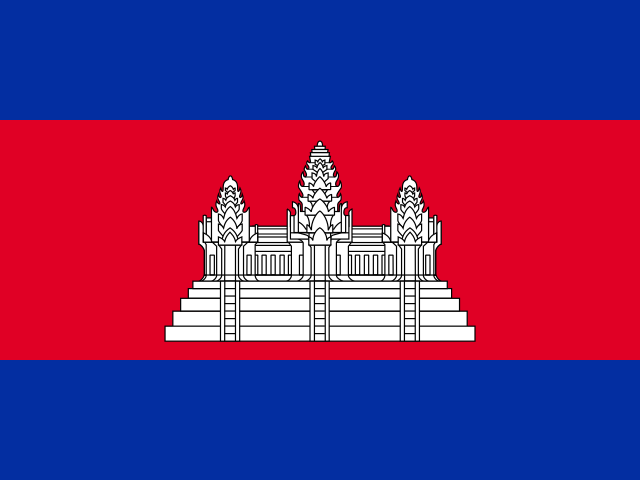
Cambodia
Cambodia’s electrification rate is the second-lowest among South East Asian countries. Cambodia plans to increase its power generation capacity by building hydropower and coal-fired plants by 2025, which can contribute to improve self-sufficiency of power supply.
- Overview
- Energy mix
- Emissions
- Electricity
-
+ 5 pages

![Cambodia Flag]()
-
Indonesia
Indonesia’s imports of oil have rapidly increased in recent years. This resource-rich nation is the world’s fourth-largest producer of coal and Southeast Asia’s biggest gas supplier. The country is the largest producer of biofuels worldwide and it is scaling up efforts to exploit its renewable energy potential. Indonesia's importance is underscored by its sizeable population of 250 million people – the fourth-largest in the world – and its significant role as a major producer and consumer of energy in regional and international markets. Indonesia is also the largest economy in ASEAN and an active member…
- Overview
- Energy mix
- Emissions
- Electricity
-
+ 5 pages
![Indonesia Flag]()
-
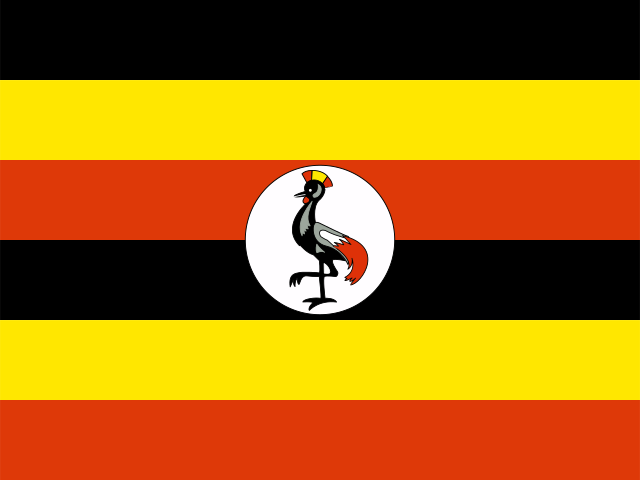
Uganda
In 2019, Uganda’s energy mix was dominated by fuel wood and charcoal followed by a small share of oil products. The country produces electricity mainly from hydroelectric plants. Between 2017 and 2019, electrification outpaced population growth in Uganda. However in 2020, less than 5% of the population had access to clean cooking.
The Electricity Connection Policy was introduced in 2018 with the ambition of increasing Uganda’s electricity access to 60 percent by 2027 through connection subsidies for consumers located close to the existing network. About 300,000 households and businesses have received free electricity connections, benefiting 1.5…- Overview
- Energy mix
- Emissions
- Electricity
-
+ 5 pages
![Uganda Flag]()
-
Bolivia
A quarter of the electricity generated in Bolivia comes from renewables. On the other hand, 12% of the population still does not have access to electricity. The government has launched the Bolivia Electric Plan 2020-2025 to support the expansion of the electricity grid with a strong emphasis on renewables.
- Overview
- Energy mix
- Emissions
- Electricity
-
+ 5 pages

![Bolivia Flag]()