-
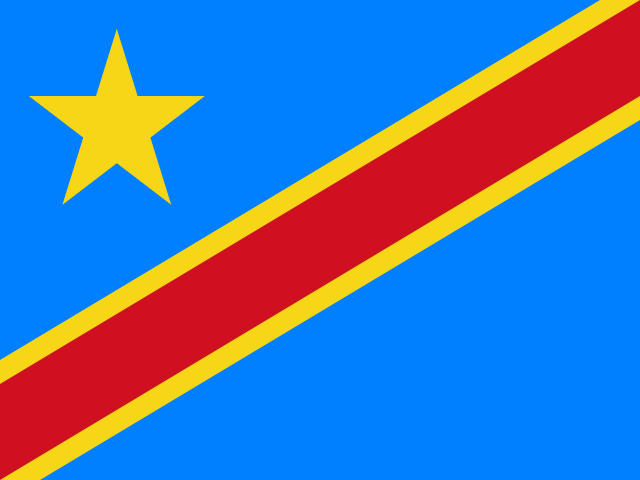
Democratic Republic of the Congo
The Democratic Republic of the Congo has huge hydropower potential while also dealing with extreme energy poverty. Foreign investors are currently partially lifting constraints on the country’s hydropower capacity, which is bringing down the costs of power supply and reducing the share of oil-fired power.
- Overview
- Energy mix
- Emissions
- Electricity
-
+ 5 pages

![Democratic Republic of the Congo Flag]()
-
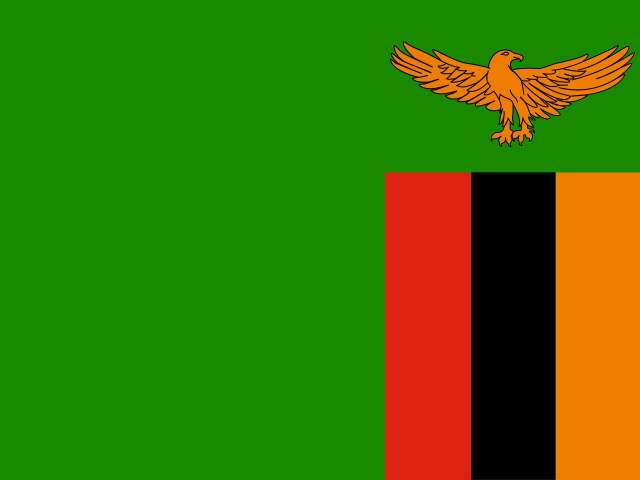
Zambia
Coal production is set to increase in Zambia, but exports remain limited to trade with neighbouring countries. The country has recently made good progress regarding electrification rates through a large push for mini-grid and off-grid solutions in rural areas.
- Overview
- Energy mix
- Emissions
- Electricity
-
+ 5 pages
![Zambia Flag]()
-
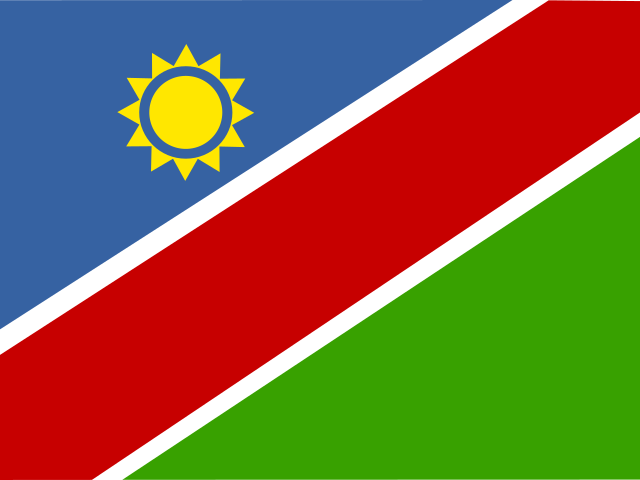
Namibia
Most of Namibia’s electricity is generated by hydropower. The country is also one of the ten-largest uranium resource-holders in the world and provides 8.2% of global production. The country has stated its interest in introducing nuclear power into its domestic mix.
- Overview
- Energy mix
- Emissions
- Electricity
-
+ 5 pages
![Namibia Flag]()
-
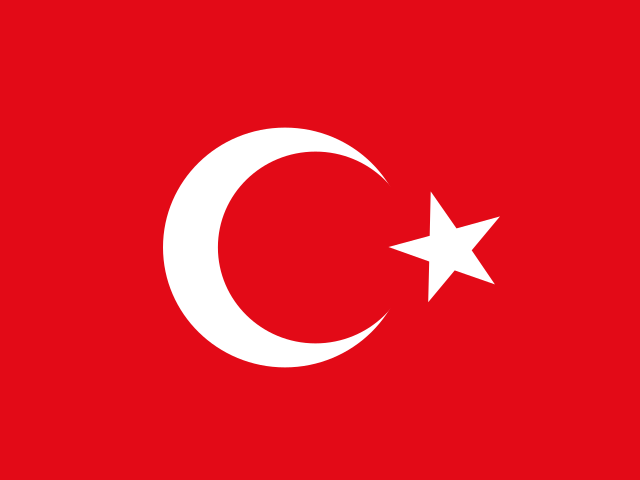
Türkiye
Rapid economic and population growth in Türkiye over the past two decades have not only driven strong growth in energy demand, but also an associated increase in import dependency. As a result, Türkiye has pursued a restructuring of its energy system with the aim of rationalising energy demand growth, lowering energy prices and slowing the pace of import growth.
These reforms have included measures targeted at modernisation, liberalisation and increased domestic production capacity. Notably, Türkiye has seen considerable diversification of its energy mix in the past decade. Renewable electricity generation has tripled in the past decade and the commissioning of…- Overview
- Energy mix
- Emissions
- Electricity
-
+ 5 pages

![Türkiye Flag]()
-
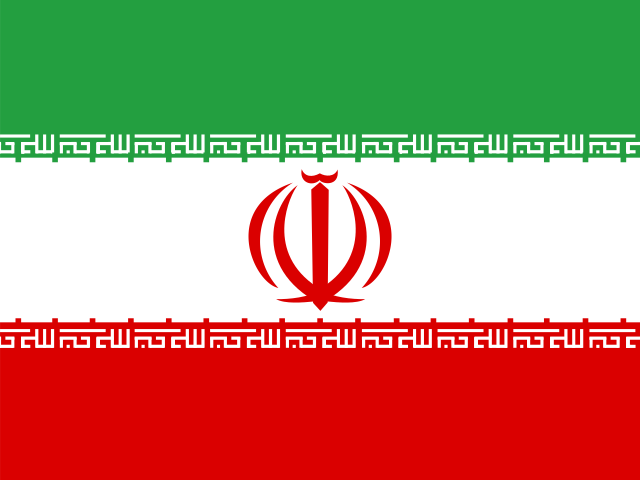
Iran
Iran has in place legislation obliging the Minister of Energy to increase the share of renewables and clean power plants to at least 5% of the country's capacity until the end of 2021.
- Overview
- Energy mix
- Emissions
- Electricity
-
+ 5 pages

![Iran Flag]()
-
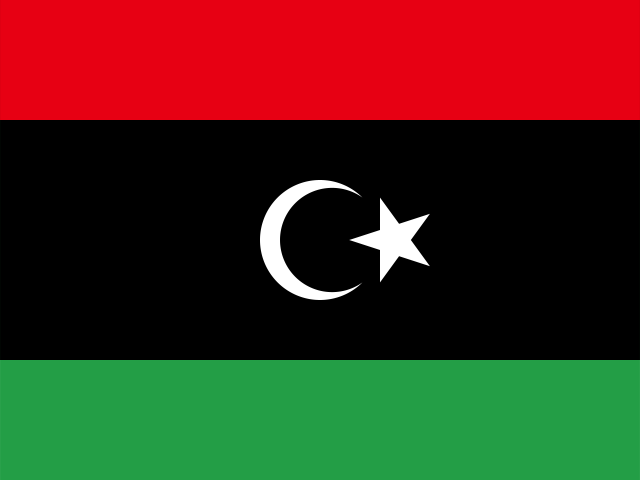
Libya
In 2013, the Libyan government launched the Renewable Energy Strategic 2013-2025 Plan, which aims to achieve 7% renewable energy contribution to the electric energy mix by 2020 and 10% by 2025. This will come from wind, Concentrated Solar Power, solar PV and solar heat.
- Overview
- Energy mix
- Emissions
- Electricity
-
+ 5 pages
![Libya Flag]()
-
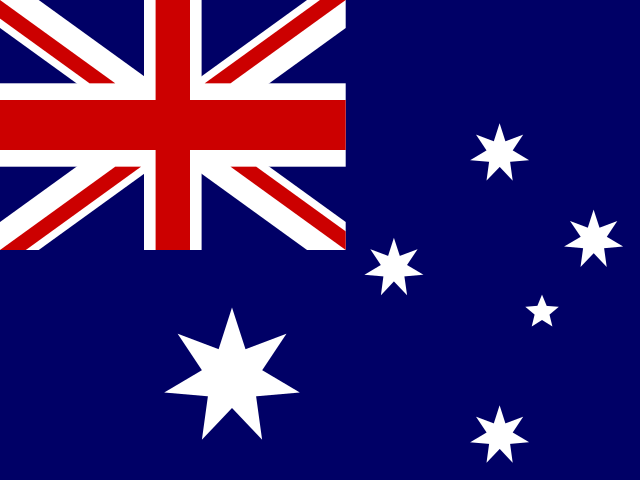
Australia
Established under the 2022 Climate Change Act, Australia's climate goals include doubling emissions reductions by 2030 and reaching Net Zero emissions by 2050, while ensuring a just and inclusive energy transition through the guidance of the Net Zero Authority under the Prime Minister’s office. By 2030, the government aims to reach the clean electricity target of 82% of renewable energy. In addition to this target, Australia is implementing a new 2030 critical minerals strategy and gas market reforms to boost energy security during the transition. Flexibility, fuel availability and resilient infrastructure will become even more vital as Australia…
- Overview
- Energy mix
- Emissions
- Electricity
-
+ 5 pages

![Australia Flag]()
-
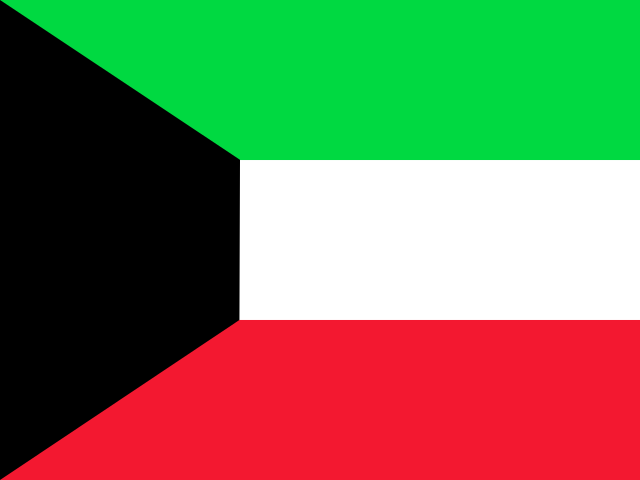
Kuwait
Kuwait is wholly reliant on fossil fuels for energy generation and by 2030, its energy demand will triple. In order to diversify its energy mix, the country targets to increase the share of renewable generation to 15% by 2030.
- Overview
- Energy mix
- Emissions
- Electricity
-
+ 5 pages
![Kuwait Flag]()
-
Czechia
Czechia has decoupled economic growth from energy consumption since 2009, yet the country’s energy and carbon intensity remain above the IEA average, which highlights the need to make energy efficiency the “first principle” of energy policy. Fossil fuels are still essential building blocks of the energy mix with coal as the single largest fuel for total energy supply and electricity generation. The country is committed to phase-out coal by 2033 and is putting in place a framework for an inclusive transition. Nuclear is the second largest electricity source and the government plans to build new nuclear units at…
- Overview
- Energy mix
- Emissions
- Electricity
-
+ 5 pages
![Czechia Flag]()
-
Mongolia
Coal is the first source of electricity generation in Mongolia, but the country has recently begun using hydro, solar and wind power, and has adopted a law aiming to increase and regulate the use of renewables.
- Overview
- Energy mix
- Emissions
- Electricity
-
+ 5 pages
![Mongolia Flag]()