-
Thailand
Thailand’s energy policy focuses on reducing dependence on natural gas to enhance energy security. With the costs reduction of variable renewable energy, conventional Thai power generation starts giving way to alternative sources. The country’s energy policy must evolve to accommodate this change.
- Overview
- Energy mix
- Emissions
- Electricity
-
+ 5 pages

![Thailand Flag]()
-
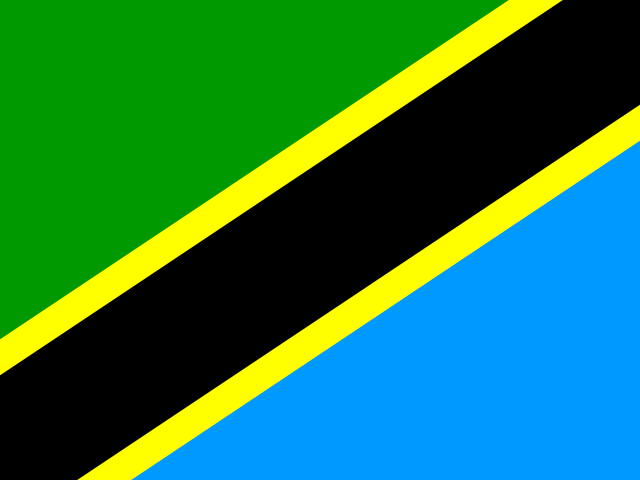
Tanzania
Electricity access in Tanzania increased from around 13% in 2008 to 32% in 2017. The government is supporting the private sector to develop its electricity market, enhancing the role of renewable energy in the energy mix and increasing rural electricity access.
- Overview
- Energy mix
- Emissions
- Electricity
-
+ 5 pages

![Tanzania Flag]()
-
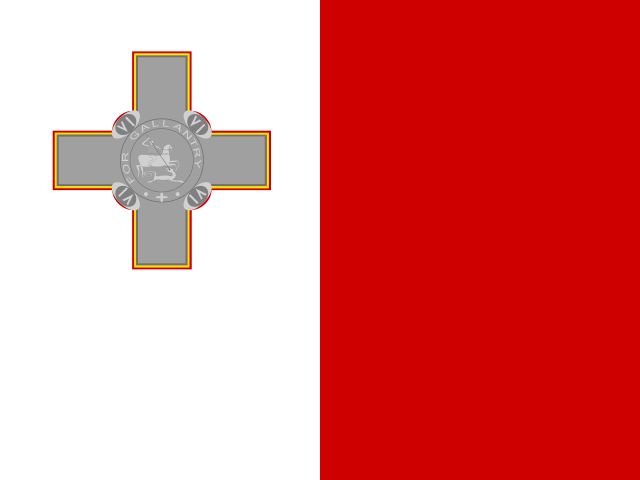
Malta
The National energy policy of Malta was launched in December 2012. It lists decisions and actions that have already been implemented as well as measures aiming to ensure the sustainability of Malta's energy sector.
- Overview
- Energy mix
- Emissions
- Electricity
-
+ 5 pages

![Malta Flag]()
-
Croatia
Croatia's National Energy Strategy 2009-2020 has three basic objectives: increase security of energy supply, develop competitive energy system and ensure sustainable energy sector development. These objectives are particularly important for the country, as it is heavily dependent on energy imports, resulting in its vulnerability to energy prices fluctuations.
- Overview
- Energy mix
- Emissions
- Electricity
-
+ 5 pages
![Croatia Flag]()
-
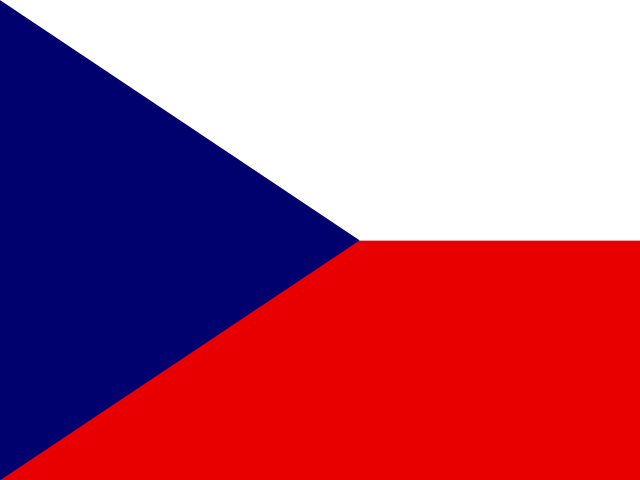
Czechia
Czechia has decoupled economic growth from energy consumption since 2009, yet the country’s energy and carbon intensity remain above the IEA average, which highlights the need to make energy efficiency the “first principle” of energy policy. Fossil fuels are still essential building blocks of the energy mix with coal as the single largest fuel for total energy supply and electricity generation. The country is committed to phase-out coal by 2033 and is putting in place a framework for an inclusive transition. Nuclear is the second largest electricity source and the government plans to build new nuclear units at…
- Overview
- Energy mix
- Emissions
- Electricity
-
+ 5 pages
![Czechia Flag]()
-
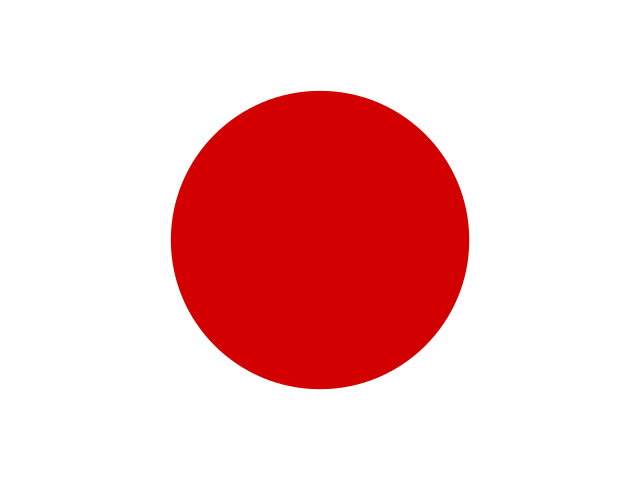
Japan
Japan’s energy policy is guided by principles of energy security, economic efficiency, environmental sustainability and safety. Achieving the aim of carbon-neutrality by 2050 will require substantially accelerating the deployment of low-carbon technologies by 2030, to address regulatory and institutional barriers and further enhance competition in energy markets. It will also be important to develop different decarbonisation scenarios and to prepare for the possibility that certain low-carbon technologies, such as nuclear, might not expand as quickly as hoped. Stronger reliance on market-based instruments, such as carbon pricing, could be one policy option for Japan to cost…
- Overview
- Energy mix
- Emissions
- Electricity
-
+ 5 pages
![Japan Flag]()
-
Ethiopia
In Ethiopia, while electricity reaches less than half of the population, great progress has been made over the past two decades. The National Electrification Program, launched in 2017, outlines a plan to reach universal access by 2025, aiming to supply 35% of the population with off-grid solutions. Meanwhile, Ethiopia is diversifying its hydro-dominated installed generation mix in favour of solar, wind and geothermal to pursue a more climate-resilient power system and reach economic development objectives.
- Overview
- Energy mix
- Emissions
- Electricity
-
+ 5 pages
![Ethiopia Flag]()
-
Denmark
Denmark has been an early leader in decarbonisation and in 2022 the government announced a net zero by 2045 target, aiming at 110% emissions reductions by 2050. Denmark’s technology leadership is important in the areas of offshore wind, biomethane and district heating. The government has expanded these categories to adopt a strategic focus on carbon capture and storage (CCUS) and hydrogen. The government has a robust energy and climate governance under the Danish Ministry of Climate, Energy and Utilities and ‘the year wheel’ of Climate Act of 2020 ensures annual policy actions and funding. Among IEA countries, Denmark has…
- Overview
- Energy mix
- Emissions
- Electricity
-
+ 5 pages
![Denmark Flag]()
-
Greece
Greece is making progress on its energy transition, including implementing reforms to standardise and simplify licensing procedures for renewable projects and investigating options for offshore wind. Coal fired generation, once the main source of electricity, will be phased out by 2028 at the latest and EUR 5 billion has been committed to assist impacted communities. Auctions are driving strong deployment of solar PV, onshore wind and battery storage. There are also projects for interconnections and renewables to decarbonise electricity on Greek islands. However, more effort is needed boost electrification and improve efficiency in transport and buildings.
- Overview
- Energy mix
- Emissions
- Electricity
-
+ 5 pages
![Greece Flag]()
-
Spain
Spain is at the forefront of the energy transition due to its energy and climate change policies. The current Spanish framework for energy and climate is based on the 2050 objectives of national climate neutrality, 100% renewable energy in the electricity mix and 97% renewable energy in the total energy mix. As such, it is centred on the massive development of renewable energy, particularly solar, wind and renewable hydrogen, increasing energy efficiency and improving electrification. This is an opportunity for the country to not only stimulate the economy and by creating jobs through the modernisation of industry, but also to…
- Overview
- Energy mix
- Emissions
- Electricity
-
+ 5 pages
![Spain Flag]()