-
El Salvador
The National Energy Policy to 2024 of El Salvador guides the national actions on energy, following main principles: ensure high quality level and continuous and affordable energy access, decrease fossil fuel dependency and mitigate environmental and social impacts of energy projects.
- Overview
- Energy mix
- Emissions
- Electricity
-
+ 5 pages

![El Salvador Flag]()
-
Madagascar
Around a quarter of the population of Madagascar has access to electricity, and only 1.5% has access to clean cooking facilities. In 2019, Madagascar’s energy mix was dominated by biofuels and wastes (85%), with oil products (11%), coal and hydro accounting for the rest of the total energy supply. In 2020, less than 5% of the population had access to clean cooking and 27% had access to electricity. The Government of Madagascar has set a target of reaching 70% electricity access rate by 2030.
- Overview
- Energy mix
- Emissions
- Electricity
-
+ 5 pages

![Madagascar Flag]()
-
Mozambique
In Mozambique, around 40% of people have access to electricity, through the grid or mini/off-grid systems. The government has promoted solar PV solutions in rural areas, reporting that 700 schools and 800 other public buildings now have electricity from solar.
- Overview
- Energy mix
- Emissions
- Electricity
-
+ 5 pages
![Mozambique Flag]()
-
Peru
Peru’s government identified the development of electricity from renewable energy sources as a public necessity of national interest. The country established a National Renewable Energy Development Plan to be funded by the Annual Budget Law, external debt operations, direct investments and contributions from international institutions.
- Overview
- Energy mix
- Emissions
- Electricity
-
+ 5 pages
![Peru Flag]()
-
Ukraine
Ukraine is a key country for European and global energy security. Russia’s invasion of Ukraine has pushed it to fundamentally reshape its past dependence on energy imports from Russia.
As the invasion continues, Ukraine is focused on tracking large-scale energy supply disruptions and actively working to recover power and heating for civilians. It is also putting together an ambitious recovery and reconstruction plan, with a strong focus on energy security. In the medium-term, Ukraine’s energy strategy remains focused on European integration, while it aims to an energy system that is ready for a Net Zero future…- Overview
- Energy mix
- Emissions
- Electricity
-
+ 5 pages

![Ukraine Flag]()
-
Mauritania
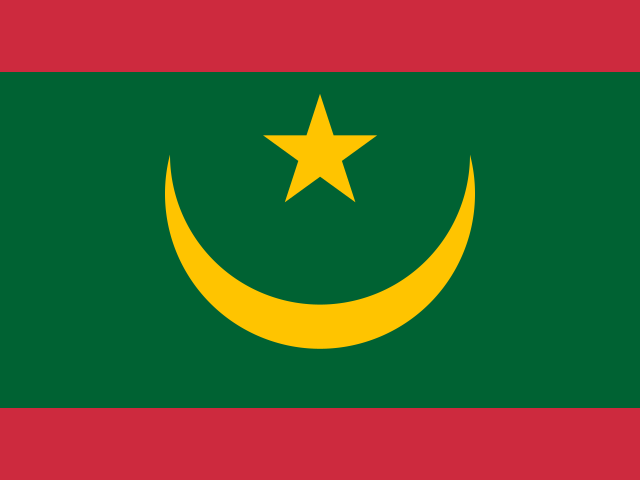
In 2019, Mauritania’s energy mix was dominated by oil products (65%) and biofuels and waste (32%). In 2020, 43% of the population had access to clean cooking which is the highest share in West Africa. In 2020, 47% of the population had access to electricity. For electricity access, the country targets universal access in urban areas and doubling of the current rate in rural areas by 2024, with country-wide universal access by 2030. For clean cooking, the target is 100% access to LPG in urban areas and 50% access to LPG in rural areas by 2030.
- Overview
- Energy mix
- Emissions
- Electricity
-
+ 5 pages
![Mauritania Flag]()
-
Azerbaijan
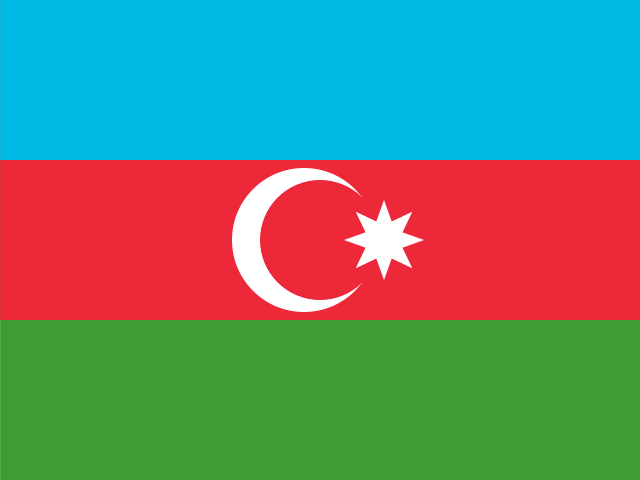
Azerbaijan has one of the highest energy self-sufficiency ratios in the world as a major crude oil and natural gas producer. While the renewable sector has not seen as much attention, the government is now looking to stimulate investment and accelerate deployment, allowing for diversification of domestic energy consumption. In addition, the government is working on a new energy strategy that will set the stage for further policy shifts. Azerbaijan is part of the EU4Energy Programme, an initiative focused on evidence-based policymaking for the energy sector.
- Overview
- Energy mix
- Emissions
- Electricity
-
+ 5 pages

![Azerbaijan Flag]()
-
Sri Lanka
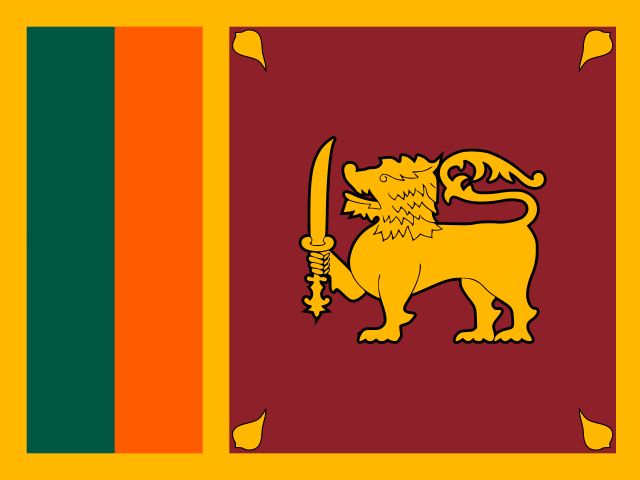
Sri Lanka’s primary energy supply mainly comes from oil and coal. Almost 40% of Sri Lanka’s electricity came from hydropower in 2017 but coal’s shares in power generation has been increasing since 2010. Sri Lanka is reaching universal access to electricity but clean cooking remain an issue with 15 million people still relying on biomass to cook.
- Overview
- Energy mix
- Emissions
- Electricity
-
+ 5 pages

![Sri Lanka Flag]()
-
Mexico
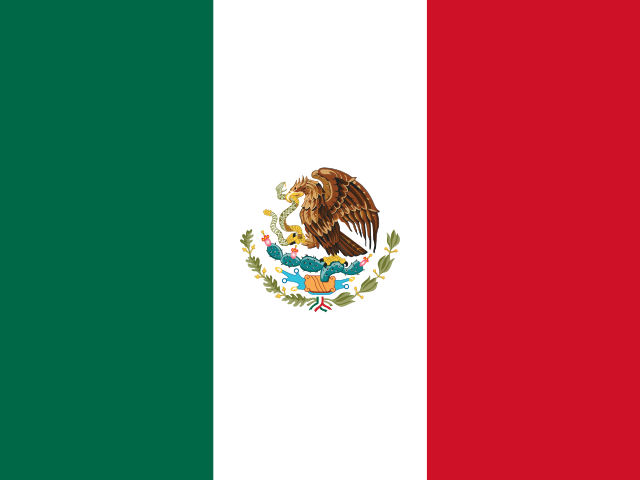
Mexico’s energy and economic profile presents both challenges and opportunities as a major oil producer, exporter and through its growing domestic energy demand. Mexico was the first large oil producing emerging economy to adopt climate legislation in 2012 and has seen growth in renewable electricity generation from wind and solar, which almost tripled from 2015 to 2022. However, strong action is needed across all sectors to reduce reliance on fossil fuels and bring down greenhouse gas emissions.
- Overview
- Energy mix
- Emissions
- Electricity
-
+ 5 pages

![Mexico Flag]()
-
Singapore
Singapore is the region’s second-largest gas importer. The country is expanding its existing LNG importing facility and is seeking to become a major LNG trading hub. Singapore’s relatively small import needs raise questions about how quickly the hub would reach sufficient liquidity to operate efficiently, but it is nonetheless well placed to bring Asian LNG buyers and sellers together and has taken a major step forward with the creation of an LNG price index: the “SLiNG”.
Singapore has made important moves towards liberalising its gas market, providing the basis for more competitive price setting. These moves include…- Overview
- Energy mix
- Emissions
- Electricity
-
+ 5 pages
![Singapore Flag]()