-
Democratic Republic of the Congo
The Democratic Republic of the Congo has huge hydropower potential while also dealing with extreme energy poverty. Foreign investors are currently partially lifting constraints on the country’s hydropower capacity, which is bringing down the costs of power supply and reducing the share of oil-fired power.
- Overview
- Energy mix
- Emissions
- Electricity
-
+ 5 pages

![Democratic Republic of the Congo Flag]()
-
Slovenia
Slovenia has put in place a National Renewable Action Plan to 2020, which targets a 25% share of energy generation from renewable sources in gross final energy consumption and 39% of electricity demand met by electricity generated from renewable energy sources.
- Overview
- Energy mix
- Emissions
- Electricity
-
+ 5 pages

![Slovenia Flag]()
-
Finland
Finland has one of the most ambitious climate targets, a legal obligation to reach carbon neutrality by 2035. It is making progress towards this target and has one of the lowest levels of reliance on fossil fuels among IEA member countries. Finland’s forests, which historically offset significant greenhouse gas emissions, have become a net emissions source. A continued push towards the energy transition is needed, as imported fossil fuels still account for over one-third of energy supply and cover higher shares in transport and key industries.
- Overview
- Energy mix
- Emissions
- Electricity
-
+ 5 pages
![Finland Flag]()
-
Zambia
Coal production is set to increase in Zambia, but exports remain limited to trade with neighbouring countries. The country has recently made good progress regarding electrification rates through a large push for mini-grid and off-grid solutions in rural areas.
- Overview
- Energy mix
- Emissions
- Electricity
-
+ 5 pages
![Zambia Flag]()
-
Congo
In Congo, 3 out of 5 people do not have access to electricity. As a country with a very low population density, Congo faces particularly severe challenges in bringing energy of any kind to its rural communities.
- Overview
- Energy mix
- Emissions
- Electricity
-
+ 5 pages
![Congo Flag]()
-
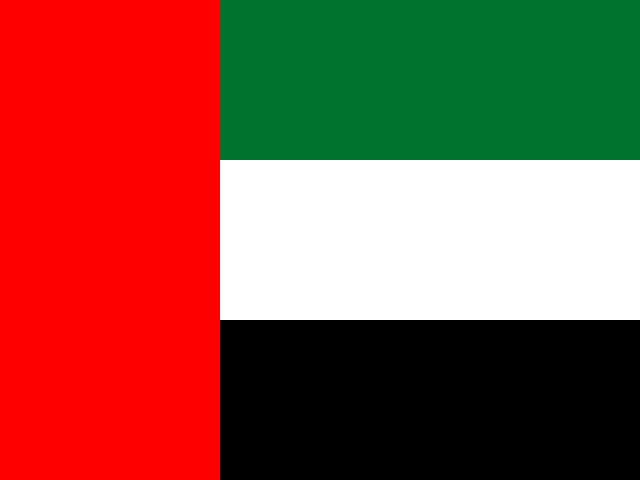
United Arab Emirates
The majority of the energy produced in the United Arab Emirates is from natural gas and oil. The country is also a major exporter of oil and gas and it started using its strong solar PV potential in 2014 to produce electricity.
- Overview
- Energy mix
- Emissions
- Electricity
-
+ 5 pages

![United Arab Emirates Flag]()
-
Singapore
Singapore is the region’s second-largest gas importer. The country is expanding its existing LNG importing facility and is seeking to become a major LNG trading hub. Singapore’s relatively small import needs raise questions about how quickly the hub would reach sufficient liquidity to operate efficiently, but it is nonetheless well placed to bring Asian LNG buyers and sellers together and has taken a major step forward with the creation of an LNG price index: the “SLiNG”.
Singapore has made important moves towards liberalising its gas market, providing the basis for more competitive price setting. These moves include…- Overview
- Energy mix
- Emissions
- Electricity
-
+ 5 pages

![Singapore Flag]()
-
Dominican Republic
Dominican Republic has adopted a law on incentives for the development of renewable energy sources, which aims to increase the diversity of energy sources, reduce dependence on imported fossil fuels and stimulate investment in renewable energy.
- Overview
- Energy mix
- Emissions
- Electricity
-
+ 5 pages

![Dominican Republic Flag]()
-
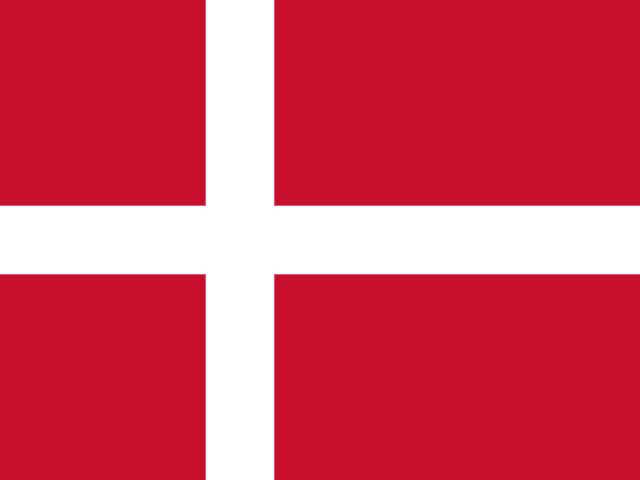
Denmark
Denmark has been an early leader in decarbonisation and in 2022 the government announced a net zero by 2045 target, aiming at 110% emissions reductions by 2050. Denmark’s technology leadership is important in the areas of offshore wind, biomethane and district heating. The government has expanded these categories to adopt a strategic focus on carbon capture and storage (CCUS) and hydrogen. The government has a robust energy and climate governance under the Danish Ministry of Climate, Energy and Utilities and ‘the year wheel’ of Climate Act of 2020 ensures annual policy actions and funding. Among IEA countries, Denmark has…
- Overview
- Energy mix
- Emissions
- Electricity
-
+ 5 pages
![Denmark Flag]()
-
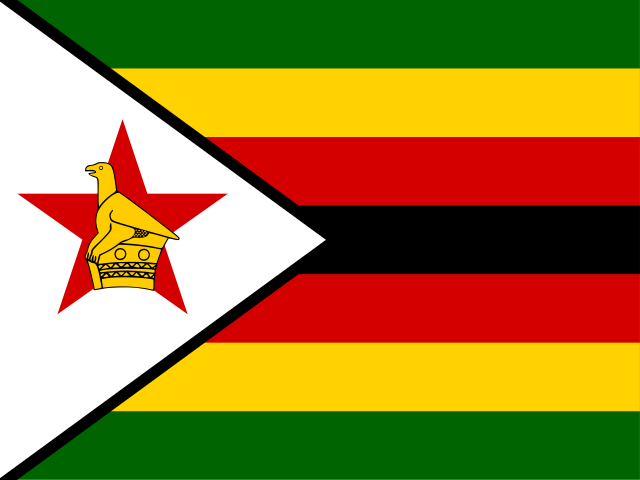
Zimbabwe
Zimbabwe holds large coal reserves and production is set to increase. The country has also significantly untapped its hydropower potential, even though the share of hydropower generation is gradually decreasing.
- Overview
- Energy mix
- Emissions
- Electricity
-
+ 5 pages
![Zimbabwe Flag]()