-
Croatia
Croatia's National Energy Strategy 2009-2020 has three basic objectives: increase security of energy supply, develop competitive energy system and ensure sustainable energy sector development. These objectives are particularly important for the country, as it is heavily dependent on energy imports, resulting in its vulnerability to energy prices fluctuations.
- Overview
- Energy mix
- Emissions
- Electricity
-
+ 5 pages

![Croatia Flag]()
-
Russia
Russia is the world’s second-largest producer of natural gas, behind the United States, and has the world’s largest gas reserves. Russia is the world’s largest gas exporter. In 2021 the country produced 762 bcm of natural gas, and exported approximately 210 bcm via pipeline.
- Overview
- Energy mix
- Emissions
- Electricity
-
+ 5 pages

![Russia Flag]()
-
Peru
Peru’s government identified the development of electricity from renewable energy sources as a public necessity of national interest. The country established a National Renewable Energy Development Plan to be funded by the Annual Budget Law, external debt operations, direct investments and contributions from international institutions.
- Overview
- Energy mix
- Emissions
- Electricity
-
+ 5 pages

![Peru Flag]()
-
Equatorial Guinea
Electrification rates are relatively high in Equatorial Guinea at 66%. The country began oil production in the late 1990s and began LNG exports in 2007.
- Overview
- Energy mix
- Emissions
- Electricity
-
+ 5 pages

![Equatorial Guinea Flag]()
-
Uganda
In 2019, Uganda’s energy mix was dominated by fuel wood and charcoal followed by a small share of oil products. The country produces electricity mainly from hydroelectric plants. Between 2017 and 2019, electrification outpaced population growth in Uganda. However in 2020, less than 5% of the population had access to clean cooking.
The Electricity Connection Policy was introduced in 2018 with the ambition of increasing Uganda’s electricity access to 60 percent by 2027 through connection subsidies for consumers located close to the existing network. About 300,000 households and businesses have received free electricity connections, benefiting 1.5…- Overview
- Energy mix
- Emissions
- Electricity
-
+ 5 pages
![Uganda Flag]()
-
El Salvador
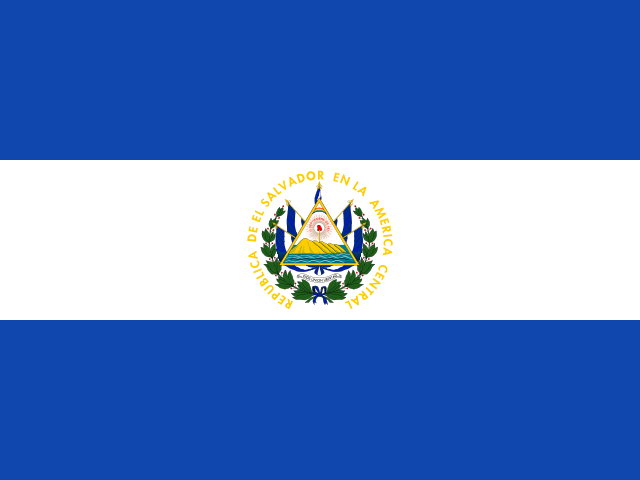
The National Energy Policy to 2024 of El Salvador guides the national actions on energy, following main principles: ensure high quality level and continuous and affordable energy access, decrease fossil fuel dependency and mitigate environmental and social impacts of energy projects.
- Overview
- Energy mix
- Emissions
- Electricity
-
+ 5 pages
![El Salvador Flag]()
-
Serbia
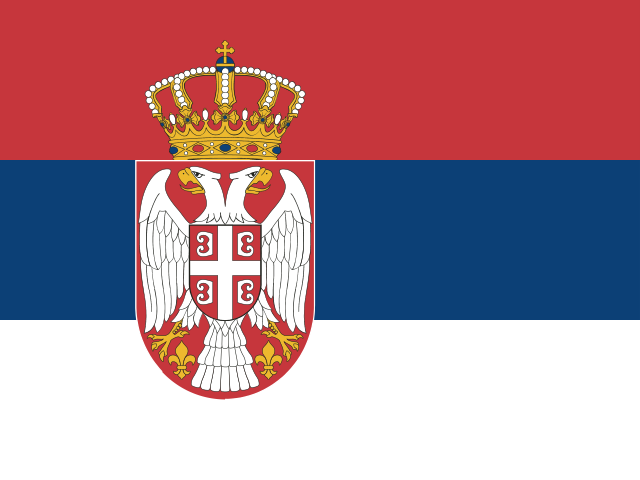
In Serbia, the National Renewable Energy Action Plan set targets of renewable energy sources use until 2020, as well as the pathway to achieve them. Among other things, it enhances investments towards the development of renewables.
Data for Serbia includes Montenegro until 2004.- Overview
- Energy mix
- Emissions
- Electricity
-
+ 5 pages
![Serbia Flag]()
-
Gabon
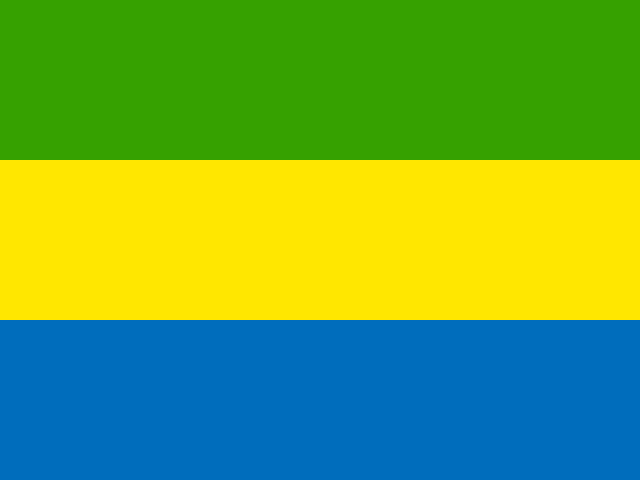
Almost two-thirds of the population of Gabon has access to electricity. The country can partially rely on its 150 thousand barrels per day hydrocarbon liquids production and has recently implemented a new petroleum legislation.
- Overview
- Energy mix
- Emissions
- Electricity
-
+ 5 pages
![Gabon Flag]()
-
Nicaragua
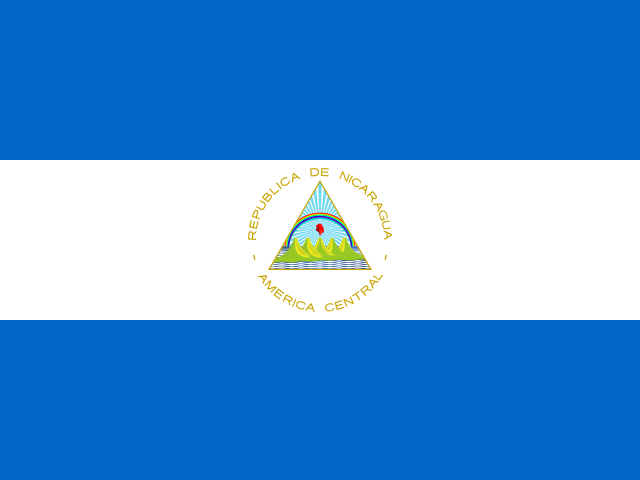
The National Energy Policy of Nicaragua establishes a policy framework for the development and exploitation of renewable sources. The law sets the objective of prioritizing the use of renewable energy in the national energy mix and of stabilizing energy prices using renewables.
- Overview
- Energy mix
- Emissions
- Electricity
-
+ 5 pages
![Nicaragua Flag]()
-
Senegal
In Senegal, 65% of the population has access to electricity. Strong policies and incentives have supported liquefied petroleum gas (LPG) use and less than 25% of the urban population now relies on solid biomass for cooking.
- Overview
- Energy mix
- Emissions
- Electricity
-
+ 5 pages
![Senegal Flag]()