-
Sudan
Most of Sudan’s electricity generation comes from hydropower, and more than half of the Eastern African region’s total oil-based capacity is located in the country. Sudan is also contemplating scaling up projects on solar power in the coming years.
- Overview
- Energy mix
- Emissions
- Electricity
-
+ 5 pages

![Sudan Flag]()
-
Bosnia and Herzegovina
Bosnia and Herzegovina adopted a National Environmental Action Plan, which provides action path to address the major environmental issues of the country. In the energy sector the target will be achieved by increasing energy efficiency and usage of renewables (hydro, solar, wind and geothermal energy).
- Overview
- Energy mix
- Emissions
- Electricity
-
+ 5 pages

![Bosnia and Herzegovina Flag]()
-
Ethiopia
In Ethiopia, while electricity reaches less than half of the population, great progress has been made over the past two decades. The National Electrification Program, launched in 2017, outlines a plan to reach universal access by 2025, aiming to supply 35% of the population with off-grid solutions. Meanwhile, Ethiopia is diversifying its hydro-dominated installed generation mix in favour of solar, wind and geothermal to pursue a more climate-resilient power system and reach economic development objectives.
- Overview
- Energy mix
- Emissions
- Electricity
-
+ 5 pages
![Ethiopia Flag]()
-
Oman
Oman’s energy supply is entirely generated by nationally-produced natural gas and oil products and the country is a large exporter of oil and gas. The government has recently launched the “Residential PV Initiative" to foster the private use of solar PV.
- Overview
- Energy mix
- Emissions
- Electricity
-
+ 5 pages

![Oman Flag]()
-
Cyprus
Cyprus adopted the Law on the Promotion of Renewable Energy and Energy Efficiency in the early 2010s, which creates a fund that finances the premium tariff and other costs related to renewable electricity generation.
Note by the Republic of Türkiye (Türkiye): The information in this document with reference to Cyprus relates to the southern part of the Island. There is no single authority representing both Turkish and Greek Cypriot people on the Island. Türkiye recognises the Turkish Republic of Northern Cyprus (TRNC). Until a lasting and equitable solution is found within the context of United Nations, Türkiye shall preserve its…- Overview
- Energy mix
- Emissions
- Electricity
-
+ 5 pages
![Cyprus Flag]()
-
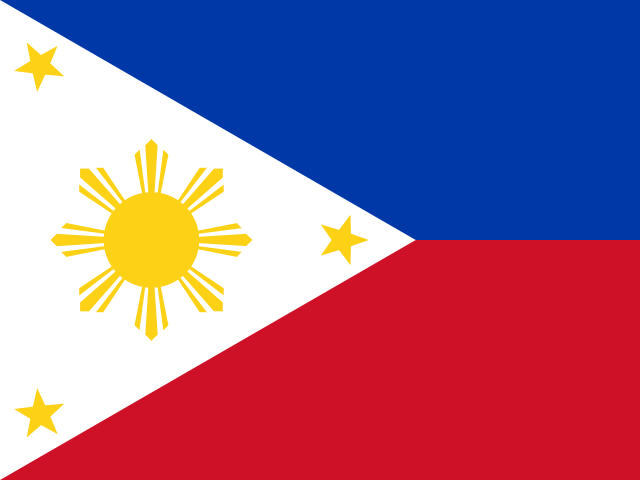
Philippines
The Philippines has made significant progress in delivering electricity access, boosting the household electrification rate past 90% in 2016. The country is on track to meet the target of achieving universal electrification by 2022, as set out in the Philippine Development Plan 2017-2022.
- Overview
- Energy mix
- Emissions
- Electricity
-
+ 5 pages

![Philippines Flag]()
-
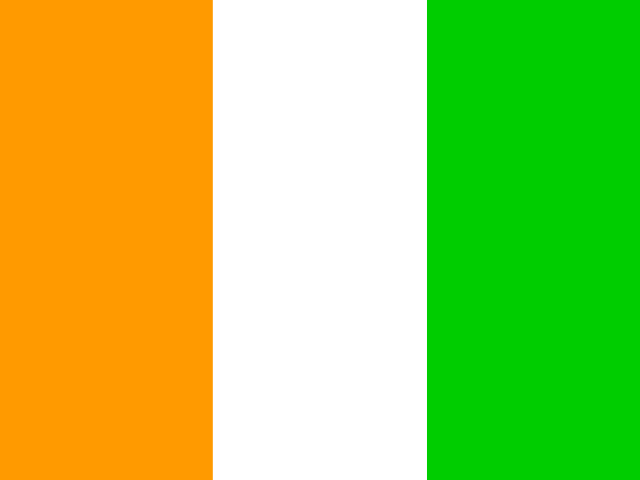
Cote D’Ivoire
Most of Cote d'Ivoire's primary energy demand is covered by local oil refinery supplies and domestic gas production. Almost 60% of the population had access to electricity in the country in 2017, a 10-percentage point’s increase from 2015.
- Overview
- Energy mix
- Emissions
- Electricity
-
+ 5 pages
![Cote D’Ivoire Flag]()
-
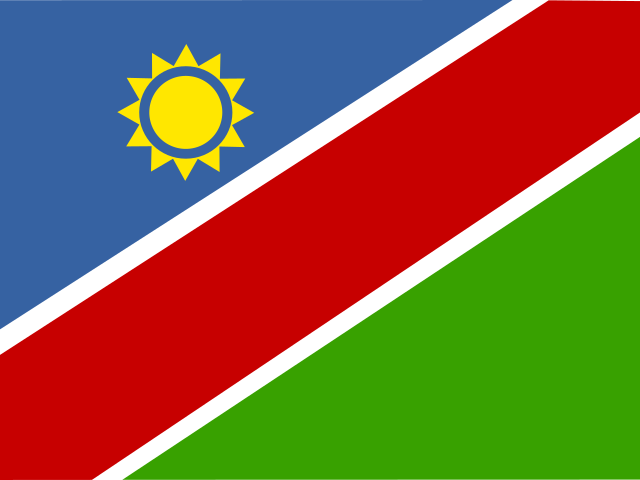
Namibia
Most of Namibia’s electricity is generated by hydropower. The country is also one of the ten-largest uranium resource-holders in the world and provides 8.2% of global production. The country has stated its interest in introducing nuclear power into its domestic mix.
- Overview
- Energy mix
- Emissions
- Electricity
-
+ 5 pages
![Namibia Flag]()
-
Singapore
Singapore is the region’s second-largest gas importer. The country is expanding its existing LNG importing facility and is seeking to become a major LNG trading hub. Singapore’s relatively small import needs raise questions about how quickly the hub would reach sufficient liquidity to operate efficiently, but it is nonetheless well placed to bring Asian LNG buyers and sellers together and has taken a major step forward with the creation of an LNG price index: the “SLiNG”.
Singapore has made important moves towards liberalising its gas market, providing the basis for more competitive price setting. These moves include…- Overview
- Energy mix
- Emissions
- Electricity
-
+ 5 pages
![Singapore Flag]()
-
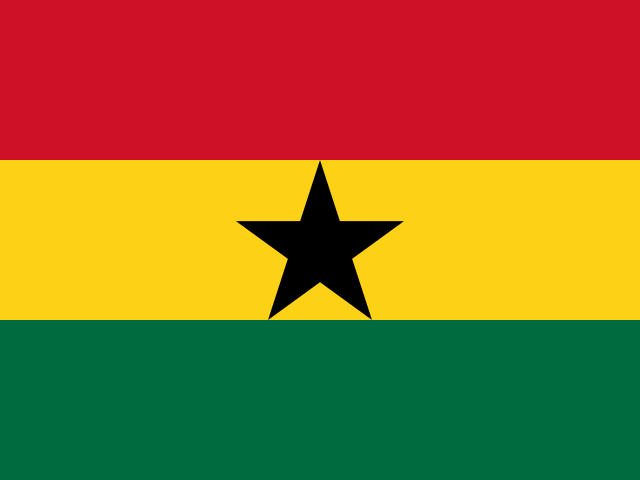
Ghana
In Ghana, electrification rates have gradually increased over the past 20 years, reaching almost 85% in 2017 and building on successful electrification plans. The country relies on a diversified energy mix and hosts the largest hydropower project of the Western African region.
- Overview
- Energy mix
- Emissions
- Electricity
-
+ 5 pages
![Ghana Flag]()