-
Sudan
Most of Sudan’s electricity generation comes from hydropower, and more than half of the Eastern African region’s total oil-based capacity is located in the country. Sudan is also contemplating scaling up projects on solar power in the coming years.
- Overview
- Energy mix
- Emissions
- Electricity
-
+ 5 pages

![Sudan Flag]()
-
Burkina Faso
In 2019, Burkina Faso’s energy mix was dominated by biofuels and wastes, with oil products accounting for one-third of the total energy supply. In 2020, 11% of the population had access to clean cooking and only 21% had access to electricity, making Burkina Faso one of the world’s least-electrified countries. For electricity, the country has a target of 95% access for urban areas and 50% for rural areas by 2030. For clean cooking, Burkina Faso has a universal access target for urban areas and 65% in rural areas by 2030. The target for LPG urban penetration…
- Overview
- Energy mix
- Emissions
- Electricity
-
+ 5 pages
![Burkina Faso Flag]()
-
Poland
Poland’s energy system has seen progress on energy transition, despite its reliance on domestic hard coal and lignite. For example, Poland has one of the fastest growing solar PV markets in the European Union and has also seen a strong uptake of heat pumps. Poland is pushing to become a major player in offshore wind, aiming for at least 3.4 GW of capacity by 2030. However, stronger efforts are needed across all sectors to accelerate energy transition and Poland would benefit from greater electricity interconnections with the rest of Europe.
- Overview
- Energy mix
- Emissions
- Electricity
-
+ 5 pages

![Poland Flag]()
-
Senegal
In Senegal, 65% of the population has access to electricity. Strong policies and incentives have supported liquefied petroleum gas (LPG) use and less than 25% of the urban population now relies on solid biomass for cooking.
- Overview
- Energy mix
- Emissions
- Electricity
-
+ 5 pages
![Senegal Flag]()
-
Rwanda
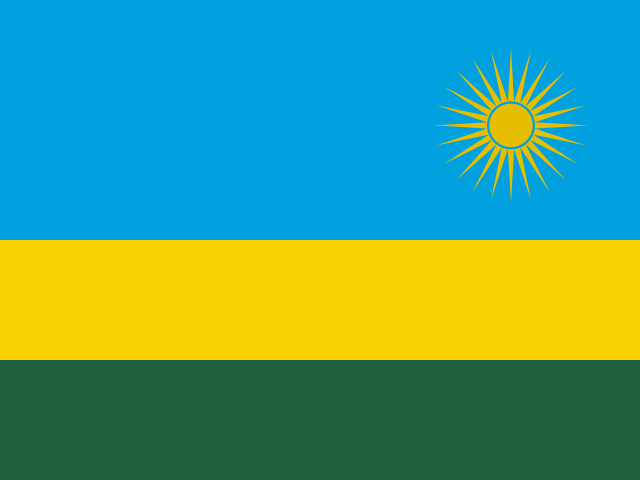
Rwanda included strong commitments to its intended nationally determined contribution (INDC) to the Paris Agreement. The country plans to increase its carbon sink capacity through sustainable forest management practices and to reduce emissions from the agricultural sector. In 2019, Rwanda’s energy mix was dominated by biomass and waste (74%) and oil products (20%), while natural gas, coal and hydro account for the rest of the energy supply. In 2020, less than 5% of the population had access to clean cooking and 50% had access to electricity. With annual access growth of more than 3 percentage points, Rwanda has shown…
- Overview
- Energy mix
- Emissions
- Electricity
-
+ 5 pages
![Rwanda Flag]()
-
Germany
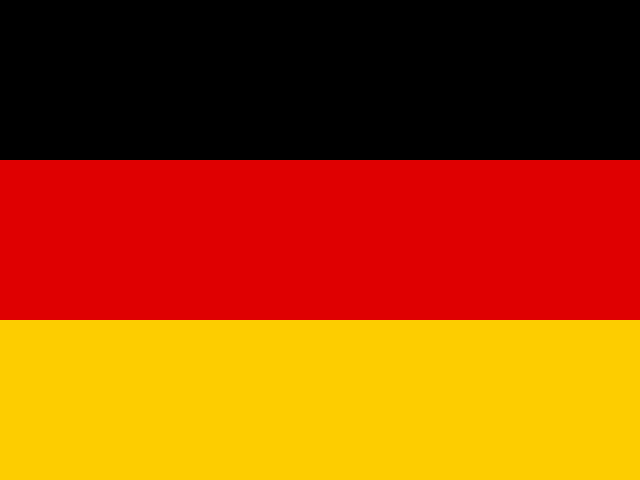
Germany’s Climate Law sets out the framework for reaching net zero emissions by 2045. In order to achieve the ambitious Energiewende by 2030, 80% of all electricity supply will need to come from renewable energy sources (and 100% by 2035) and coal is to be completely phased out. Germany has been an early leader in offshore wind and solar PV and phased out nuclear power in 2023. Major legislative reforms in renewable energy planning and siting support targets of 100-110 GW of onshore wind, 30 GW offshore wind and 200 GW solar, alongside investments in 10 GW of…
- Overview
- Energy mix
- Emissions
- Electricity
-
+ 5 pages
![Germany Flag]()
-
Slovenia
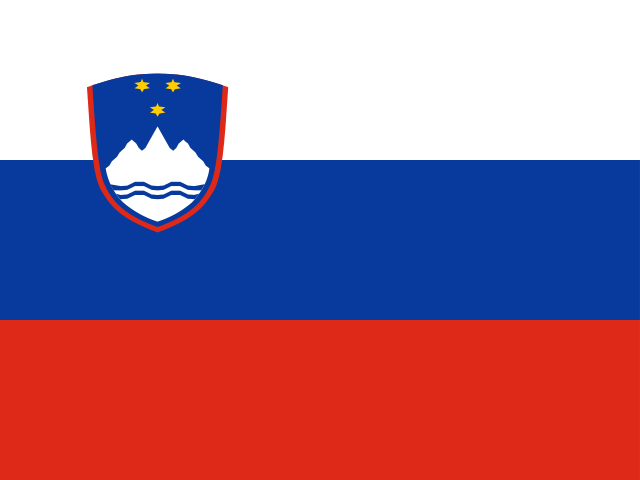
Slovenia has put in place a National Renewable Action Plan to 2020, which targets a 25% share of energy generation from renewable sources in gross final energy consumption and 39% of electricity demand met by electricity generated from renewable energy sources.
- Overview
- Energy mix
- Emissions
- Electricity
-
+ 5 pages
![Slovenia Flag]()
-
Togo
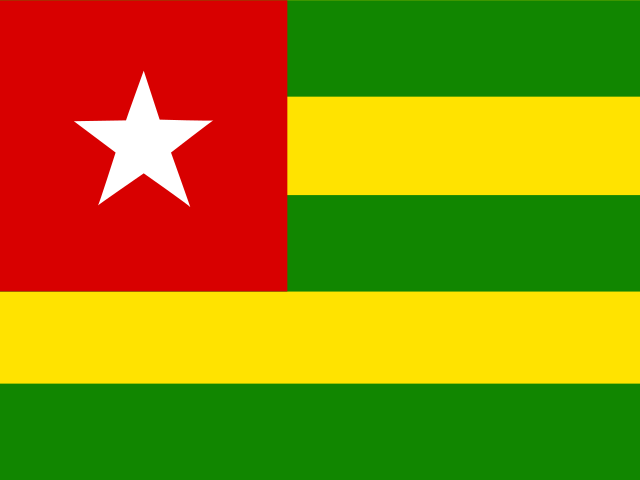
Less than half of the Togolese population has access to electricity. The country has a relatively diversified energy mix and more than 13% of its final energy consumption comes from renewable supplies of energy, mainly hydropower.
- Overview
- Energy mix
- Emissions
- Electricity
-
+ 5 pages
![Togo Flag]()
-
Paraguay
Paraguay established renewable energy targets in its National Development Plan 2014–2030. The country’s goal is to reach 60% of renewable energy in total energy consumption by 2030. By the same year, Paraguay aims to reduce by 20% the share of fossil fuel within its total energy consumption.
- Overview
- Energy mix
- Emissions
- Electricity
-
+ 5 pages

![Paraguay Flag]()
-
Mali
In recent years, the rate of access to electricity in Mali has surpassed 25%, thanks to a public focus on mini-grid solutions. The government of Mali now plans to increase hybridisation of its mini-grids by adding PV capacity to diesel power plants. In 2019, Mali’s energy mix was dominated by biofuels and wastes (65%) and oil products (32%), with coal and hydro accounting for the rest. In 2020, less than 5% of the population had access to clean cooking and 52% had access to electricity. For electricity access, the country targets 70% access by 2025, 80% by…
- Overview
- Energy mix
- Emissions
- Electricity
-
+ 5 pages
![Mali Flag]()