-
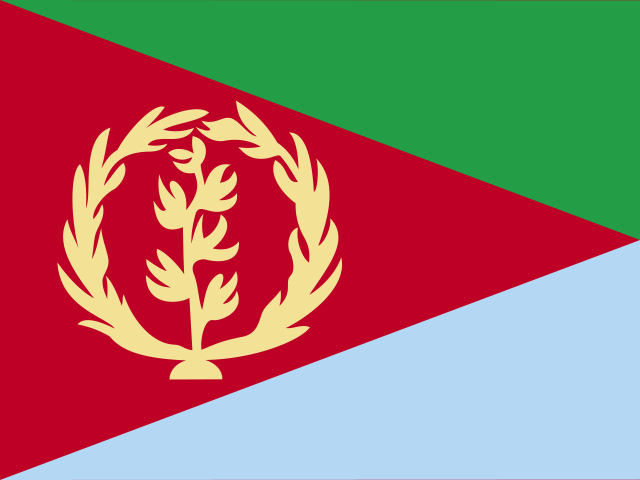
Eritrea
Less than half of the population of Eritrea has access to electricity. Most of the country's electricity generation comes from imported oil.
- Overview
- Energy mix
- Emissions
- Electricity
-
+ 5 pages

![Eritrea Flag]()
-
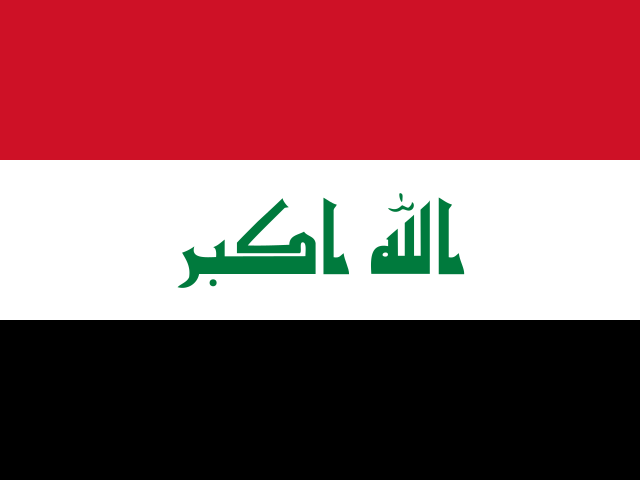
Iraq
Iraq holds abundant oil and gas resources and has strong solar PV potential. Its production to 2030 is set to be third largest contributor to global oil supply. By the same year, the government expects that renewable capacity will amount for 5% of the country’s total system capacity.
- Overview
- Energy mix
- Emissions
- Electricity
-
+ 5 pages

![Iraq Flag]()
-
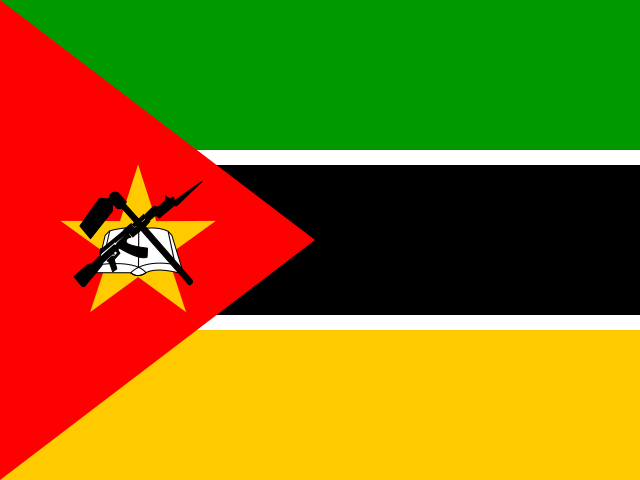
Mozambique
In Mozambique, around 40% of people have access to electricity, through the grid or mini/off-grid systems. The government has promoted solar PV solutions in rural areas, reporting that 700 schools and 800 other public buildings now have electricity from solar.
- Overview
- Energy mix
- Emissions
- Electricity
-
+ 5 pages
![Mozambique Flag]()
-
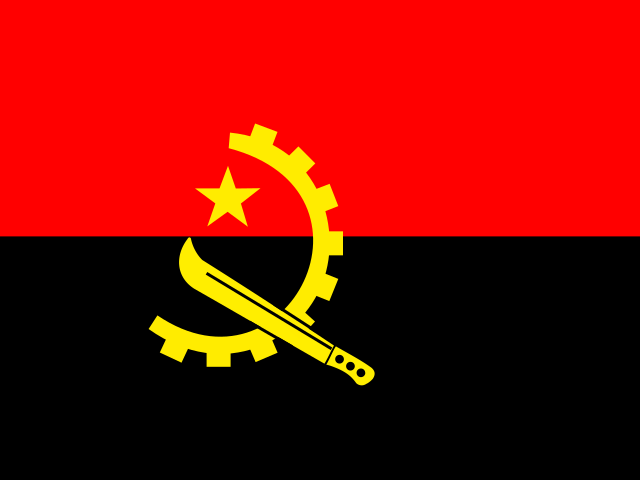
Angola
Angola is set to become the largest producer of crude oil in Southern Africa, yet has also set the foundation for the sustainable development of renewables, through investments and supportive measures. Angola has particularly strong hydropower generation potential that remains underutilised.
- Overview
- Energy mix
- Emissions
- Electricity
-
+ 5 pages
![Angola Flag]()
-
Costa Rica
Costa Rica’s energy policy aims to move from a fossil fuels based energy system towards renewable energy sources and to expand its power generation capacity, replacing old power generating stations and developing new projects.
- Overview
- Energy mix
- Emissions
- Electricity
-
+ 5 pages

![Costa Rica Flag]()
-
New Zealand
New Zealand has a diversified energy mix, with significant production of both hydropower and geothermal. As the country embarks on an ambitious energy transition, it has many natural advantages, including a strong renewable resource base. New Zealand already has a low-emissions electricity system, with over 80% of electricity coming from renewable sources. The key challenge will be to decarbonise other end-use sectors through clean power and support investments in new technologies to achieve deeper emissions cuts across all sectors. Notably, the transport sector accounts for the highest share of emissions and is almost entirely dependent on oil while…
- Overview
- Energy mix
- Emissions
- Electricity
-
+ 5 pages

![New Zealand Flag]()
-
Nepal
Almost the totality of the electricity generated in Nepal comes from hydropower. Most of the energy supply is from biofuels and waste as 21 million people still rely on traditional biomass for cooking. In 2000, 81% did not have access to electricity but with remarkable efforts from the government, only 6% of the population remain without access today.
- Overview
- Energy mix
- Emissions
- Electricity
-
+ 5 pages
![Nepal Flag]()
-
Cuba
Cuba’s energy supply mainly comes from oil products, accounting for over 80% of power generation.
- Overview
- Energy mix
- Emissions
- Electricity
-
+ 5 pages
![Cuba Flag]()
-
Argentina
Argentina’s total primary energy mix is dominated by natural gas (55%) and oil (33%), with bioenergy contributing 5%, and hydropower and nuclear another 3% each. Argentina has the 2nd largest reserve of shale gas and the 4th largest reserve of shale oil worldwide. In 2019, the country produced 500,000 bpd of oil, of which 89,000 bpd was exported, but the country remains a net importer of oil products. In terms of power generation, Argentina relies on natural gas (65%), hydropower (18%), followed by nuclear 8%, wind (7%) and solar (1%). A set of public policies have boosted…
- Overview
- Energy mix
- Emissions
- Electricity
-
+ 5 pages
![Argentina Flag]()
-
Denmark
Denmark has been an early leader in decarbonisation and in 2022 the government announced a net zero by 2045 target, aiming at 110% emissions reductions by 2050. Denmark’s technology leadership is important in the areas of offshore wind, biomethane and district heating. The government has expanded these categories to adopt a strategic focus on carbon capture and storage (CCUS) and hydrogen. The government has a robust energy and climate governance under the Danish Ministry of Climate, Energy and Utilities and ‘the year wheel’ of Climate Act of 2020 ensures annual policy actions and funding. Among IEA countries, Denmark has…
- Overview
- Energy mix
- Emissions
- Electricity
-
+ 5 pages

![Denmark Flag]()