-
Italy
Italy aims for carbon neutrality by 2050 and is on track to reach its 2030 targets for emissions reductions and energy efficiency, aiming to reach 30% of renewables in total energy consumption and 55% of renewables in electricity generation. The country has experienced notable growth in the renewable energy sector and has successfully integrated large volumes of variable renewable generation. Natural gas is a major source for electricity and heating, therefore Italy has strengthened its energy security by diversifying natural gas supply, making use of the pipeline and LNG infrastructure that it has built up over the last decade. Reducing…
- Overview
- Energy mix
- Emissions
- Electricity
-
+ 5 pages

![Italy Flag]()
-
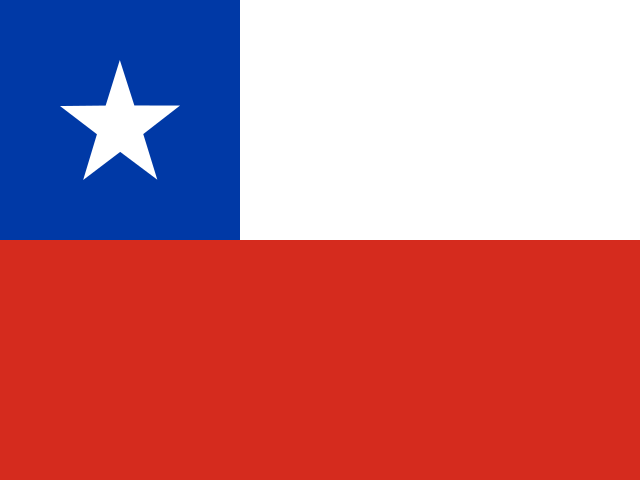
Chile
…has a single interconnected national electricity system.
This frontrunner role is underlined by the governments pledge to net-zero by 2050, which includes closing two thirds of coal plants by 2025. This goal is supported by a Just Transition Strategy, currently being developed by the government. It also includes, for the first time, a focus on green hydrogen and electric mobility, in line with the respective National Hydrogen Strategy (2020) and the Electromobility Strategy (2022). The former aims for 5 GW of electrolysis capacity by 2025, while the latter lays out a goal of 100% electric vehicle sales by 2035.- Overview
- Energy mix
- Emissions
- Electricity
-
+ 5 pages

![Chile Flag]()
-
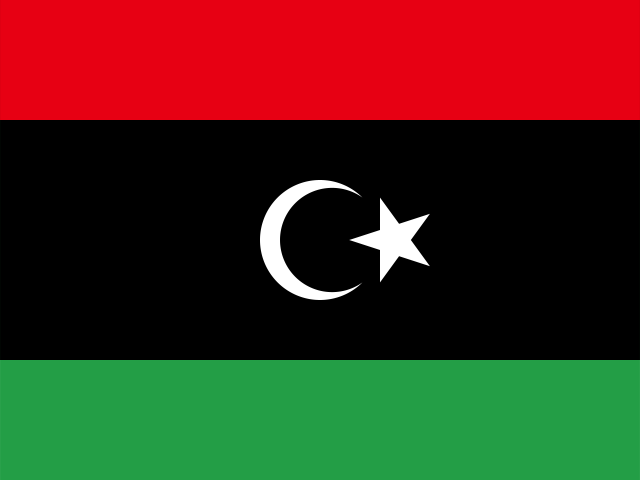
Libya
In 2013, the Libyan government launched the Renewable Energy Strategic 2013-2025 Plan, which aims to achieve 7% renewable energy contribution to the electric energy mix by 2020 and 10% by 2025. This will come from wind, Concentrated Solar Power, solar PV and solar heat.
- Overview
- Energy mix
- Emissions
- Electricity
-
+ 5 pages

![Libya Flag]()
-
Sudan
Most of Sudan’s electricity generation comes from hydropower, and more than half of the Eastern African region’s total oil-based capacity is located in the country. Sudan is also contemplating scaling up projects on solar power in the coming years.
- Overview
- Energy mix
- Emissions
- Electricity
-
+ 5 pages
![Sudan Flag]()
-
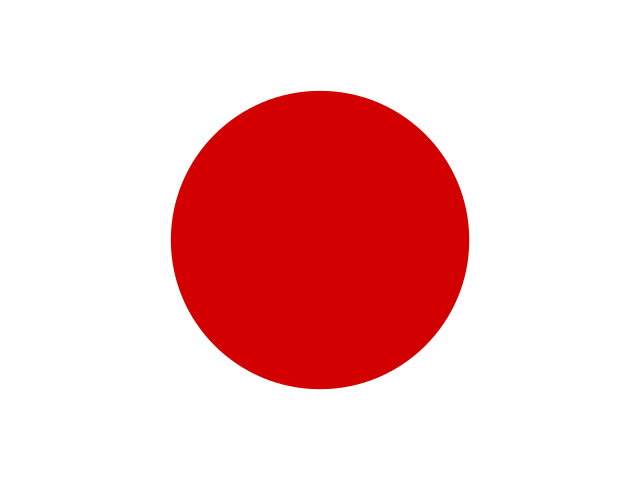
Japan
Japan’s energy policy is guided by principles of energy security, economic efficiency, environmental sustainability and safety. Achieving the aim of carbon-neutrality by 2050 will require substantially accelerating the deployment of low-carbon technologies by 2030, to address regulatory and institutional barriers and further enhance competition in energy markets. It will also be important to develop different decarbonisation scenarios and to prepare for the possibility that certain low-carbon technologies, such as nuclear, might not expand as quickly as hoped. Stronger reliance on market-based instruments, such as carbon pricing, could be one policy option for Japan to cost…
- Overview
- Energy mix
- Emissions
- Electricity
-
+ 5 pages

![Japan Flag]()
-
Madagascar
Around a quarter of the population of Madagascar has access to electricity, and only 1.5% has access to clean cooking facilities. In 2019, Madagascar’s energy mix was dominated by biofuels and wastes (85%), with oil products (11%), coal and hydro accounting for the rest of the total energy supply. In 2020, less than 5% of the population had access to clean cooking and 27% had access to electricity. The Government of Madagascar has set a target of reaching 70% electricity access rate by 2030.
- Overview
- Energy mix
- Emissions
- Electricity
-
+ 5 pages
![Madagascar Flag]()
-
Mali
In recent years, the rate of access to electricity in Mali has surpassed 25%, thanks to a public focus on mini-grid solutions. The government of Mali now plans to increase hybridisation of its mini-grids by adding PV capacity to diesel power plants. In 2019, Mali’s energy mix was dominated by biofuels and wastes (65%) and oil products (32%), with coal and hydro accounting for the rest. In 2020, less than 5% of the population had access to clean cooking and 52% had access to electricity. For electricity access, the country targets 70% access by 2025, 80% by…
- Overview
- Energy mix
- Emissions
- Electricity
-
+ 5 pages
![Mali Flag]()
-
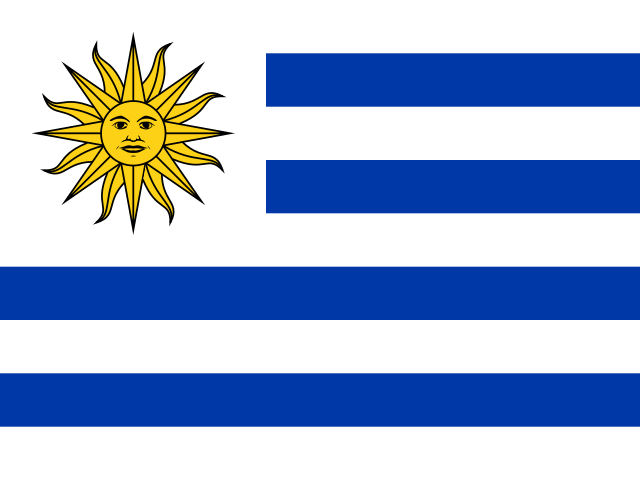
Uruguay
In 2010 the Ministry of Energy, Mining and Industry of Uruguay approved Decree 354 on the Promotion of Renewable Energies meant to increase dramatically the share of electricity generation from renewable sources in the country.
- Overview
- Energy mix
- Emissions
- Electricity
-
+ 5 pages
![Uruguay Flag]()
-
Slovenia
Slovenia has put in place a National Renewable Action Plan to 2020, which targets a 25% share of energy generation from renewable sources in gross final energy consumption and 39% of electricity demand met by electricity generated from renewable energy sources.
- Overview
- Energy mix
- Emissions
- Electricity
-
+ 5 pages
![Slovenia Flag]()
-
Sri Lanka
Sri Lanka’s primary energy supply mainly comes from oil and coal. Almost 40% of Sri Lanka’s electricity came from hydropower in 2017 but coal’s shares in power generation has been increasing since 2010. Sri Lanka is reaching universal access to electricity but clean cooking remain an issue with 15 million people still relying on biomass to cook.
- Overview
- Energy mix
- Emissions
- Electricity
-
+ 5 pages
![Sri Lanka Flag]()